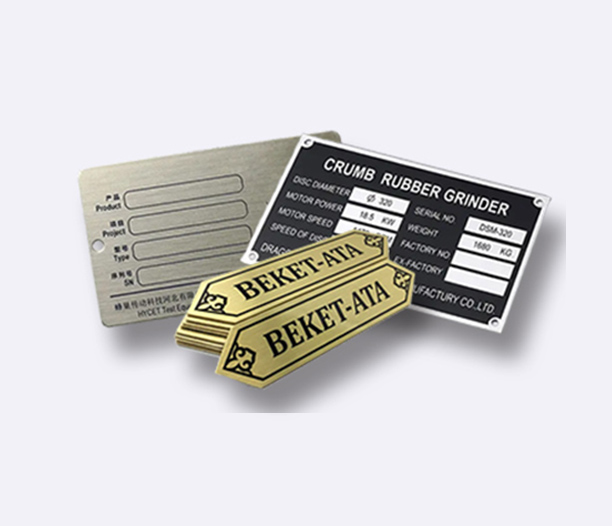
In a world of flimsy stickers and fading prints, some information is too important to trust to anything less than the most durable medium. This is where metal tags and labels come into play. They are the unsung heroes of industrial identification, providing permanence where other marking methods fail.
Whether you're tracking high-value assets, complying with safety regulations, or branding equipment meant to last decades, the choice of identification matters. Paper fades. Plastic can crack or melt. But a well-made metal tag endures.
This article explores the seven key reasons why metal tags and labels are often the superior choice for demanding applications. We'll look at the materials, methods, and real-world scenarios where they prove their worth.
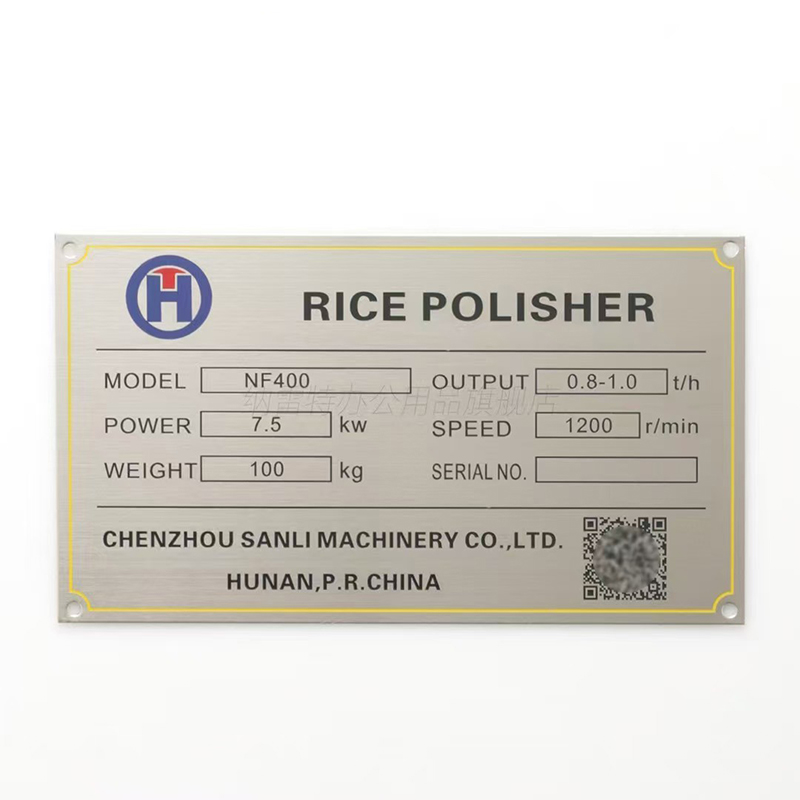
1. Unmatched Durability in Harsh Environments
The primary advantage of metal tags and labels is their incredible durability. They are built to survive conditions that would destroy other types of labels.
Think about outdoor applications. A metal nameplate on construction equipment faces relentless sun, rain, snow, and temperature swings. Unlike printed vinyl, the information on a metal tag won't fade from UV exposure. It won't peel off in the rain or become brittle in the cold.
Inside factories, metal labels resist oils, solvents, and chemicals that can dissolve adhesive or smear ink. They can withstand high-pressure washdowns, abrasion from tools or materials, and prolonged exposure to heat near machinery. This resilience makes them indispensable for permanent asset tracking and safety signage.
2. A Range of Materials for Every Need
Not all metal tags are the same. The specific material chosen directly impacts performance, cost, and suitability. The most common options each have their strengths.
Aluminum is a lightweight, cost-effective, and highly versatile choice. It’s naturally corrosion-resistant and can be easily stamped, etched, or embossed. Anodized aluminum tags offer even greater surface hardness and allow for colored finishes, useful for color-coding or branding.
Stainless Steel is the go-to for extreme conditions. It provides superior strength and outstanding resistance to corrosion, acids, and high temperatures. Stainless steel labels are common in food processing, marine environments, chemical plants, and anywhere hygiene and longevity are critical.
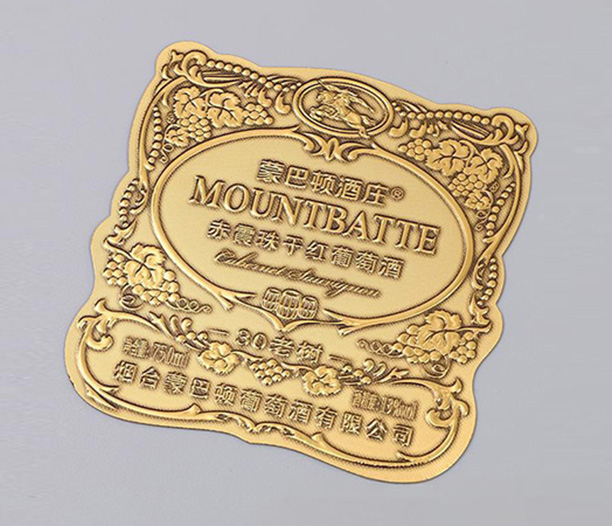
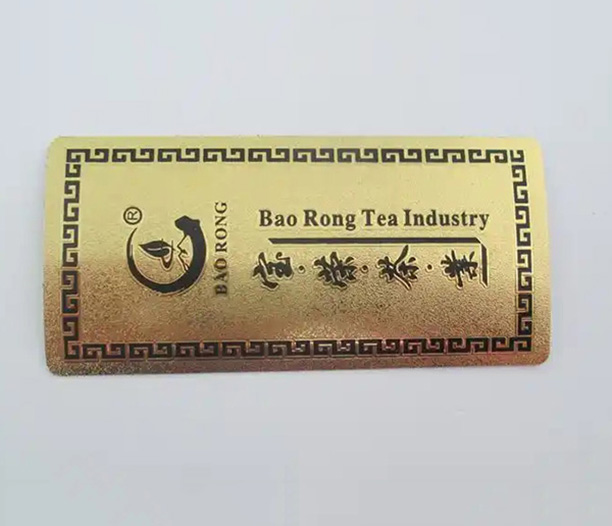
Brass and Bronze offer a classic, decorative appearance with good corrosion resistance. They are often chosen for architectural plaques, commemorative tags, and equipment where aesthetics are important alongside function.
3. Permanent Marking Techniques
The information on a metal tag needs to be as permanent as the tag itself. Several marking methods ensure the data becomes an integral part of the metal.
Stamping physically presses characters into the metal, creating a deep, tactile impression that can be read even if painted over. It's a classic, low-cost method for serial numbers and part IDs.
Etching uses a chemical or laser process to remove material, creating precise, clean marks. This is excellent for complex graphics, barcodes, QR codes, and detailed information on metal labels.
Embossing raises the lettering above the tag's surface, providing a professional look and good tactile feel. Each of these methods ensures the marking won't rub off or degrade separately from the tag itself.
4. Critical Applications Across Industries
Where do you actually need metal tags and labels? Their use is widespread in sectors where failure is not an option.
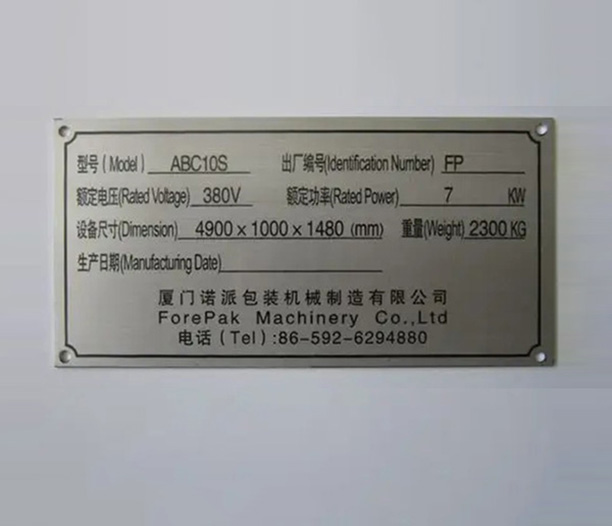
In manufacturing, they serve as permanent asset identification tags on machinery, providing serial numbers, model data, and maintenance logs. Electrical panels use metal labels for UL-approved safety warnings and component identification that won't combust.
The aerospace and automotive industries rely on them for tracking parts throughout a product's lifecycle. For utility companies, metal tags identify valves, pipelines, and power poles buried or exposed for decades. In these roles, the tag must last as long as the asset it identifies.
5. Compliance and Safety: Non-Negotiable Requirements
Many industries operate under strict regulatory standards. Metal tags and labels are frequently specified to meet these codes.
Safety regulations (like OSHA) often require permanent, legible warnings on hazardous equipment. A metal safety label ensures that "Danger: High Voltage" or "Hot Surface" warning remains intact for the life of the machine.
Industry standards from organizations like UL or ANSI may dictate the material and permanence of identification plates on certified equipment. Using compliant metal tags is part of demonstrating due diligence and ensuring workplace safety.
6. Professional Appearance and Branding
Beyond pure function, metal tags and labels convey quality and permanence. They are a subtle but powerful branding tool.
A custom-engraved metal nameplate on a piece of industrial equipment or a laboratory instrument speaks to its durability and the manufacturer's attention to detail. It elevates the product's perceived value.
For architectural applications, decorative metal plaques provide a sense of history and substance. The aesthetic weight of metal simply cannot be replicated with plastic or vinyl, making it ideal for awards, donor recognition, and high-end branding.
7. Long-Term Cost Effectiveness
While the initial unit cost of a metal tag may be higher than a sticker, the total cost of ownership is often lower. This is a classic case of "buy once, cry once."
A plastic label that needs replacement every year due to wear creates recurring material costs, labor for removal and reapplication, and the risk of information loss during the gap. A single stainless steel label, properly attached, can last for the entire lifespan of the asset—20, 30, or 50 years.
This eliminates downtime for re-identification, prevents errors from missing or incorrect labels, and provides a reliable audit trail. For critical infrastructure and capital equipment, this long-term reliability makes metal tags and labels a smart investment.
Choosing the Right Metal Tag for Your Project
Selecting the best metal tag involves asking a few key questions. What environment will it face? (Consider moisture, chemicals, temperature, and physical abuse.) How does it need to be marked? (Simple text, barcodes, logos?) How will it be attached? (Holes for rivets or screws, adhesive backing, welding?)
For harsh environments, lean towards stainless steel. For indoor, general-purpose use where weight or cost is a factor, aluminum is excellent. Always discuss your specific application with a supplier who specializes in metal tags and labels to ensure the material, marking process, and attachment method are all correctly specified.
Frequently Asked Questions (FAQs)
Q1: Can metal tags and labels be used outdoors for decades without failing?
A1: Absolutely. This is one of their greatest strengths. Materials like stainless steel or anodized aluminum are specifically chosen for their corrosion resistance. The permanent marking methods (etching, stamping) ensure the text and graphics won't fade from sun exposure. Properly manufactured and installed metal tags are designed to last as long as the structures or assets they identify, even in harsh weather.
Q2: Are metal labels readable by barcode scanners?
A2: Yes, very reliably. Laser etching is a preferred method for creating precise, high-contrast barcodes (like Data Matrix or QR codes) directly onto the metal label surface. These etched codes provide excellent scannability because they are durable and not susceptible to the smudging or fading that can ruin printed plastic labels. This makes metal tags ideal for permanent asset tracking systems.
Q3: How are metal tags typically attached to equipment or surfaces?
A3: There are several common attachment methods. The most permanent are mechanical fastenings like rivets, screws, or welding. For surfaces where drilling isn't possible, industrial-grade adhesives (like epoxy-backed options) can provide a very strong, permanent bond to clean, solid surfaces. Some tags also come with holes for wire or cable ties. The best method depends on the surface material and the required security level.
Q4: What is the main difference between etched and stamped metal tags?
A4: The key difference is in the process and result. Stamping uses a die to physically deform the metal, leaving an indented (or occasionally raised) mark. It's fast and economical for simple text and numbers. Etching (often laser etching) uses a focused beam to vaporize a thin layer of metal, creating a smooth, precise mark. Etching is better for complex graphics, small fonts, and 2D barcodes. Both create permanent marks.
Q5: When would I choose aluminum over stainless steel for a tag?
A5: Choose aluminum when you need a lightweight, cost-effective, and corrosion-resistant option for less extreme conditions. It's perfect for indoor equipment, panels, and nameplates. Choose stainless steel when you need maximum strength, superior chemical/acid resistance, or the tag will face severe outdoor exposure, high temperatures, or washdowns (e.g., food processing, marine, chemical plants).