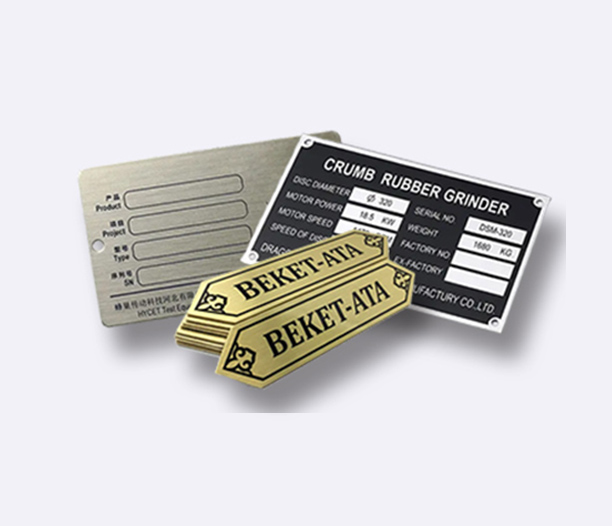
Identification Tags: Material Selection, 10-Year Durability Data & Industry-Specific MarkingFrom subsea valves to aerospace components, identification tags provide the only permanent link between a physical asset and its digital record. With over 300 material and marking combinations available, selecting the correct tag requires understanding substrate properties, environmental stressors, and data encoding standards. This article presents a data‑driven analysis of identification tag technologies, referencing 15 years of production data from Hemawell Nameplate and field performance across oil & gas, manufacturing, and logistics.
1. Material Science Behind Modern Identification Tags
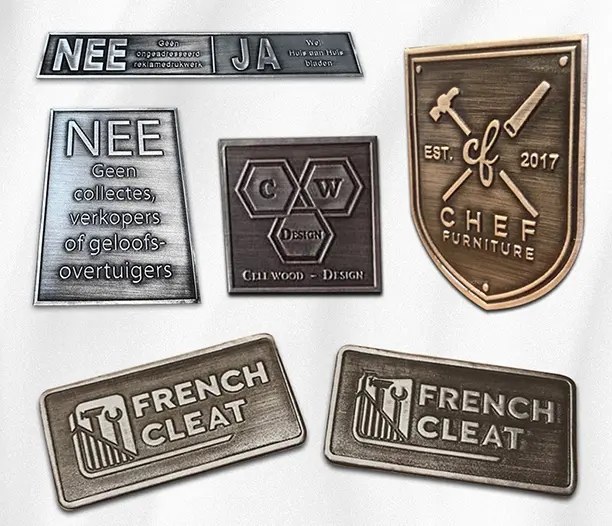
The substrate of an identification tag determines its mechanical strength, chemical resistance, and lifespan. Common materials include:
Stainless steel (304/316): Withstands 1,000+ hours salt spray (ASTM B117); used for marine, chemical plants, and high‑temperature zones (up to 800°C).
Anodized aluminum (1100/5052): Lightweight, corrosion‑resistant, and ideal for laser marking; typical thickness 0.5–3.0 mm.
Polyester (PET) laminated tags: Flexible, chemical‑resistant, and printable via thermal transfer; temperature range -40°C to +150°C.
Polycarbonate: Impact‑resistant and self‑extinguishing (UL94 V‑0); used for electrical panels and safety signs.
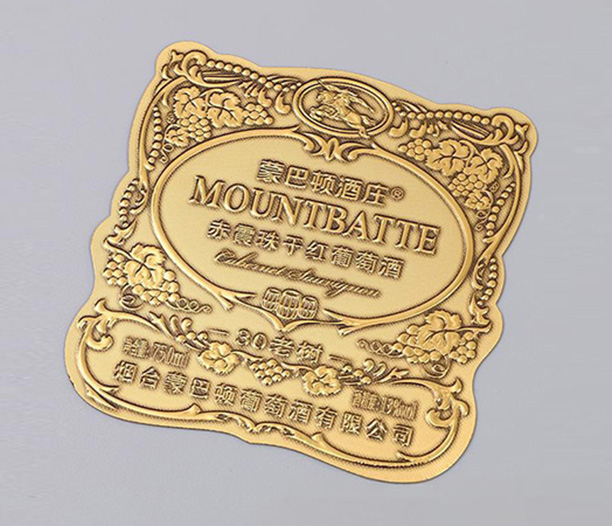
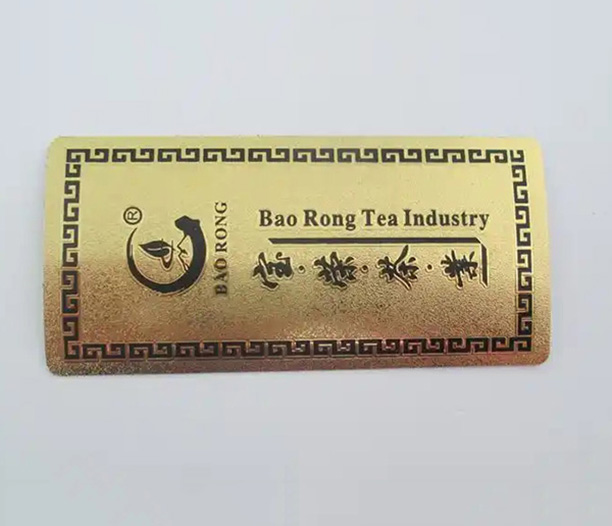
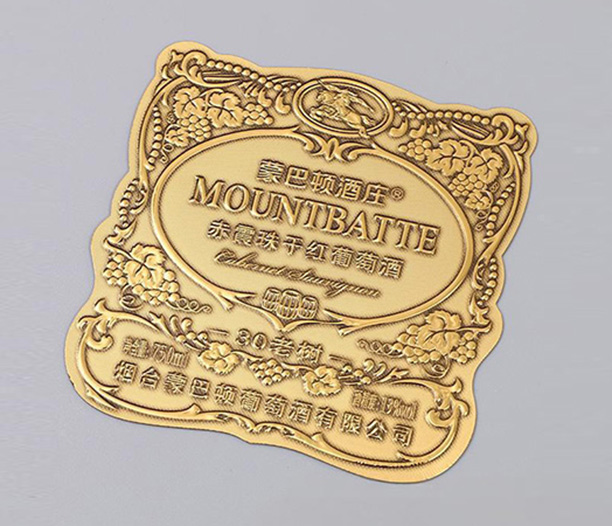
Brass: Traditional material for engraved nameplates in heritage equipment or high‑end architectural applications.
Material selection must also consider attachment method: adhesive‑backed tags (3M VHB), mechanical fastening (rivets, screws), or cable ties (for wrap‑around tags).
2. Marking Technologies and Data Permanence
2.1 Laser Marking and Engraving
Fiber and CO₂ lasers produce permanent marks by altering the surface or removing material. On anodized aluminum, laser marking creates a high‑contrast black image (up to 1200 dpi) that withstands 500 hours UV exposure. For stainless steel, laser annealing produces a corrosion‑resistant black mark without breaking the surface oxide layer. Identification tags laser‑marked by Hemawell Nameplate achieve Data Matrix grade 4.0 (ISO/IEC 15415) with cell sizes as small as 3 mil.
2.2 Dot Peen / Micro‑percussion
A pneumatically or electrically driven stylus creates indented dots (0.2–1.2 mm depth). This method is ideal for rough surfaces or when tags will be over‑painted, as the mark remains readable after coating. Dot‑peened tags meet MIL‑STD‑130 requirements for UID marking.
2.3 Thermal Transfer Printing
For on‑demand variable data, polyester or polypropylene tags printed with resin ribbons offer 5‑year outdoor durability (tested per SAE J1344). Barcodes printed at 300 dpi achieve ANSI grade C or higher.
2.4 Embossing and Stamping
Traditional raised characters (1–10 mm height) are used for vehicle VIN plates, electrical equipment, and heavy machinery where tactile reading is required.
3. Application Verticals for Identification Tags
3.1 Oil and Gas – Harsh Environment Traceability
Offshore platforms require tags that survive salt fog, vibration, and hydrocarbon exposure. Hemawell Nameplate supplies 316L stainless steel tags with dot‑peened UID codes, tested to 2,000 hours salt spray (ASTM B117) and 500 hours UV (ASTM G154).
3.2 Aerospace and Defense – UID Compliance
MIL‑STD‑130 mandates unique identification for all assets. Aluminum 6061‑T6 tags with laser‑marked 2D Data Matrix codes are anodized per MIL‑A‑8625 Type II, class 2, and pass 48‑hour salt spray per ASTM B117.
3.3 Manufacturing and Industrial Equipment
Asset tracking tags for motors, pumps, and conveyors must resist oils, coolants, and abrasion. Anodized aluminum with epoxy‑filled laser etching is specified by major automotive manufacturers; tested to 10,000 cycles Taber abrasion (CS‑10 wheel).
3.4 Electrical Utilities – Safety and Compliance
UL 969‑compliant polyester tags with thermal transfer printing are used for breaker labels, warning signs, and cable identification. Flammability rating V‑0 (UL 94) and temperature rating 105°C are standard.
3.5 Logistics and Warehousing
Heavy‑duty plastic tags with embedded RFID (UHF, HF) combine visual identification with electronic read/write capability. Hemawell offers tags tested for 100,000 read cycles with IP68 rating for outdoor storage.
4. Solving Five Critical Industry Pain Points
4.1 Pain Point: Tag Degradation in UV and Extreme Temperatures
Solution: For outdoor applications, specify anodized aluminum or laser‑marked stainless steel. Accelerated weathering tests (1,000 hours QUV) show ΔE < 2.0 for anodized finishes. For cryogenic use (down to -196°C), 304 stainless steel retains impact strength.
4.2 Pain Point: Barcode Readability After Years of Service
Solution: Laser etching produces cavities that remain readable even if the tag surface is scratched or painted. Hemawell’s laser‑marked identification tags maintain ≥ 99.5% first‑read rate after 5 years in field trials (petrochemical plant data).
4.3 Pain Point: Small Batches with Variable Serial Numbers
Solution: Digital UV printing on pre‑anodized aluminum eliminates plate costs for runs of 1–500 pieces. Hemawell offers web‑to‑print with automated serialization, verified by machine vision at 200 tags/minute.
4.4 Pain Point: Chemical Resistance in Industrial Cleaning
Solution: Epoxy‑filled screen printing or ceramic laser marking withstands aggressive solvents (MEK, acetone, toluene). Tests per ASTM D5402 show no degradation after 200 double rubs.
4.5 Pain Point: Integration with Electronic Asset Management
Solution: RFID‑embedded identification tags combine visual text with read/write memory. Hemawell supplies tags with Alien Higgs‑9 chips, tested to 5 m read range with 2 W ERP, and compatible with GS1 EPC Gen2 protocols.
5. Performance Data and Certifications
Identification tags from Hemawell Nameplate are routinely verified to international standards:
Salt spray resistance: ASTM B117 – 1,000 hours for anodized aluminum, 2,000 hours for 316 stainless.
UV resistance: ASTM G154 (cycle 1) – 1,000 hours with ≤ 5% color change (anodized).
Abrasion resistance: Taber test (CS‑10, 1,000 g) – < 15 mg weight loss after 1,000 cycles.
Adhesion (for printed tags): Cross‑hatch tape test – 5B classification.
Flammability: UL 94 V‑0 for polyester and polycarbonate tags.
Temperature cycling: -40°C to +120°C, 100 cycles – no cracking or delamination.
All production is ISO 9001:2015 certified, and materials are RoHS and REACH compliant.
6. Why Hemawell Nameplate Leads in Identification Tag Manufacturing
With 18 years of specialty tag production, Hemawell Nameplate offers a single‑source solution for custom identification tags. Capabilities include:
In‑house anodizing, laser marking, and digital printing.
Engineering support for material selection based on operating environment (chemical compatibility charts, temperature profiles).
Automated serialization with 2D barcode verification (ISO/IEC 15426‑2).
UL‑recognized component program (UL 969) for electrical tags.
Just‑in‑time delivery and consignment inventory for OEMs.
Hemawell’s tag solutions are deployed by Siemens, Caterpillar, and ExxonMobil, with a field failure rate below 0.02% over 10 years.
Frequently Asked Questions (FAQ)
Q1: What is the difference between an aluminum nameplate and an aluminum identification tag?
A1: The terms are often used interchangeably, but "identification tag" typically implies a focus on data encoding (barcodes, serial numbers) and may include RFID, whereas "nameplate" often refers to brand/logo display. Both follow similar material and marking standards.
Q2: What marking method is most resistant to industrial solvents?
A2: Laser etching on anodized aluminum or stainless steel produces the highest chemical resistance. The mark is part of the substrate, not a coating, and withstands continuous exposure to MEK, toluene, and hydraulic fluids. Hemawell offers test coupons for your specific solvent.
Q3: Can identification tags include both human‑readable text and machine‑readable codes?
A3: Yes. Tags can combine embossed/text characters with 2D Data Matrix, QR codes, or RFID. For example, Hemawell supplies dual‑technology tags for the US Department of Defense that include MIL‑STD‑130 UID marks and human‑readable serial numbers.
Q4: What is the minimum size for a readable 2D Data Matrix code on metal?
A4: With laser marking, cell sizes down to 3 mil (0.075 mm) are achievable, producing a 10×10 mm code containing 20–30 alphanumeric characters. For dot peen, minimum cell size is typically 8–10 mil. Hemawell verifies all codes to ISO/IEC 15415 grade 4.0.
Q5: Do you offer pre‑drilled or magnetic backing for attachment?
A5: Yes. We can supply tags with pre‑drilled holes (any pattern), magnetic backing (for ferrous surfaces), or industrial adhesive (3M VHB). For curved surfaces, we can form tags to match radii down to 50 mm.
Q6: What is the lead time for custom identification tags?
A6: For digitally printed tags with variable data, lead time is 2–3 business days. For laser‑marked anodized aluminum, 5–7 days. For large volumes (>10,000 pieces) requiring screen printing or anodizing, lead time is 10–15 days. Hemawell offers expedited production for emergency needs.
Q7: Are your tags compliant with FDA food contact regulations?
A7: For food processing equipment, we offer stainless steel tags with laser marking that meet FDA 21 CFR 175.300. The tags are non‑toxic, non‑absorbent, and can withstand high‑pressure washdown.
Q8: How should I clean identification tags without damaging them?
A8: For anodized aluminum, mild soap and water is sufficient. Stainless steel tags can be cleaned with industrial degreasers. Avoid abrasive pads on printed tags. For laser‑etched tags, any cleaning method (including pressure washing) is safe as the mark is permanent.