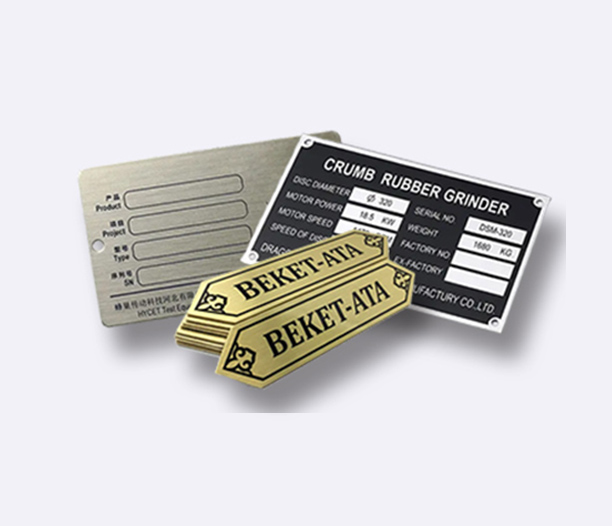
When you need information to stick around, paper and plastic often fall short. They fade, peel, and tear. For a permanent solution, more industries are turning to custom aluminum labels. These durable identification plates offer a professional finish and withstand conditions that destroy other labels.
But what exactly are they best for? And how do you pick the right one? Let’s break down the real-world uses and key selection factors for custom aluminum labels.
Custom Aluminum Labels vs. Other Common Label Types
Choosing the right label material is a practical decision. Here’s how custom aluminum labels stack up against the competition.
Plastic labels, like polypropylene or vinyl, are cost-effective for short-term indoor use. However, UV light makes them brittle. Chemicals can cause them to swell or dissolve. Custom aluminum labels laugh off these challenges. Anodized aluminum is highly resistant to sunlight and most chemicals.
Stainless steel labels are another robust option. They are stronger in extreme abrasion scenarios. But they are heavier, more expensive, and harder to fabricate. For the vast majority of applications, custom aluminum labels provide the best balance of durability, weight, and cost.
Then there are adhesive paper labels. They are useful for shipping or temporary coding. They are not meant for permanent asset identification. The adhesive on custom aluminum labels, often a strong industrial-grade acrylic or epoxy, is designed to bond for the life of the asset.
The key advantage of custom aluminum labels is their permanent marking. The information isn’t just printed on the surface; it’s often etched, engraved, or stamped in. This makes tampering or accidental removal nearly impossible.
Where Are Custom Aluminum Labels Actually Used?
You’ll find these labels in places where failure is not an option. Their reliability makes them indispensable across several fields.
In manufacturing and industrial settings, custom aluminum labels serve as permanent nameplates on machinery. They display model numbers, serial numbers, electrical ratings, and safety warnings. These labels survive constant vibration, oil, coolant, and heat from the factory floor.
The aerospace and defense sectors rely heavily on them. Every component, from a small bracket to a large assembly, often requires traceability. Custom aluminum labels with etched serial numbers or barcodes provide this. They withstand fuel exposure, temperature swings, and pressure changes.
For electrical panels and utility equipment, safety and clarity are paramount. Custom aluminum labels clearly identify circuits, breakers, and hazards. They are non-corrosive and electrically non-conductive when properly coated, making them safe for these applications.
Outdoor asset tracking is another major use. Think of telecommunications equipment, solar panel arrays, or pipeline valves. These assets face decades of weather. A custom aluminum label with a deep engraving and a protective anodized layer will remain legible for the life of the asset.
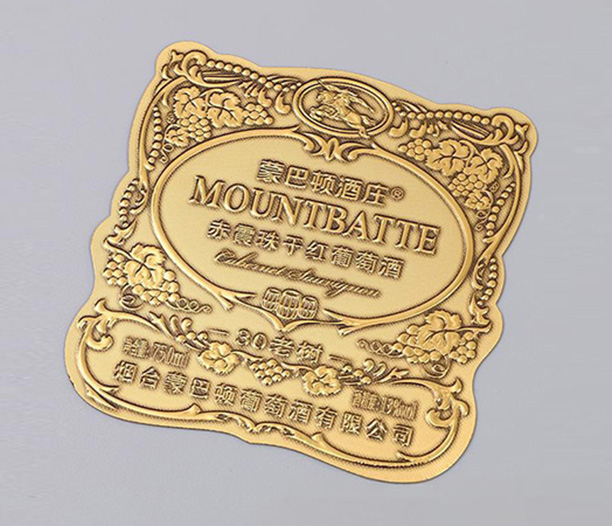
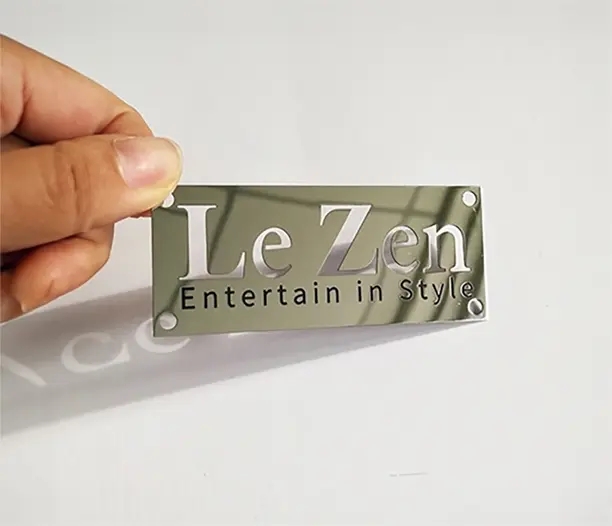
Even in high-end retail or signage, custom aluminum labels offer an aesthetic benefit. They provide a sleek, modern, and premium look for product branding, door plaques, or directional signage.
How to Choose the Right Custom Aluminum Label for Your Job
Not all custom aluminum labels are the same. Making the right choice involves answering a few key questions about your environment and needs.
First, consider the surface and mounting. Is the surface flat or curved? Will it be exposed to high temperatures? For flat, clean surfaces, a strong permanent adhesive backing might suffice. For curved surfaces or extreme heat, mechanical fasteners (like rivets or screws) through pre-drilled holes in the label are necessary.
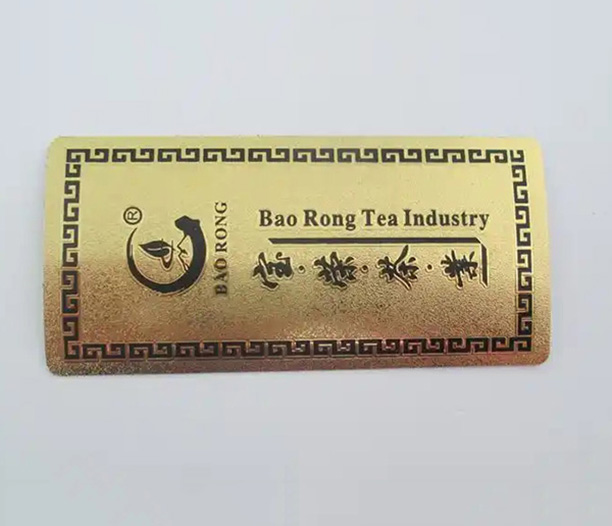
Next, think about the finish and coating. Bare aluminum can oxidize and turn dull gray. For most applications, an anodized finish is recommended. Anodizing creates a hard, protective oxide layer that resists corrosion and scratching. It also allows for color—clear, black, gold, or other hues—by adding dyes during the process.
The marking method is crucial for longevity. For the most durable custom aluminum labels, chemical etching or laser engraving are top choices. Chemical etching removes material to create deep, smooth marks that won’t wear off. Laser engraving is precise and perfect for complex logos or tiny text. Stamped labels are also very durable but less common for intricate designs.
Finally, size and information density matter. Pack too much text onto a small label, and it becomes unreadable. Work with your supplier on a layout that is clean and functional. Remember, the primary goal of any custom aluminum label is to communicate information clearly and permanently.
Finding a Supplier for Your Custom Aluminum Labels
Sourcing a reliable supplier is as important as the design. You need a partner, not just an order-taker.
Look for a manufacturer with proven experience in your industry. A company that makes decorative tags might not understand the strict traceability requirements for aerospace custom aluminum labels. Ask for case studies or examples of past work.
Inquire about their in-house capabilities. Do they handle design, fabrication, and finishing all under one roof? This controls quality and speeds up turnaround. A shop that only does printing and farms out the metalwork may have inconsistencies.
Communication is key. A good supplier will ask detailed questions about your application: environment, surface type, required lifespan, and any industry standards (like UL or MIL-SPEC) you must meet. They should provide material samples and proofs before full production.
Get quotes from a few suppliers, but don’t choose on price alone. The cheapest custom aluminum labels might use thin material, weak adhesive, or shallow engraving that will fail prematurely. Consider value—durability and accuracy over the long term.
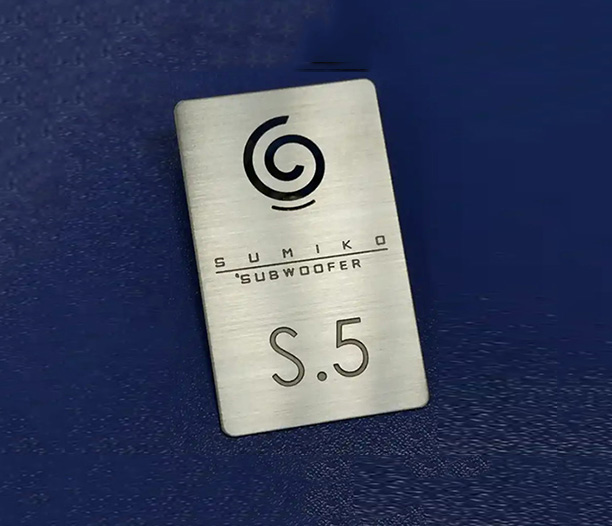
Understanding the Cost Factors for Custom Aluminum Labels
The price for custom aluminum labels isn’t a single number. It’s built from several components.
Material and Size: Obviously, larger labels and thicker aluminum stock cost more. Standard thicknesses like 0.020” or 0.040” are common. A specialized alloy will also affect the price.
Finishing: A basic mill finish is the least expensive. Adding anodizing, especially in colors, adds a step and cost. However, this cost is usually minimal per piece and provides immense value in protection.
Marking Process: Simple printing is cheaper but less durable. Laser engraving and chemical etching have higher setup costs but are permanent. For small runs, laser might be most economical. For very large runs of identical labels, chemical etching becomes very cost-effective.
Quantity: Unit cost drops significantly with volume. The setup and tooling costs are amortized over more pieces. If you have a standard label you’ll re-order, buying in bulk makes financial sense.
Labor and Design: A complex, multi-layer design file takes time to prepare for production. Providing a clean, print-ready vector file can reduce this cost. Unique shapes requiring custom tooling for cutting (like a die) will also add a one-time charge.
When budgeting, think total cost of ownership. A slightly more expensive, properly made custom aluminum label that lasts 15 years is far cheaper than replacing a cheap vinyl label every 6 months.
The Technology Behind Durable Markings on Aluminum
The longevity of your label hinges on the marking technology. Let’s look at the two most robust methods for custom aluminum labels.
Chemical Etching: This is a subtractive process. A patterned mask is applied to the anodized aluminum. The plate is then sprayed with a chemical etchant that dissolves the exposed aluminum, creating recessed cavities. These cavities can be left as-is for a subtle look or filled with permanent enamel paint for high contrast. The result is a mark that is integral to the metal, not just sitting on top.
Laser Engraving/Marking: A high-power laser beam interacts with the aluminum surface. For engraving, it vaporizes material to create a cavity. For marking (often on anodized aluminum), it can change the color of the anodized layer by heat-induced oxidation without removing material. Laser work is incredibly precise, allowing for detailed graphics, 2D barcodes, and micro-text.
Both methods produce marks that are immune to wear from abrasion, cleaning, and environmental exposure. They are what transform a simple piece of aluminum into a permanent, reliable custom aluminum label.
Choosing between them often comes down to aesthetics, depth requirement, and batch size. Your supplier can recommend the best process for your specific design.
Frequently Asked Questions (FAQ)
Q1: What’s the main difference between an aluminum tag and an aluminum label?
A1: The terms are often used interchangeably. Generally, a "tag" might imply a item that is hung or attached loosely (like a dog tag), often with a hole. A "label" typically suggests something that is adhered directly to a surface for identification. However, custom aluminum labels can certainly have holes for screws or rivets, blurring the distinction. The key is the function: permanent surface identification.
Q2: How well do the adhesives on custom aluminum labels hold up outdoors?
A2: Extremely well, when the right adhesive is specified. For outdoor use, you should request a high-performance acrylic or epoxy-based permanent adhesive. These are designed to withstand temperature extremes (-40°F to +300°F ranges are common), moisture, and UV exposure. Proper surface preparation (clean, dry, and oil-free) is also critical for the bond to achieve its full potential.
Q3: Can I get custom aluminum labels with sequential serial numbers or barcodes?
A3: Absolutely. This is a very common request for asset tracking. Suppliers use specialized software and laser or etching equipment that can automatically increment numbers or generate unique 2D barcodes (like Data Matrix codes) on each label in a run. This is highly efficient for creating traceable sets of custom aluminum labels.
Q4: What file format should I provide for my label design?
A4: Vector file formats are essential for clean, scalable production. Provide your design as an .AI (Adobe Illustrator), .EPS, or .SVG file. This ensures text and logos remain crisp at any size. Avoid sending low-resolution .JPG or .PNG files, as these will result in poor-quality, pixelated markings on the final custom aluminum labels.
Q5: Are custom aluminum labels recyclable?
A5: Yes, aluminum is one of the most recyclable materials on the planet. If you ever need to decommission an asset, the custom aluminum label can be removed and recycled along with the aluminum component it’s attached to. This makes them an environmentally responsible choice compared to some plastic-based composite labels.