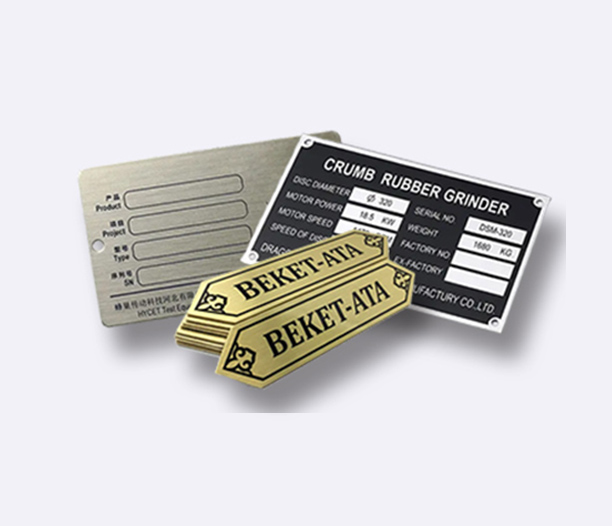
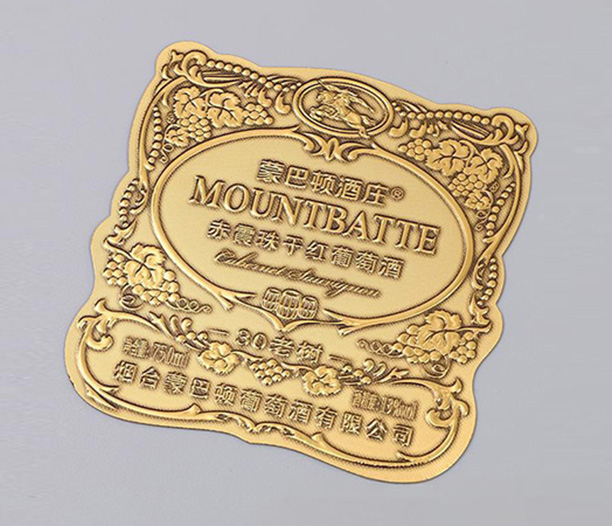
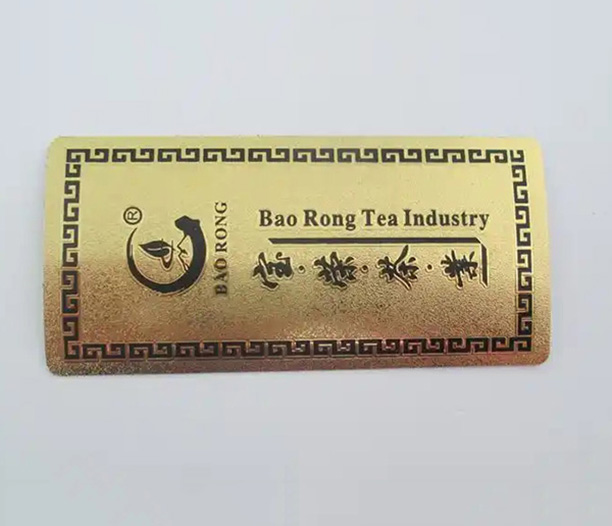
Aluminium Cable Tags: Engineering Specifications & Industrial ApplicationsIn mission-critical environments—from offshore platforms to data centres—the reliability of cable identification directly impacts safety, maintenance efficiency, and regulatory compliance. aluminium cable tag systems have emerged as the industry benchmark, offering an optimal balance of lightweight durability, corrosion resistance, and cost-effectiveness. This guide provides a technical deep dive into material science, application scenarios, and procurement best practices, helping engineers and procurement specialists make informed decisions.
Understanding Aluminium Cable Tags: Material Properties and Manufacturing
Aluminium cable tags are not a one-size-fits-all product. Their performance hinges on alloy selection, temper, and the marking process. Below we examine the metallurgical aspects and fabrication methods that determine long‑term readability in harsh conditions.
Why Aluminium? Comparing Materials (Stainless Steel, Plastic)
While stainless steel offers high tensile strength, it is heavier and more expensive. Plastics, on the other hand, degrade under UV exposure and extreme temperatures. Aluminium alloys—typically 3003, 5052, or 6061—provide a unique combination:
Weight-to-strength ratio: 60% lighter than steel, reducing load on bundled cables.
Corrosion resistance: Natural oxide layer protects against humidity, salt spray, and most industrial chemicals.
Thermal stability: Maintains integrity from -40°C to +150°C, suitable for outdoor and process areas.
Cost efficiency: Lower raw material and machining costs compared to stainless steel.
Manufacturing Processes: Embossing, Laser Marking, and Printing
The legibility of an aluminium cable tag depends on how information is applied:
Embossing: Raised characters created by stamping; ideal for high‑contrast, permanent marking in dirty environments.
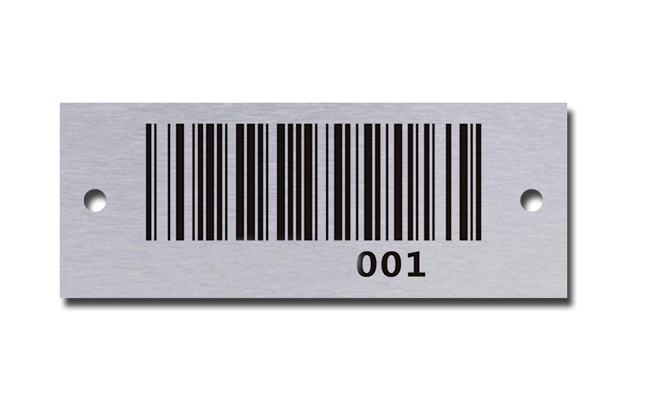
Laser marking: Uses a fibre laser to etch the anodised layer, producing high‑resolution barcodes, logos, and serial numbers without chemical inks.
Screen printing / digital printing: Suitable for colour coding and complex graphics, protected by a clear overcoat.
Anodising after marking further seals the surface, ensuring the tag withstands abrasion and chemical exposure for decades.
Durability and Corrosion Resistance in Harsh Environments
Field data from offshore installations show that anodised aluminium tags retain 100% readability after 10+ years of salt‑fog exposure. The key is the thickness of the anodic layer (≥10 microns for marine use) and the alloy’s copper content (low‑copper alloys like 5052 are preferred).
Critical Applications Across Industries
Aluminium cable tags are specified in sectors where failure is not an option. Below are four representative use cases.
Power Generation and Distribution
In substations and wind farms, cables must be identified for safe isolation during maintenance. Tags must resist UV, ozone, and electromagnetic interference. Aluminium tags with laser‑etched QR codes link to digital maintenance records, reducing human error.
Oil and Gas Facilities
On offshore platforms and refineries, cables are exposed to hydrocarbons, salt water, and temperature swings. aluminium cable tag systems with stainless steel ties provide a non‑sparking, corrosion‑proof solution that complies with NORSOK and IECEx standards.
Railway and Infrastructure
Rail signalling and traction power cables require identification that withstands vibration, graffiti, and cleaning agents. Embossed aluminium tags mounted with UV‑stable cable ties are the de facto standard for Network Rail and Deutsche Bahn.
Data Centers and Telecommunications
High‑density fibre and copper cabling demand clear, space‑efficient labelling. Thin (0.5 mm) aluminium tags with printed barcodes allow rapid asset tracking without adding bulk to cable trays.
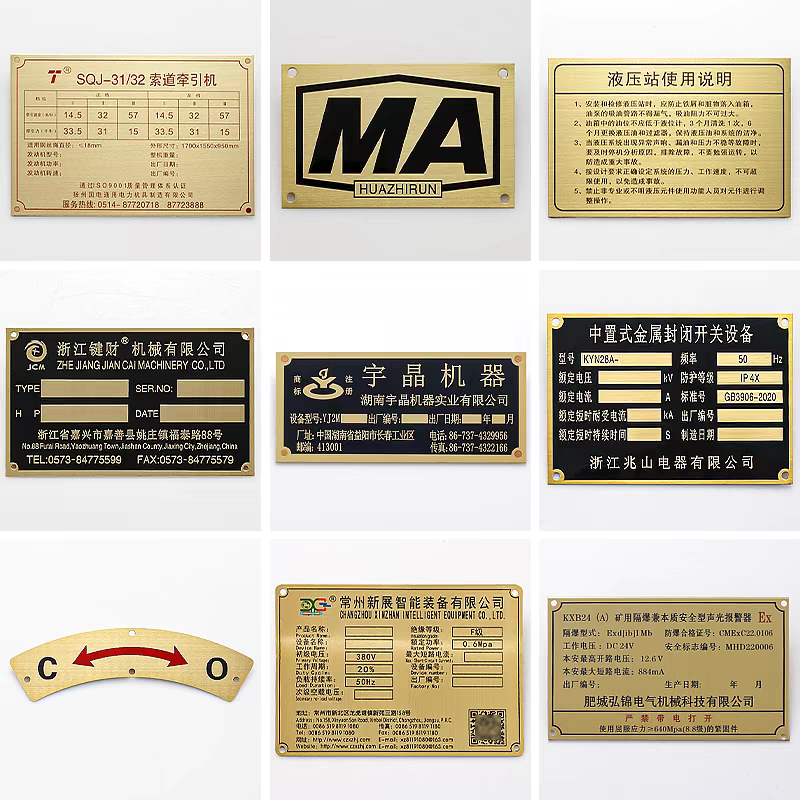
Technical Specifications and Standards Compliance
Specifying an aluminium cable tag requires attention to dimensional standards and environmental testing protocols.
Size, Thickness, and Mounting Options
Thickness: Typically 0.5 mm to 1.5 mm; thicker tags resist bending in high‑traffic areas.
Hole patterns: Single centre hole, double holes for wrap‑around ties, or slot for flag‑style mounting.
Custom shapes: Round, rectangular, or cut‑outs for specific clamps.
Industry Standards (IEEE, IEC, etc.)
Compliance with IEEE 400 (power cable diagnostics) or IEC 62305 (lightning protection) often requires tags to survive specific environmental tests. Aluminium tags from Hemawell Nameplate are routinely tested for:
Salt spray (ASTM B117) – 500+ hours
UV resistance (ISO 4892) – 2000 hours
Abrasion (DIN EN 60068-2-70)
Customization: Barcodes, Serial Numbers, and QR Codes
Modern asset management systems require machine‑readable codes. Laser‑marked 2D Data Matrix codes on anodised aluminium achieve a reading reliability of >99.9% even after years of service. Hemawell Nameplate offers variable data printing with sequential numbers, ensuring full traceability from manufacture to decommissioning.
Addressing Common Industry Pain Points with Aluminium Cable Tags
Field feedback from maintenance teams reveals three recurring problems with inferior tags. Here is how correctly specified aluminium tags solve them.
Problem: Tag Deterioration in Extreme Temperatures
Plastic tags become brittle at -20°C and soften above 80°C. Aluminium maintains its mechanical properties across a wider range, and the anodic layer prevents oxidation even during steam cleaning.
Problem: Illegible Markings Over Time
Cheap printing wears off within months. Laser marking on anodised aluminium creates a permanent contrast—the mark is actually within the anodic layer, not on top of it. This technique is used by military and aerospace industries for lifetime identification.
Problem: Incorrect Installation Leading to Loss
Loose tags slide along cables and become lost in trays. Properly designed aluminium cable tags feature raised edges or embossed text that increases friction, and when paired with stainless steel cable ties, they remain fixed even under vibration.
Solution: Hemawell Nameplate’s Precision Engineering
With over two decades of metal fabrication experience, Hemawell Nameplate provides tags that integrate these solutions. Every batch is inspected for dimensional accuracy and mark permanence, ensuring that your cable identification outlasts the cable itself.
Best Practices for Selection and Installation
To maximise the service life of your aluminium cable tag, follow these engineering guidelines.
Choosing the Right Aluminium Alloy
Marine/offshore: 5052 alloy (excellent salt‑water resistance).
Industrial indoor: 3003 alloy (cost‑effective, good formability).
High‑temperature zones: 6061‑T6 (higher strength, but ensure anodising is thick enough).
Attachment Methods: Cable Ties, Adhesive, or Clamping
For most industrial applications, stainless steel (304 or 316) cable ties are recommended. Nylon ties may suffice indoors but degrade outdoors. Adhesive‑backed tags are only suitable for clean, dry, low‑temperature environments. Clamping tags directly to the cable with a crimped sleeve provides the most secure fit for high‑vibration areas.
Ensuring Long-Term Readability
Place tags where they are visible without moving cables. Use a combination of human‑readable text and QR codes—the latter can store much more data and link to online documentation. Periodically inspect a sample of tags; if any show wear, review the alloy and marking process with your supplier.
Frequently Asked Questions (FAQ)
Q1: What is the typical lifespan of an aluminium cable tag?
A1: When correctly anodised and installed, aluminium tags typically last 20+ years outdoors and indefinitely indoors. Accelerated aging tests show no significant degradation after 10 years in coastal environments.
Q2: Can aluminium cable tags be used in underground installations?
A2: Yes, provided they are direct‑buried with an additional protective coating (e.g., epoxy) or wrapped in a corrosion‑proof tape. Anodised aluminium itself resists soil corrosion, but acidic or alkaline soils may require extra protection.
Q3: Are these tags resistant to UV radiation?
A3: Absolutely. Aluminium is inherently UV‑stable, and the anodised layer prevents fading of printed colours. Laser‑marked tags are unaffected by UV exposure.
Q4: How do I choose between embossed and laser-marked tags?
A4: Choose embossed tags if the environment is extremely dirty (oil, grease) because raised characters can be read by touch even when coated. Choose laser‑marked tags if you need high‑density data (barcodes, logos) or if the tags will be read by automated systems.
Q5: Does Hemawell Nameplate offer custom shapes and sizes?
A5: Yes, Hemawell Nameplate provides fully customised aluminium cable tags, including non‑standard hole patterns, special cut‑outs, and thicknesses from 0.3 mm to 3.0 mm. Engineering drawings can be submitted for quotation.
Q6: Can I print barcodes on aluminium tags?
A6: Yes. Barcodes, QR codes, and Data Matrix codes are commonly laser‑marked or printed with specialised inks. Laser marking offers the highest durability and contrast.
Q7: What is the temperature range for aluminium cable tags?
A7: Standard anodised aluminium tags perform reliably from -40°C to +150°C. For short excursions up to 200°C, specify a high‑temperature alloy and a thicker anodic layer.
For technical drawings, material certifications, or to discuss your specific application, contact the engineering team at Hemawell Nameplate. Our expertise in metal identification solutions ensures you receive a product that meets both operational and regulatory demands.