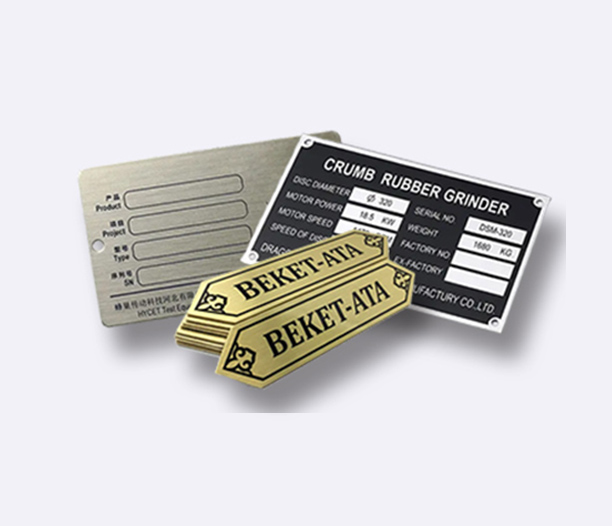
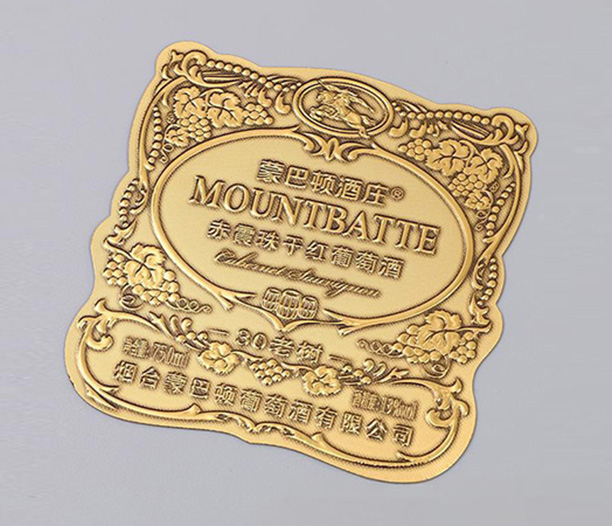
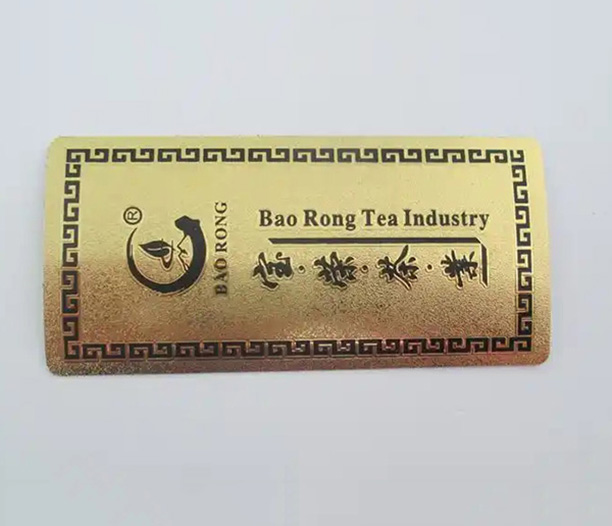
In industrial environments where durability, corrosion resistance, and
legibility are non-negotiable, the humble aluminum blank tags serve as the
foundational substrate for countless identification systems. Unlike pre-printed
labels, blanks offer maximum flexibility for on-demand marking, whether through
mechanical engraving, chemical etching, or high-resolution digital printing.
This article provides a technical analysis of aluminum alloys, temper
designations, thickness specifications, and application-specific considerations
for engineers and procurement professionals.
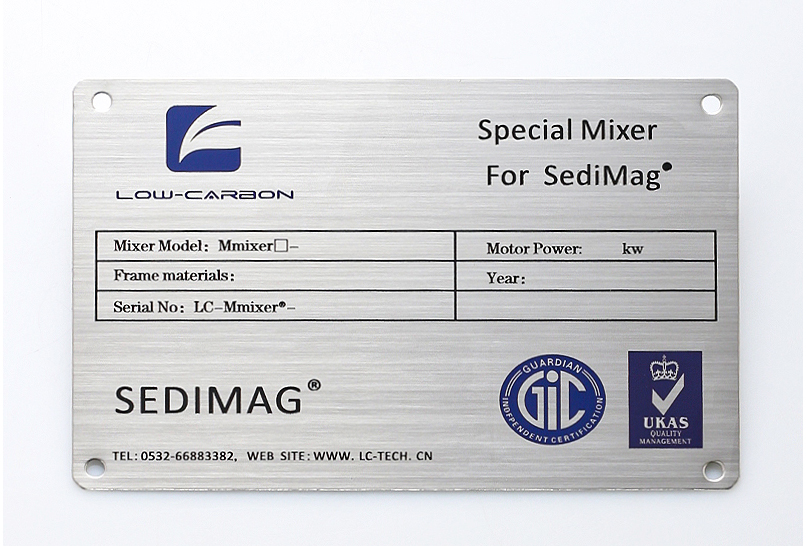
1. Material Science: Selecting the Right Aluminum Alloy for Blank Tags
The performance of an aluminum tag begins with its metallurgical composition.
Not all aluminum is created equal. The choice of alloy and temper directly
impacts the tag's ability to withstand bending, corrosion, and temperature
extremes. Based on over 15 years of experience, Hemawell
Nameplate typically recommends the following alloys for blank
tags depending on the intended use.
1.1 5052-H32: The Workhorse for General Industrial Tags
Alloy 5052 is one of the most common choices for industrial nameplates and
tags. Its primary alloying element is magnesium, which provides excellent
corrosion resistance, especially in marine or chemical atmospheres. The H32
temper indicates it is strain-hardened and stabilized to a specific strength
range, offering a good balance between formability and rigidity. For
applications like valve tags, pump tags, and equipment nameplates that require
stamping or slight bending, 5052-H32 is an ideal, cost-effective substrate for
aluminum blank tags.
1.2 6061-T6: High Strength for Demanding Applications
When a tag requires higher mechanical strength—for instance, if it will be
subjected to significant vibration, impact, or needs to support its own weight
in a cantilevered mounting—6061-T6 is the preferred alloy. Alloyed with
magnesium and silicon, and artificially aged to the T6 temper, it offers tensile
strength roughly double that of 5052-H32. However, it is less formable. It is
frequently specified for heavy equipment tags, structural identification, and
safety signage where durability is paramount.
1.3 1100-H14: Pure Aluminum for Chemical Resistance and Formability
For applications requiring maximum corrosion resistance in highly specific
chemical environments or for intricate formed shapes, 1100 series (commercially
pure aluminum) is used. It is soft and highly ductile, making it easy to emboss
or form into complex curves. Its purity ensures predictable performance in
sensitive electrical or chemical processing equipment, though it lacks the
strength of the 5xxx and 6xxx series alloys.
2. Precision Manufacturing: From Coil to Finished Blank
The transformation of raw aluminum coil into precision aluminum blank tags involves several
critical processes that determine dimensional accuracy, edge quality, and
surface finish. These factors are essential for downstream marking and
application.
2.1 Laser Cutting: Achieving Tight Tolerances and Complex Geometries
For prototypes and medium-volume production runs requiring intricate shapes
or tight internal cutouts (e.g., for mounting holes or sequential numbering
windows), fiber laser cutting is the preferred method. At Hemawell
Nameplate, we utilize high-precision fiber lasers that produce
burr-free edges with minimal heat-affected zones. This process eliminates
tooling costs and allows for rapid design iterations, ensuring that blank tags
conform exactly to customer CAD files, with tolerances held to ±0.1mm or
better.
2.2 Punching and Turret Press Operations for High Volume
For large-scale production runs of standard shapes, mechanical punching using
CNC turret presses remains the most efficient method. This process can produce
thousands of identical blanks per hour with consistent quality. Modern turret
presses can also perform forming operations, such as creating slight embossing
or dimples for specific mounting requirements. Tooling costs are amortized over
large quantities, making this method highly economical for standard industrial
tags.
2.3 Surface Finishes and Preparation
The surface of an aluminum blank tag is a critical factor for subsequent
marking and readability. Common finishes include:
Mill Finish: As-rolled surface, suitable for applications where cost
is the primary driver and surface cosmetics are secondary.
Brushed or Satin Finish: Achieved by mechanical polishing with
abrasive belts. This provides a uniform, directional grain that minimizes
fingerprints and provides an excellent surface for screen printing or laser
marking.
Anodized Finish: An electrochemical process that thickens the natural
oxide layer. Anodizing (Type II) provides exceptional hardness and corrosion
resistance. It also allows for the integration of color through dyeing, making
it ideal for color-coded asset tags and safety tags. The anodized layer is
integral to the metal and will not peel or chip like paint.
3. Industrial Applications and Customization Vectors
The primary advantage of aluminum blank tags is their versatility as a base
medium for a vast array of identification needs across multiple sectors.
3.1 Sector-Specific Use Cases for Blanks
Asset Tracking and Property Management: Blank tags serve as durable
substrates for in-house engraving or stamping of asset numbers. Their durability
ensures that property tags remain legible for the lifespan of the equipment,
whether in a warehouse, office, or on construction sites.
Safety and Warning Signs: For environments where chemical resistance
and non-flammability are required, aluminum blanks are the substrate of choice
for custom safety messages. They can be screen printed with OSHA-compliant
legends and mounted permanently.
Valve and Pipeline Identification: In chemical plants and refineries,
tags must resist harsh atmospheres. 5052 aluminum blanks, often with a chemical
etch or stamped text, provide permanent identification that withstands decades
of exposure.
Electrical and Panel Labeling: Small, precision-cut aluminum blanks
are used for terminal blocks, breaker panels, and control interfaces. They can
be laser-marked with high-contrast text and symbols for clear, professional
panel layouts.
3.2 The Five Pillars of Customization
A truly engineered solution addresses more than just the base material. We
provide comprehensive customization across five key dimensions:
Dimensional Precision: We produce blank tags ranging from tiny 10mm
identification dots to large 200mm equipment plates, and even larger format
signs up to 2000mm. All dimensions are verified for consistency.
Geometric Freedom: Shapes are not limited to rectangles. Using laser
cutting and forming presses, we can create any 2D profile and add simple bends
or offsets to fit curved machine surfaces.
Hole and Slot Configuration: Custom mounting solutions, including
countersunk holes, keyhole slots, or captive screw holes, are integrated
directly into the blank during manufacturing.
Edge Condition: Depending on the application, edges can be left
as-cut, deburred, or radiused for safety and aesthetics.
Material Thickness: We stock and process a range of standard gauges,
from thin 0.5mm foil for light-duty tags up to 3mm or thicker plates for
heavy-duty structural identification.
4. Quality Assurance and Compliance
Supplying blanks for safety-critical and regulated industries requires
rigorous quality control. We ensure that all aluminum blank tags meet specified
alloy and temper requirements, with certifications of conformance available upon
request. Our commitment to maintaining the integrity of parts during packaging
and transport ensures that blanks arrive ready for immediate processing or
deployment, whether they are destined for aerospace, chemical, or general
manufacturing facilities. By leveraging our extensive knowledge of industry
standards, we help clients select the correct blank specifications to meet their
compliance needs from the outset.
Frequently Asked Questions: Aluminum Blank Tags
Q1: What is the minimum order quantity (MOQ) for custom
aluminum blank tags?
A1: The MOQ depends on the level of customization
required. For stock shapes and sizes from our standard tooling, we can often
accommodate orders as low as 1 piece for samples. However, for fully customized
dimensions, shapes, or specific hole patterns requiring setup, the MOQ typically
ranges from 3,000 to 10,000 pieces to make the production process
cost-efficient. We recommend contacting us with your specifications for a
precise quote.
Q2: Which aluminum alloy is best for outdoor or marine
environment tags?
A2: For outdoor, and especially marine environments,
we strongly recommend alloy 5052-H32. Its magnesium content provides excellent
corrosion resistance to salt spray and humidity. For the highest level of
protection, pairing the 5052 alloy with a clear anodized finish (Type II)
creates a virtually impervious barrier, ensuring the tag remains legible for
decades.
Q3: Can you provide blanks with pre-drilled mounting holes
or custom cutouts?
A3: Absolutely. We specialize in producing blanks with
custom hole patterns, slots, or any other cutout required for your specific
mounting hardware. Whether you need simple round holes for rivets, keyhole slots
for screws, or complex cutouts for cable ties, our laser cutting and punching
capabilities can accommodate your design precisely.
Q4: How do you handle proofing or sampling before a full
production run?
A4: We support design proofing and sampling. If the
sample requires no custom printing (e.g., it's a simple blank shape to verify
dimensions), we can often provide it at no cost, with you covering the shipping
via your courier account (FEDEX, DHL, UPS, etc.). For samples requiring specific
tooling or complex custom artwork, we can discuss the nominal setup costs. This
ensures the final production blanks meet your exact
expectations.
Q5: What are the standard thicknesses available for aluminum
blank tags?
A5: We offer a wide range of thicknesses to suit
different applications. Common gauges include 0.5mm, 0.8mm, 1.0mm, 1.5mm, 2.0mm,
and 3.0mm. Thinner materials (0.5mm - 1.0mm) are suitable for lightweight tags,
serial number plates, or where flexibility is needed. Thicker materials (1.5mm
and above) provide rigidity for valve tags, heavy equipment plates, and
structural signage. We can also source other thicknesses upon
request.
Selecting the correct aluminum blank tags is a technical
decision that impacts the longevity and effectiveness of your entire
identification system. By understanding alloy properties, manufacturing
precision, and application requirements, you can ensure optimal performance. For
assistance in specifying the right blank for your project, contact our
engineering team for a consultation and a detailed quotation.