Industrial Magnetic Nameplates: Engineering, Customization & Applications | HemawellIn demanding industrial environments, equipment identification must withstand vibration, temperature fluctuations, and chemical exposure while remaining adaptable for reconfiguration. The name plate magnetic has evolved from a simple label to a critical component of lean manufacturing and asset tracking systems. This article provides a technical analysis of materials, manufacturing processes, and application-specific solutions for engineers and procurement specialists.
1. The Engineering Behind High-Performance Magnetic Nameplates
Selecting the correct magnetic nameplate requires understanding the interplay between the magnetic substrate, the face material, and the environmental conditions. It is not a one-size-fits-all product; rather, it is an engineered solution.
1.1 Material Science: Matching Substrate to Environment
The choice of the face material dictates the nameplate's durability, resistance, and aesthetics. Based on over 15 years of industry experience, Hemawell Nameplate typically engineers magnetic nameplates using the following substrates:
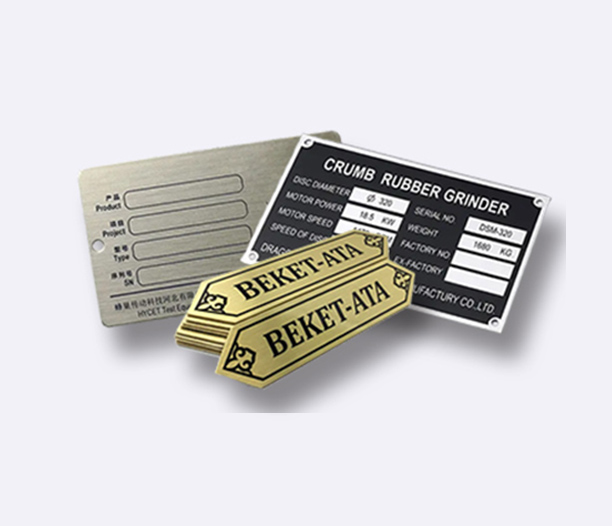
Anodized Aluminum: The industry standard for indoor and most outdoor applications. The anodized layer provides a hard, corrosion-resistant surface. It is lightweight and ideal for chemical etching or screen printing. Thicknesses often range from 0.5mm to 1.5mm for optimal rigidity and magnetic hold.
Stainless Steel (304/316): Specified for extreme environments, including marine, chemical processing, or subsea applications. Stainless steel offers superior corrosion resistance and mechanical strength. It requires more powerful magnetic backing due to its weight and density.
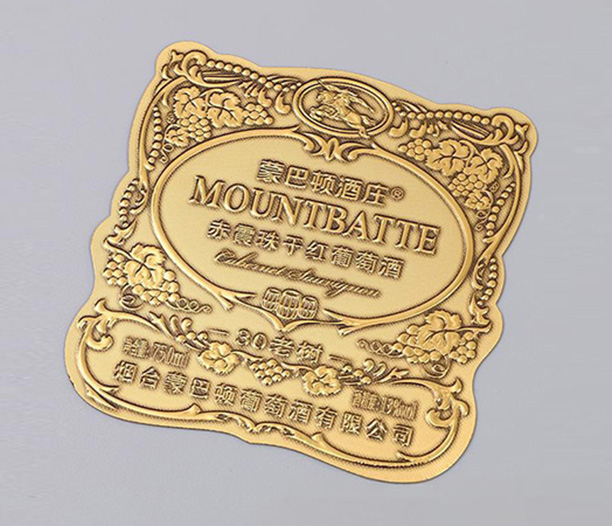
Brass: Chosen for applications requiring excellent electrical conductivity or a premium aesthetic, such as in control panels or high-end electrical equipment. Brass accepts etching and engraving exceptionally well.
PVC and Acrylic: Cost-effective solutions for indoor, light-duty applications like inventory racks or office asset tags. They offer vibrant color options via digital printing but lack the temperature and UV resistance of metals.
1.2 Magnetic Backing: Hold Force and Temperature Ratings
The performance of a magnetic nameplate is defined by its pull force. We utilize flexible magnetic sheeting and rare-earth magnets, depending on the application:
Flexible Magnetic Sheeting (Ferrite): Ideal for large, flat surfaces (e.g., locker tags, vehicle signage). It provides a consistent, moderate hold but its magnetic strength degrades at temperatures above 80°C (176°F).
Rare-Earth Magnets (Neodymium): Embedded into the nameplate back for high-hold applications subject to vibration, such as on heavy machinery or pump housings. Neodymium offers exceptional strength but requires careful temperature consideration, as performance can drop in sustained heat above 150°C.
2. Precision Manufacturing: From Etching to Laser Cutting
The production method for a name plate magnetic is as critical as the material. It determines the legibility, permanence, and precision of the data. At Hemawell Nameplate, we employ several advanced processes tailored to volume and complexity.
2.1 Chemical Etching for Intricate Detail
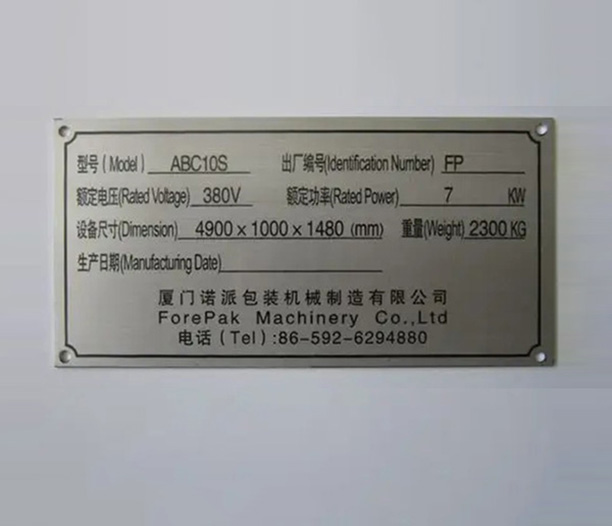
For components requiring permanent markings without mechanical stress, chemical etching is the preferred method. An acidic solution carves the design into the metal surface. We control the etch depth between 0.038mm (0.0015") and 0.2mm (0.008"), ensuring text and graphics remain legible for decades, even under abrasion. This is the standard for data plates and compliance tags in the aerospace and heavy equipment sectors.
2.2 Screen Printing for High-Volume, Vivid Color
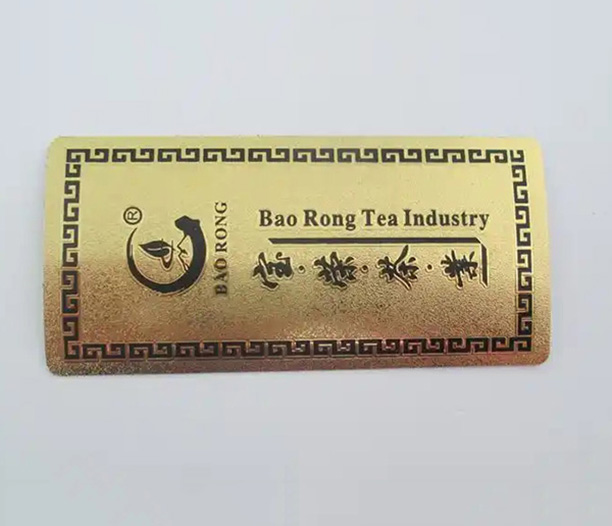
When corporate branding or color-coded identification is required, screen printing deposits UV-stable inks directly onto the metal. We utilize multi-color offset printing, matching inks precisely to Pantone specifications. The ink is then heat-cured for a durable, long-lasting bond. This process is efficient for large runs of equipment nameplates where visual impact is key.
2.3 Laser Cutting and Fiber Laser Technology
To achieve complex geometries and tight tolerances without tooling costs, fiber laser cutting is indispensable. It allows for burr-free edges and intricate cutouts for mounting or sequential numbering. This method reduces material waste and shortens lead times significantly compared to traditional punching for prototypes and medium runs.
3. Industrial Applications and Custom Solutions
The versatility of magnetic mounting solves a critical industry pain point: the need for non-permanent, yet secure, identification. Permanent adhesives or mechanical fasteners can damage surfaces or make reconfiguration impossible. Magnetic nameplates offer a clean, damage-free solution.
3.1 Sector-Specific Use Cases
Data Centers and IT: Server racks and asset tags require frequent updates. Magnetic nameplates allow for instant reconfiguration without tools, preventing adhesive residue on expensive equipment.
Manufacturing and Lean Operations (Kanban): Visual management systems rely on movable cards and tags. Magnetic nameplates for bins and shelves enable just-in-time inventory flow and quick workstation changeovers.
Energy and Utilities: Valve tags and pump tags often need to be removed for maintenance and replaced. A magnetic system provides a reliable hold in outdoor and industrial settings while facilitating this access.
Warehousing and Logistics: Pallet racking and shelving labels made from durable magnetic material can be repositioned instantly as storage layouts evolve, ensuring inventory accuracy.
3.2 Addressing the 5 Key Customization Vectors
No two asset management systems are identical. A truly engineered solution addresses customization across five dimensions:
Dimensional Precision: Whether it's a small 10mm component tag or a large 200mm equipment plate, we manufacture to exact specifications, utilizing turret punch presses and laser systems for repeatable accuracy.
Geometric Complexity: Shapes are not limited to rectangles. Using forming presses, we can create custom angles, folds, and curves to fit specific machine surfaces or control panels.
Color Accuracy: From safety red to corporate blue, color matching is critical for compliance and branding. Our screen printing and digital proofing processes ensure color fidelity.
Adhesive Integration: For hybrid solutions, we integrate 3M™ adhesive systems where a permanent or semi-permanent bond is required in conjunction with magnetic backing.
Serialization and Data Matrix: Variable data, including sequential numbering, QR codes, and Data Matrix codes, can be incorporated via stenciling, laser marking, or chemical etching for full traceability.
4. Compliance, Durability, and Quality Assurance
Industrial nameplates must meet stringent regulatory and performance standards. Whether it's a UL-listed component, a marine-grade tag for subsea use, or a safety tag for hazardous locations, our manufacturing processes are designed for compliance. We engineer labels and nameplates to withstand the thermal, chemical, and mechanical challenges they will face throughout their lifecycle, from the factory floor to the end-user environment. This includes rigorous testing of adhesive bonds and print durability to ensure readability under extreme conditions.
Frequently Asked Questions: Magnetic Nameplates
Q1: What is the minimum order quantity (MOQ) for custom magnetic name plates?
A1: It depends on the level of customization. For stock sizes and simple designs, we can accommodate orders as low as 1 piece. For fully customized sizes, shapes, or colors involving specific tooling or setup, the MOQ typically ranges from 3,000 to 10,000 pieces to ensure cost-effectiveness. We always recommend reviewing your specific design for a tailored quote.
Q2: Can you add my company logo or specific branding to a magnetic nameplate?
A2: Absolutely. Adding a trademark, logo, or specific typography is a standard part of our customization process. This can be achieved through various methods including chemical etching (for a debossed look), screen printing (for colored logos), or laser marking. While nearly all designs are possible, we recommend submitting your vector artwork (e.g., .ai or .dxf files) for a review to confirm the best production method for fine details.
Q3: What is your typical lead time and shipping process?
A3: For items in stock, processing and dispatch usually takes 5-10 days. For custom production, lead time is generally 15-20 days, depending on order complexity and quantity. For shipping, we offer a range of options: for urgent small orders, we can use air express services like FEDEX, DHL, or UPS. For larger bulk orders, sea freight is the most economical method.
Q4: Do you offer prototyping or pre-production samples, and is there a charge?
A4: Yes, we support design proofing. If the sample does not require custom printing (e.g., a specific logo or complex graphic), there is typically no charge for the sample itself—you would only need to cover the shipping cost or provide a courier account (FEDEX, DHL, etc.). If full-color custom artwork is required for the prototype, we can discuss the setup costs. We encourage requesting a quote to initiate this process.
Q5: How do I choose the right material for outdoor, high-temperature, or corrosive environments?
A5: Material selection is critical for longevity. For outdoor UV exposure and general corrosion, anodized aluminum or stainless steel are recommended. For high-temperature environments (e.g., near engines or ovens), stainless steel with a specialized high-temperature magnetic backing is necessary, as standard flexible magnets can lose strength. For chemical resistance, stainless steel (especially 316 grade) or certain engineered plastics like UV-stable acrylic are ideal. Our engineering team can provide a detailed material recommendation based on your specific operating parameters.
For mission-critical applications where identification must be permanent yet flexible, the engineered name plate magnetic remains the superior choice. By leveraging advanced materials and precision manufacturing, we provide solutions that enhance operational efficiency and ensure compliance. To discuss your specific project requirements, contact us for a consultation and a detailed quotation.