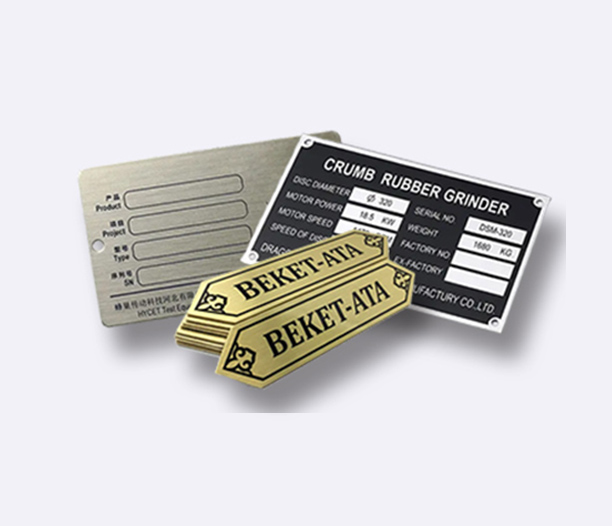
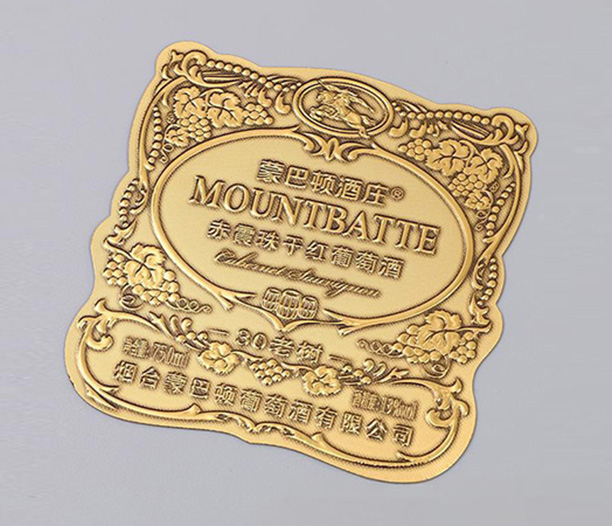
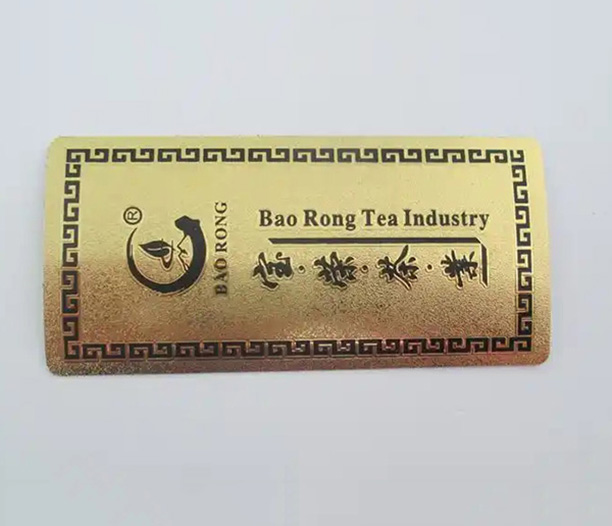
In industrial, aerospace, and defense sectors, the requirement for permanent,
tamper-evident identification has driven the adoption of laser etched labels as a superior alternative to
adhesive-printed or mechanically stamped plates. Unlike surface-level marking,
laser etching creates a permanent alteration of the substrate—either through
annealing, ablation, or foaming—resulting in markings that withstand extreme
temperatures, chemical exposure, and mechanical abrasion. At Hemawell
Nameplate, we engineer laser etched labels using a
systematic approach that matches laser wavelength, power density, and processing
parameters to the specific material, ensuring compliance with standards such as
MIL-STD-130, SAE AS9131, and ISO/IEC 15415 for data matrix readability.
1. Laser Technology Selection: Wavelength, Pulse Duration, and Material
Interaction
The term “laser etching” encompasses several distinct physical processes. The
choice of laser source—fiber, CO₂, or UV—directly determines the achievable
contrast, depth, and durability of laser etched labels.
Understanding these differences is critical for specifying the correct process
for a given application.
1.1 Fiber Lasers (1064 nm) – The Standard for Metals and Engineered
Plastics
Fiber lasers operate in the near-infrared spectrum and are the most widely
used for marking metals and many engineering plastics. The interaction mechanism
can be controlled to achieve either:
Annealing: For stainless steel and titanium, a low-power,
high-frequency setting heats the surface to create a dark oxide layer (typically
Fe₃O₄) without material removal. This produces a high-contrast,
corrosion-resistant mark ideal for medical instruments and aerospace
components.
Ablation: For coated metals (anodized aluminum, painted
surfaces) or for creating recessed marks, higher power densities vaporize the
surface layer. On anodized aluminum, this reveals the bare metal beneath,
producing a permanent mark with excellent contrast.
Foaming: For certain polymers, the laser creates
micro-bubbles that scatter light, producing a light-on-dark mark without surface
disruption—useful for electronic components where surface integrity is
critical.
1.2 CO₂ Lasers (10.6 μm) – Organic Materials and Wide-Area Marking
CO₂ lasers are absorbed efficiently by organic materials such as wood,
acrylic, rubber, and many unfilled plastics. For laser etched
labels on polyester or polycarbonate, CO₂ lasers produce a crisp,
engraved appearance. However, they are not effective on metals unless a marking
compound is applied. When specified, we use CO₂ systems for high-volume runs on
flexible label stock where depth control is less critical than speed.
1.3 UV Lasers (355 nm) – Cold Marking for Heat-Sensitive Substrates
UV lasers operate through a photo-ablation process that breaks molecular
bonds without generating significant heat. This “cold marking” capability makes
them ideal for thin films, medical-grade polymers, and materials where thermal
stress could cause cracking or delamination. UV laser etched labels on polyimide
(Kapton) or liquid crystal polymers exhibit exceptional edge definition and are
used extensively in semiconductor and medical device industries.
2. Material Compatibility and Processing Parameters
The performance of laser etched labels is fundamentally
determined by the interaction between the laser parameters and the substrate
material. We maintain a comprehensive process database that correlates material
type, thickness, and required durability with specific laser settings.
Stainless Steel (304, 316): Fiber laser annealing at 10–20
W with scan speeds of 200–500 mm/s produces a dark, corrosion-resistant mark.
For deep engraving (0.001–0.003 inches), we use higher power (30–50 W) with
multiple passes.
Anodized Aluminum: Fiber laser ablation removes the anodic
layer to expose bare aluminum. The contrast is determined by the anodizing
thickness (typically 0.0005–0.001 inches). We maintain tight process control to
ensure complete removal without damaging the base metal.
Polycarbonate and Polyester: CO₂ lasers create a frosted,
recessed mark. For applications requiring abrasion resistance, we use
high-speed, single-pass settings that minimize surface roughness while
maintaining legibility.
Ceramics and Glass: UV lasers produce micro-fractures that
create a permanent, smooth mark. This is specified for high-temperature sensors
and laboratory equipment where chemical resistance is paramount.
3. Addressing Industry Pain Points with Laser Etched Labels
Asset owners and manufacturers consistently face three challenges with
traditional identification methods: marking durability under extreme conditions,
data integrity for automated tracking, and compliance with increasingly
stringent traceability requirements. Engineered laser etched
labels provide solutions to each.
3.1 Extreme Environment Durability
In oil and gas exploration, downhole tools are exposed to temperatures
exceeding 200°C, pressures above 20,000 psi, and aggressive drilling fluids.
Adhesive labels fail within hours. Laser etched labels on 316L stainless steel
or Inconel 718, using deep ablation, provide permanent identification that
survives the entire tool lifecycle. We validate these applications with thermal
cycling from -40°C to +250°C and pressure testing to 30,000 psi.
3.2 UID and Data Matrix Compliance
Department of Defense (DoD) contracts require Unique Identification (UID)
markings that meet MIL-STD-130’s permanence and readability criteria.
Laser etched labels are the preferred method for applying Data
Matrix codes directly to metal assets. We use fiber lasers with closed-loop scan
field calibration to achieve cell sizes as small as 0.005 inches, and we verify
every code with ISO/IEC 15415 verifiers to ensure a minimum grade of A or B
after environmental exposure.
3.3 Traceability in Medical Device Manufacturing
The FDA’s Unique Device Identification (UDI) rule mandates that device labels
remain legible for the intended life of the product. For reusable surgical
instruments, laser etched labels on stainless steel or titanium
provide permanent identification that withstands hundreds of autoclave cycles.
We qualify our processes for steam sterilization (135°C, 30 psi), ethylene oxide
(EtO) exposure, and chemical disinfectants, ensuring that UDI data remains
scannable throughout the device’s service life.
4. Manufacturing Process and Quality Control
Producing consistent, high-quality laser etched labels requires a controlled workflow that integrates material preparation, laser
parameter management, and post-process validation. At Hemawell
Nameplate, we follow a structured protocol.
Step 1 – Material Certification: All substrates are
verified against material specifications. For metals, we confirm alloy
composition via positive material identification (PMI) using XRF analyzers. For
plastics, we verify UL ratings and glass transition temperatures.
Step 2 – Surface Preparation: Materials are cleaned using
ultrasonic or plasma treatment to remove oils, oxides, or contaminants that
could interfere with laser absorption. Surface energy is measured with dyne
solutions to ensure consistency.
Step 3 – Laser Parameter Optimization: For each job, we run
a process qualification matrix that varies power, frequency, scan speed, and
hatch spacing. The optimal parameters are selected based on contrast measurement
(using a spectrophotometer), engraving depth (measured with a confocal
microscope), and edge roughness (profilometer).
Step 4 – Automated Marking: We use galvo-scanner systems
with 0.001-inch positioning accuracy. For high-volume runs, we employ rotary
indexing tables or conveyor systems to maintain cycle time consistency. Each
marking is captured by a vision system that verifies presence, position, and
(for 2D codes) readability.
Step 5 – Post-Processing: Depending on the application,
etched labels may receive a clear protective coating (for color retention),
passivation (for stainless steel), or no additional treatment. We document all
post-process steps in the manufacturing record.
Step 6 – Final Inspection and Traceability: Every label is
inspected for marking quality, dimensional accuracy, and data readability. A
Certificate of Conformance (COC) is generated, and, for defense contracts, we
provide a First Article Inspection Report (FAIR) per AS9102.
5. Validation and Testing Protocols
To ensure that laser etched labels perform as specified, we
subject samples to a suite of environmental and mechanical tests, often aligned
with customer-specific or industry standards.
Adhesion and Abrasion: For coated or filled markings, we
perform cross-hatch adhesion (ASTM D3359) and Taber abrasion (ASTM D4060). For
metal substrates, we use the tape test specified in MIL-STD-130 to verify that
the marking cannot be removed by adhesive tape.
Chemical Resistance: Labels are exposed to a panel of
fluids including hydraulic oil (MIL-PRF-83282), jet fuel (JP-8), brake fluid,
and industrial solvents. After 24-hour immersion, we inspect for discoloration,
swelling, or loss of contrast.
Thermal Cycling: Samples undergo 100 cycles between the
minimum and maximum operating temperatures (e.g., -55°C to +125°C for aerospace
applications). Post-cycling, we measure contrast and, for 2D codes, re-verify
scan grade.
Salt Fog (ASTM B117): For maritime and outdoor
applications, labels are subjected to 96 to 500 hours of continuous salt spray.
No corrosion products are permitted within the marked area, and the marking must
remain legible.
UV Exposure: For outdoor applications, we perform QUV
testing (ASTM G154) to ensure that any color fill or polymer substrate does not
yellow or degrade under solar radiation.
6. Comparing Laser Etching to Alternative Marking Methods
When selecting an identification technology, engineers often compare laser
etching against mechanical engraving, chemical etching, and inkjet printing. The
choice depends on the required depth, contrast, material, and production
volume.
Laser Etching vs. Mechanical Engraving: Mechanical
engraving produces deeper marks (0.010–0.030 inches) but requires tool changes,
has slower cycle times, and is limited by tool geometry. Laser etching is
faster, offers unlimited design flexibility, and produces no tool wear. For tags
requiring extremely deep marks (>0.003 inches) on soft metals, mechanical
engraving remains superior; for most industrial applications, laser etching
provides the best combination of speed and permanence.
Laser Etching vs. Chemical Etching: Chemical etching is
cost-effective for high-volume, thin-gauge parts but involves hazardous
chemicals and has longer lead times for tooling. Laser etching is tool-less,
ideal for variable data, and suitable for both prototypes and production
runs.
Laser Etching vs. Inkjet Printing: Inkjet printing offers
color and high speed but lacks permanence. For traceability codes that must
survive cleaning, abrasion, and temperature extremes, laser etching is the only
viable choice.
7. Expert Perspective: Controlling Contrast and Depth for Long-Term
Legibility
One of the most critical factors in the longevity of laser etched
labels is the initial contrast and depth relative to the anticipated
wear conditions. For metals, we use a combination of surface profilometry and
optical densitometry to establish baseline metrics. A marking with a contrast
ratio below 0.7 (using the CIELAB color space) may appear acceptable when new
but can become illegible after minor surface oxidation or abrasion. We set
internal thresholds that exceed customer requirements, typically targeting a
contrast ratio of 0.85 or higher for critical data matrix codes.
Additionally, for applications where the label will be subject to direct
contact or cleaning, we specify a minimum depth of 0.0005 inches for metals and
0.001 inches for plastics. This ensures that even if the surface is lightly
abraded, the optical contrast remains sufficient for scanning. For high-wear
applications (e.g., handheld tools), we combine deep laser ablation with a
protective clear coat to preserve the marking’s integrity.
Conclusion: The Role of Laser Etched Labels in Modern Traceability
As industries move toward fully digital asset tracking and stricter
regulatory requirements, the demand for permanent, machine-readable
identification continues to grow. Laser etched labels provide a
proven solution that meets the durability requirements of aerospace, defense,
medical, and industrial applications. By carefully selecting the laser source,
optimizing process parameters, and validating against environmental extremes,
manufacturers can achieve identification that remains legible for the life of
the asset. At Hemawell Nameplate, we combine decades of materials
engineering experience with advanced laser processing capabilities to deliver
labels that meet the most stringent traceability standards.
Frequently Asked Questions (FAQ) About Laser Etched Labels
Q1: What is the difference between laser etching and laser
engraving?
A1: In industry terminology, “etching” generally refers
to surface marking with minimal material removal (typically less than 0.001
inches), while “engraving” implies deeper material removal (0.003 inches or
more). Both are achieved with lasers by varying power, frequency, and pass
count. For most identification applications, the term is used interchangeably,
but the critical factor is the depth and permanence required. We define the
process based on the intended application and specify depth in microns or
inches.
Q2: Can laser etched labels be applied to curved or irregular
surfaces?
A2: Yes. Our galvo-scanner systems can be integrated with
3-axis or rotary axis stages to maintain focus on curved surfaces (such as
cylindrical parts, tool handles, or spherical components). The key is
maintaining consistent focal distance; we use dynamic focusing or part-specific
fixtures to ensure uniform marking quality across the entire surface.
Q3: How durable are laser etched labels on anodized aluminum compared
to other materials?
A3: Laser etching on anodized aluminum removes
the anodic layer to reveal the bare metal. This marking is extremely durable
because the base metal is unaffected by UV, chemicals, or temperature. The
anodized coating itself is typically 0.0005–0.001 inches thick, so the marking
is recessed and protected from abrasion. With proper parameters, these markings
will outlast the component they are applied to.
Q4: What information is required to provide a quote for laser etched
labels?
A4: To provide an accurate quote, we need: (1) substrate
material and thickness; (2) artwork (vector format preferred, .ai or .dxf); (3)
required marking depth or contrast; (4) quantity; (5) any special testing
requirements (e.g., salt spray, thermal cycling). For UID or UDI codes, we also
need the data structure (enterprise identifier, part number, serial number) to
encode the data matrix correctly.
Q5: Can laser etched labels incorporate variable data like serial
numbers or QR codes?
A5: Yes. Laser etching is ideal for variable
data because it is a tool-less process. We integrate with customer databases to
generate unique serial numbers, data matrix codes, or QR codes for each label.
The laser system reads the variable data from a file or directly from the
customer’s ERP system, ensuring that each label receives the correct, unique
marking without setup time between parts.
Q6: What testing standards do you use to validate the durability of
laser etched labels?
A6: We test to industry-specific standards
including MIL-STD-130 (permanence and readability), SAE AS9131 (aerospace
marking quality), ISO/IEC 15415 (2D code verification), and ASTM B117 (salt
spray). For medical applications, we validate against ISO 13485 requirements and
perform sterilization cycle testing (autoclave, EtO, gamma). All testing is
documented and available in our validation packages.