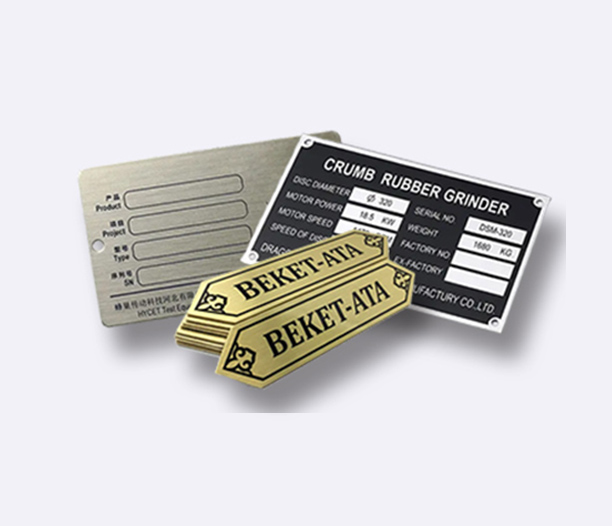
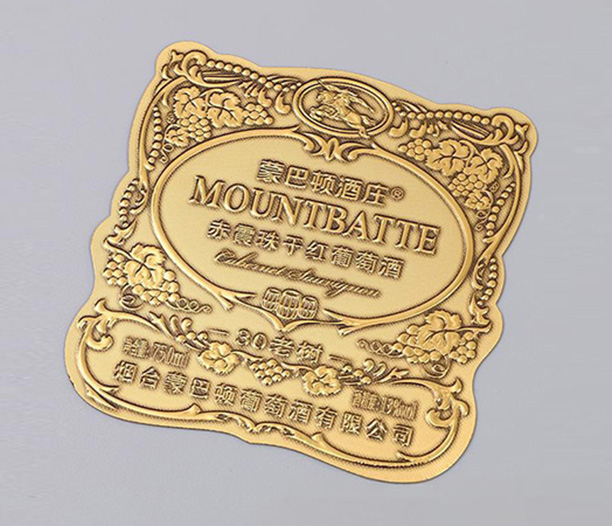
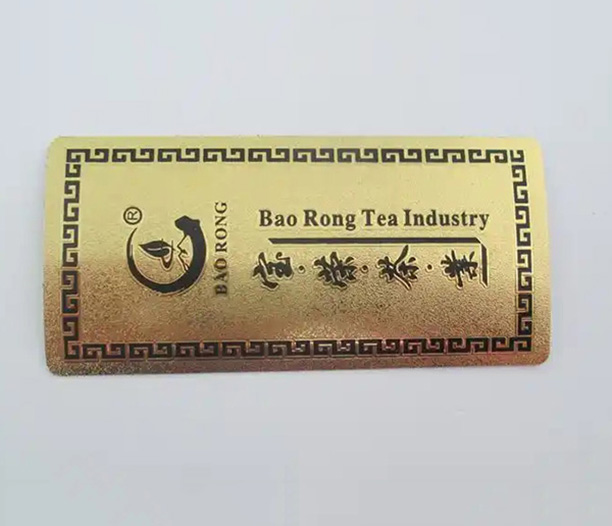
In corporate environments, the desk name plate serves as a silent ambassador
of brand standards, individual professionalism, and operational efficiency.
While pre-manufactured options dominate the market, organizations increasingly
recognize that a carefully executed diy desk name
plate project delivers superior material quality, precise branding
alignment, and lifecycle cost advantages. This guide moves beyond craft-store
approaches to present an engineering perspective on substrate selection, marking
technologies, and compliance requirements. Drawing on industrial fabrication
standards, we examine how professionals achieve institutional-grade results
while maintaining full control over design, lead times, and per-unit
economics.
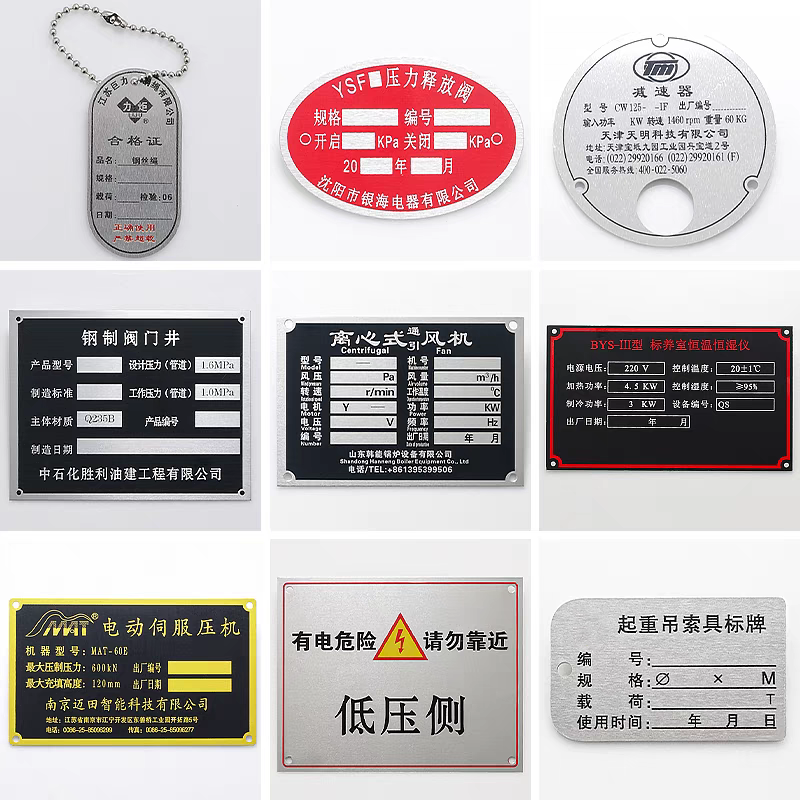
1. Material Science: Selecting Substrates for Durability and Aesthetic
Precision
The foundation of any lasting desk identifier is the substrate.
Commercial-grade diy desk name plate fabrication begins with
understanding material performance under typical office, medical, or hospitality
conditions. Three categories dominate professional applications: aluminum
composites, acrylics, and sustainable wood composites. Each offers distinct
mechanical and visual properties.
Aluminum, particularly 0.032″ to 0.063″ 5052 or 6061 alloy, provides the
highest durability. When brushed or anodized per MIL-A-8625, the surface resists
fingerprints, cleaning chemicals, and UV yellowing. For environments requiring
frequent sanitization—such as healthcare or food processing—anodized aluminum
with chemical etching becomes the standard. Acrylic (PMMA) offers edge-lit
potential and vibrant color integration but requires careful thickness selection
(minimum 3mm for rigidity) and proper laser settings to avoid flame polishing
artifacts. Sustainable options like bamboo plywood or FSC-certified maple
veneers appeal to ESG-focused organizations but require sealed finishes to
prevent moisture absorption.
1.1 Comparative Performance Metrics
Anodized Aluminum: Hardness 8-9 Mohs, chemical resistance
to IPA, acetone, and quaternary ammonium compounds. Ideal for high-touch or
sterile environments.
Cast Acrylic: Light transmission up to 92%, suitable for
backlit applications. Susceptible to stress cracking when exposed to aggressive
solvents (e.g., ethanol >70%).
Solid Surface (e.g., Corian-style): Seamless appearance,
repairable scratches, but heavier and requires CNC routing for precise
cutouts.
For organizations executing internal signage programs, material selection
directly impacts replacement frequency. Field data from corporate facility
managers indicates that aluminum-based DIY name plates maintain aesthetic
integrity for 8–12 years, while basic acrylic plates in high-traffic areas often
show edge degradation or hazing within 36 months.
2. Marking Technologies: From Rotary Engraving to UV-LED Printing
The method of applying text and graphics determines legibility, permanence,
and the perceived quality of the finished piece. Professionals undertaking a
diy desk name
plate project select marking technologies based on substrate,
desired depth, and colorfastness requirements.
Rotary engraving remains the gold standard for dimensional text. Using
diamond drag or carbide cutters, this method creates V-groove or prismatic cuts
that produce high contrast when infilled with paint or left natural. Depth
control within ±0.005″ ensures consistent legibility across a run. For
photorealistic logos or small type, CO₂ laser engraving offers micron-level
precision. On anodized aluminum, the laser removes the anodic layer to reveal
the base metal, creating a permanent mark without additional infill. However,
laser parameters must be calibrated to prevent heat-affected zones that can
discolor acrylic or warp thin substrates.
For facilities requiring rapid updates—such as hoteling desks or temporary
project spaces—direct-to-substrate UV-LED printing provides full-color
capability with fade-resistant inks (tested to 5+ years indoor). This method
eliminates tooling costs but requires flat substrates and proper adhesion
promoters for plastics.
2.1 Process Selection Matrix
High Contrast & Texture: Rotary engraving with paint
infill. Ideal for executive offices and ADA tactile applications.
Fine Detail & Speed: CO₂ laser marking. Best for
complex logos, small fonts, and batch production of identical plates.
Color Graphics & Short Runs: UV-LED printing. Supports
variable data without setup changeover.
3. Design Engineering: Balancing Aesthetics, Brand Standards, and
Ergonomics
A professionally executed DIY name plate is not merely a label—it is a brand
touchpoint. Design parameters must align with corporate identity manuals while
considering human factors: viewing angles, lighting conditions, and
accessibility requirements. The Americans with Disabilities Act (ADA) and
similar international standards dictate specific criteria for tactile characters
in public-facing signage, but even internal signage benefits from adherence to
legibility principles.
Optimal character height for desk-level viewing ranges from 18 pt to 36 pt
depending on distance. Sans-serif typefaces (Helvetica, Futura, Lato) maximize
legibility under variable office lighting. Stroke weight should maintain a
minimum contrast ratio of 70% against the substrate. For engraved plates,
character width-to-depth ratios of 1:1.2 prevent shadowing under overhead
fluorescent lighting.
Edge finishing significantly affects perceived quality. Professionally
fabricated plates employ beveled or radius edges to eliminate sharp corners. For
acrylic, flame polishing or micro-abrasive blasting produces a crystal-clear
edge that complements minimalist interiors. Aluminum plates benefit from
deburring and anodizing after cutting to seal edges against oxidation.
4. Application Scenarios: Corporate, Medical, and Executive
Environments
The technical requirements for a diy desk name plate vary
dramatically across industries. In corporate headquarters, plates must support
rapid reconfiguration—modular offices with interchangeable magnetic or
slot-mount systems allow for employee moves without replacing hardware. Here,
aluminum plates with magnetic backings (embedded rare-earth magnets) enable
damage-free repositioning while maintaining alignment.
Medical environments impose stricter criteria. Name plates in patient rooms,
nursing stations, and surgical suites must withstand daily disinfection with
bleach-based wipes (EPA List N) without delamination or fading. Anodized
aluminum with laser-engraved text eliminates adhesion failures common with
adhesive-backed vinyl. Additionally, mounting must comply with CDC guidelines
for non-porous surfaces—mechanical fasteners or silicone-based adhesives prevent
bacterial harborage.
Executive and hospitality settings prioritize material richness and
customization. Solid brass or bronze plates with chemical etching offer a
traditional aesthetic, while layered acrylic with illuminated bases creates a
contemporary statement. In these scenarios, the DIY approach allows for unique
substrates—reclaimed wood, leather inlays, or polished stone—that mass-market
suppliers rarely offer.
5. Cost Engineering: Total Ownership Analysis of In-House Fabrication
When organizations evaluate internal name plate production, the decision
often centers on per-unit cost. However, a comprehensive total cost of ownership
(TCO) model reveals broader advantages. Outsourced name plates typically incur
setup fees ($50–$150 per design), minimum order quantities (often 25–50 units),
and lead times of 10–15 business days. A well-equipped in-house program using
diy desk name
plate methods shifts the cost structure to variable expenses:
substrate material, marking consumables, and labor.
For an organization processing 200 name plate changes annually, the TCO
comparison shows significant savings. Outsourced production at $18 per plate
(including setup amortization) totals $3,600 annually. In-house production with
an entry-level laser engraver ($4,500 capital) and materials at $4 per plate
totals $800 annual material cost plus 20 hours of labor ($1,200 at $60/hour
burdened). Even including capital depreciation, year-one TCO favors in-house by
approximately $1,200, with increasing savings as volume grows.
Beyond direct costs, internal fabrication reduces administrative overhead—no
vendor coordination, no shipping delays, and immediate response to urgent
requests (e.g., new hires or last-minute office reconfigurations). For facility
teams, this agility translates to improved employee satisfaction metrics.
6. Compliance and Standards: ADA, Fire Safety, and Corporate Governance
Professional name plate fabrication must navigate regulatory frameworks. The
ADA Standards for Accessible Design (2010) require that certain permanent room
identification signs feature tactile characters, raised pictograms, and high
contrast. While not all desk plates fall under ADA jurisdiction, many
organizations voluntarily adopt tactile elements for inclusivity. DIY
fabrication can achieve compliance using raster engraving techniques that
produce raised characters or by applying tactile vinyl overlays after substrate
marking.
Fire safety standards (ASTM E84) may apply to name plates in exit paths or
public corridors. Materials must demonstrate a Class A flame spread rating.
Aluminum and solid-surface composites inherently meet these requirements, while
untreated wood or acrylic may require certification. For commercial
installations, specifying UL 94 V-0 rated materials ensures compliance with
local fire codes.
Internal corporate governance often mandates branding consistency. By
maintaining in-house control, organizations enforce exact Pantone color
matching, logo positioning, and typography standards across all office
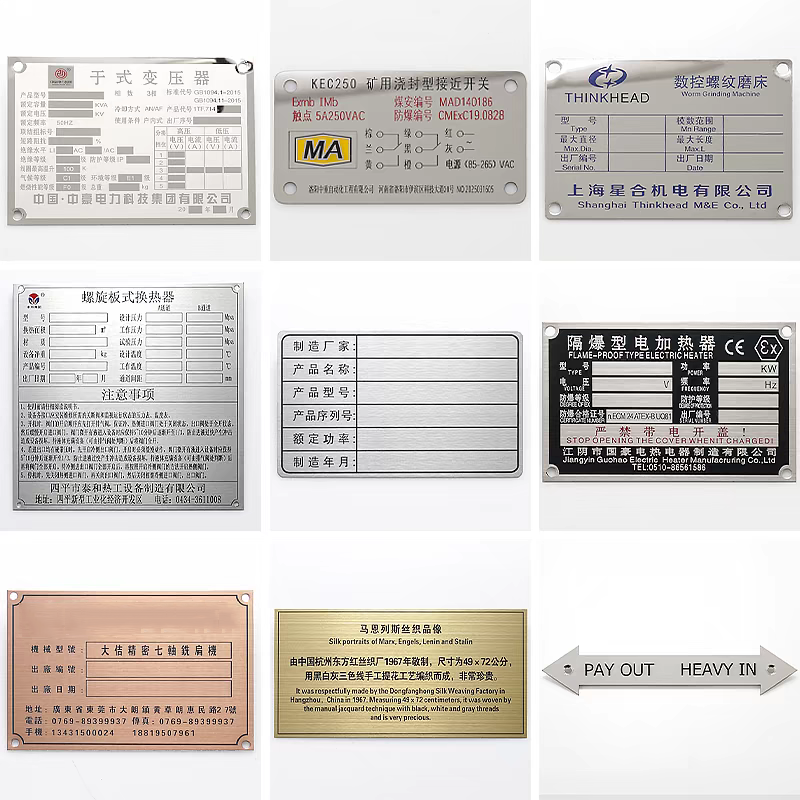
locations. At Hemawell Nameplate, we provide
material kits and technical datasheets that enable corporate facility teams to
achieve production-grade results while adhering to strict brand guidelines.
7. Implementation Workflow: From Design File to Installed Plate
A systematic workflow ensures repeatable quality in DIY name plate
production. The process begins with vector-based design files (Adobe Illustrator
or CorelDRAW) where text is converted to outlines and color specifications are
defined in Pantone or CMYK values. For laser engraving, raster settings are
tested on scrap material to calibrate power, speed, and frequency for each
substrate type.
Cutting operations—whether laser, rotary, or CNC—require precise fixturing to
maintain registration. For aluminum, a combination of vacuum tables and low-tack
tape prevents movement during engraving. Post-processing steps include
deburring, cleaning with isopropyl alcohol, and applying protective backing if
using adhesive mounting. Finally, a quality control checklist verifies character
spacing, surface finish, and mounting hardware integrity before deployment.
For organizations lacking in-house equipment, partnering with a specialist
that provides pre-cut substrates and technical consultation bridges the gap
between outsourcing and full DIY. This hybrid model allows facilities to
leverage professional material sourcing while retaining final assembly and
personalization control.
Frequently Asked Questions (FAQs)
Q1: What is the minimum thickness required for a durable aluminum DIY
desk name plate?
A1: For standard desk placement, 0.032″ (20 gauge)
aluminum provides sufficient rigidity. For plates that will be handled
frequently or require magnetic mounting, 0.063″ (16 gauge) prevents bending and
allows for countersunk holes or embedded magnets. Thinner materials risk warping
during engraving or becoming susceptible to accidental deformation.
Q2: Can I achieve ADA-compliant tactile characters using DIY
methods?
A2: Yes. ADA-compliant tactile characters (raised 1/32″
minimum) can be achieved through rotary engraving with raised prismatic letters,
or by laser engraving a negative background to create a raised effect.
Alternatively, adhesive-backed tactile letters from specialized suppliers can be
applied to a base plate. Ensure character height meets 5/8″ minimum and that
braille (if required) is placed below the text.
Q3: What mounting solutions are recommended for modular office
environments?
A3: For cubicles and modular walls, we recommend
aluminum plates with slotted mounting for universal hangers, or magnetic plates
with 6mm countersunk neodymium magnets (grade N52). For glass partitions, clear
silicone adhesive pads allow repositioning without residue. Avoid permanent
adhesives in frequently reconfigured spaces.
Q4: How do I prevent color fading on printed DIY desk name
plates?
A4: For UV-LED printed plates, ensure the printer uses
UV-cured inks with a post-cure cycle. For laser-engraved and infilled plates,
use exterior-grade enamel or epoxy paints that cure to a chemical-resistant
finish. Avoid standard acrylic paints, which fade within 12–18 months under
fluorescent lighting. At Hemawell Nameplate, we provide
UV-stable infill compounds rated for 5+ years indoor use.
Q5: What file format and resolution are required for professional
results?
A5: Vector formats (AI, EPS, or SVG) are essential for
engraving and cutting. Text must be converted to outlines to avoid font
substitution. For printed plates, raster images should be at least 300 DPI at
final size. All artwork should include bleed (3mm) if the plate will have
edge-to-edge graphics. Our technical team provides pre-press checklists to
ensure files are production-ready.
Technical Note: Performance specifications and compliance
references are based on industry standards (ADA 2010, ASTM E84, MIL-A-8625) and
field data from corporate facility operations. Application results may vary;
consult with materials engineers for specific environmental requirements.