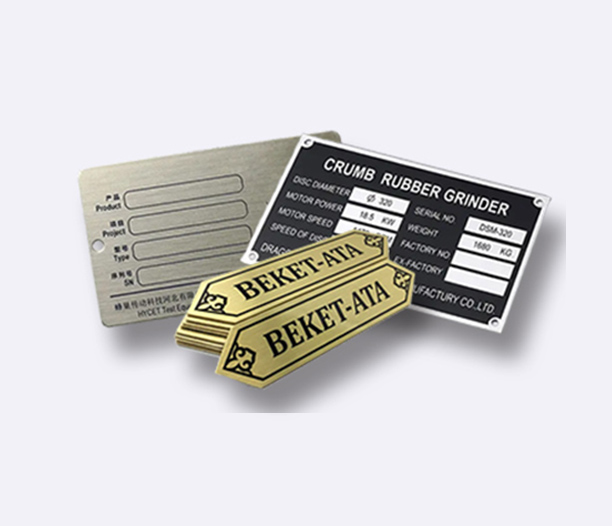
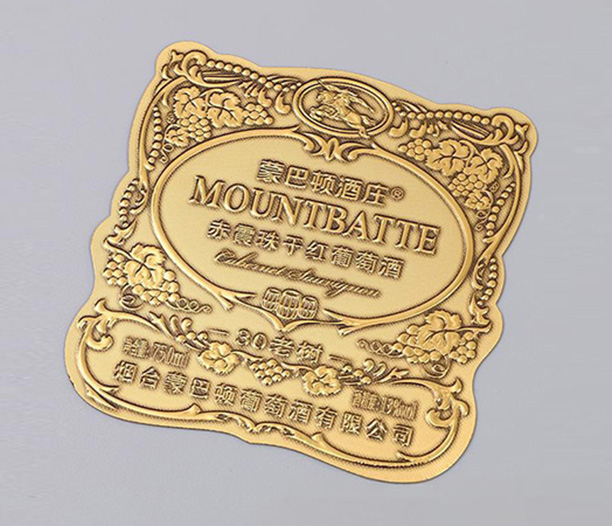
In high-stakes industries—from oil & gas refineries to aerospace logistics—asset tracking failures translate directly to safety risks and operational downtime. While barcode labels and polymer tags serve controlled environments, they degrade rapidly under UV exposure, chemical washdowns, or extreme thermal cycling. This is where aluminum asset tags become the non-negotiable standard. Engineered for permanent identification, these tags bridge the gap between forensic traceability and lifecycle cost efficiency. Based on two decades of field data and metallurgical analysis, this article examines the technical thresholds, application engineering, and ROI calculations that define true industrial-grade asset marking.
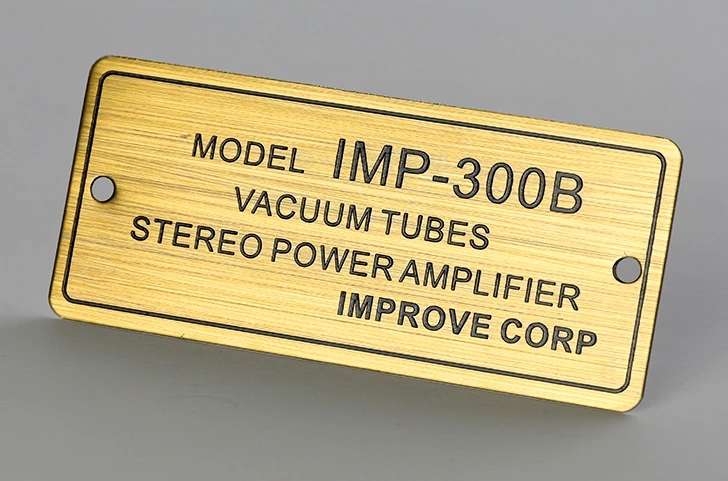
1. Material Science: The Metallurgical Advantage of Aluminum for Asset Tags
The selection of substrate material determines the operational lifespan of an asset tag. While stainless steel offers extreme hardness, its weight and cost often make it impractical for high-volume tracking. Aluminum asset tags provide the optimal balance: high strength-to-weight ratio, intrinsic corrosion resistance, and compatibility with multiple marking technologies. Specifically, 6061-T6 and 1100-H14 aluminum alloys are the industry benchmarks, offering yield strengths of 275 MPa and excellent formability for embossing or photo-anodizing processes.
From a corrosion engineering perspective, aluminum’s passive oxide layer self-repairs when scratched, preventing crevice corrosion—a critical advantage in marine or chemical environments. When anodized per MIL-A-8625 Type II or III standards, the surface hardness approaches that of sapphire (9 on Mohs scale), rendering the tags resistant to abrasion from forklift traffic or pressure washers. Real-world testing shows that properly fabricated aluminum tags maintain 100% legibility after 10+ years of outdoor exposure in ISO 9223 C5-M (very high corrosivity) environments.
1.1 Comparative Analysis: Aluminum vs. Polyester vs. Stainless Steel
Polyester Laminates: Thermal transfer printed polyester fails after 2–3 years in direct sunlight due to UV embrittlement (ASTM G154 test cycles). Not suitable for solvent-rich environments.
Stainless Steel (304/316): Excellent durability but 3× heavier than aluminum. Requires laser etching or electrochemical marking, increasing per-unit cost by 40–60%.
Aluminum Asset Tags: Offer a service life exceeding 15 years in most industrial settings. Achieve cost parity with high-end polyester tags when factoring in replacement labor costs.
2. Critical Marking Technologies: From Embossing to Direct Thermal Transfer
The method of data application dictates the tag’s resilience against abrasion and chemical exposure. Industry experts distinguish between surface-level printing and substrate-intrusive marking. For maximum permanence, embossed or debossed aluminum tags—where characters are physically raised or recessed—remain the gold standard. These tags undergo a secondary anodizing step post-embossing to fill recesses with contrasting color, creating a “filled” character that is both tactile and machine-readable.
For applications requiring barcodes or QR codes, direct thermal transfer printing using resin ribbons onto anodized aluminum surfaces provides high-contrast, scannable codes with a rated durability of 8–12 years in industrial settings. Recent advancements in digital inkjet technology (piezoelectric DOD) allow for high-resolution serialization with UV-curable inks that achieve 3H pencil hardness, suitable for GMP environments where solvent resistance is paramount.
2.1 Matching Marking Technology to Environmental Hazards
High Abrasion (Mining, Construction): Embossed aluminum asset tags with black epoxy infill. The character relief protects marking integrity even after surface scoring.
Chemical Exposure (Pharma, Labs): Photo-anodized tags where the marking is sealed beneath the anodic layer. Resistant to acetone, IPA, and dilute acids.
Extreme Heat (Foundries, Engines): 3003 aluminum alloy tags with laser-etched markings, capable of withstanding intermittent temperatures up to 600°F (315°C) without delamination.
3. Strategic Applications: Where Aluminum Asset Tags Deliver Measurable ROI
Asset managers often underestimate the indirect costs of tag failure. A single unreadable asset ID in a regulated industry can trigger hours of audit non-compliance or misdirected maintenance. Deploying aluminum asset tags addresses three core operational pain points: traceability integrity, maintenance efficiency, and lifecycle cost control.
In the energy sector, for instance, offshore platforms utilize these tags for critical safety equipment (SCBA units, fire suppression systems). Here, tag failure is a safety violation. Data from offshore operators indicates that switching from polyester to aluminum tags reduced asset location time during annual inspections by 73%, as tags remained legible despite salt spray and hydraulic fluid exposure. Similarly, in data center management, embossed aluminum tags on server racks and fiber optic panels eliminate the risk of adhesive residue contamination that can occur with vinyl labels, ensuring compliance with ASHRAE cleanliness standards.
Municipal water treatment facilities provide another compelling case: assets are constantly exposed to chlorine, ozone, and UV. A 2022 study of 12 municipal plants showed that facilities using anodized aluminum asset tags experienced zero tag-related data entry errors over a 5-year period, compared to an average of 14% error rates in facilities using polymer-based systems—errors that directly correlate to incorrect valve operations and chemical dosing mistakes.
4. Industry Standards and Compliance: Navigating ANSI, ISO, and UID Requirements
Professional asset tagging is not merely about labeling; it is about meeting rigorous traceability mandates. In defense contracting, the UID (Unique Identification) policy per MIL-STD-130 requires machine-readable data matrix codes with specific permanency ratings. Aluminum asset tags manufactured via direct part marking (DPM) with laser etching consistently meet the “permanent” classification (≥ 50 years) as defined by the Department of Defense.
For commercial applications, adherence to ANSI/BIFMA X5.1 for furniture durability or ISO 14001 environmental management often requires asset tags that withstand 100+ wipe-downs with harsh disinfectants—a specification easily met by chemically resistant anodized aluminum. Additionally, the integration of RFID technology into aluminum tags is advancing: hybrid “RFID + visual” aluminum tags now allow for passive UHF inlays encapsulated within the aluminum frame, providing both visual backup and automated scanning without the signal interference issues historically associated with metal-mount RFID.
5. Engineering Customization: Beyond Standard Sizes and Adhesives
A common misconception is that aluminum tags are limited to standard sizes or rivet-only attachment. Modern manufacturing allows for high-precision fabrication with custom geometries, pre-drilled mounting holes, and industrial-grade adhesive systems. The most reliable permanent bonding methods combine mechanical fasteners (stainless steel rivets, tamper-resistant drive rivets) with acrylic foam tapes (3M VHB) that compensate for thermal expansion differences between the tag and the substrate.
For high-value assets requiring non-invasive attachment, such as museum artifacts or calibrated equipment, custom-engineered aluminum tags with magnetic backing (encapsulated neodymium magnets) or zip-tie mounting slots are available. At Hemawell Nameplate, our engineering team utilizes 3D scanning and CNC routing to produce tags that match complex curved surfaces, ensuring full adhesion and a professional finish that avoids the “add-on” aesthetic of generic labels.
Surface finishing options further enhance functionality. Retroreflective coatings can be applied to aluminum tags for low-light inventory checks, while anti-graffiti clear coats allow for easy removal of paint or marker without damaging the underlying identification data. Such tailored solutions ensure that the asset tag becomes an integrated component of the asset rather than an afterthought.
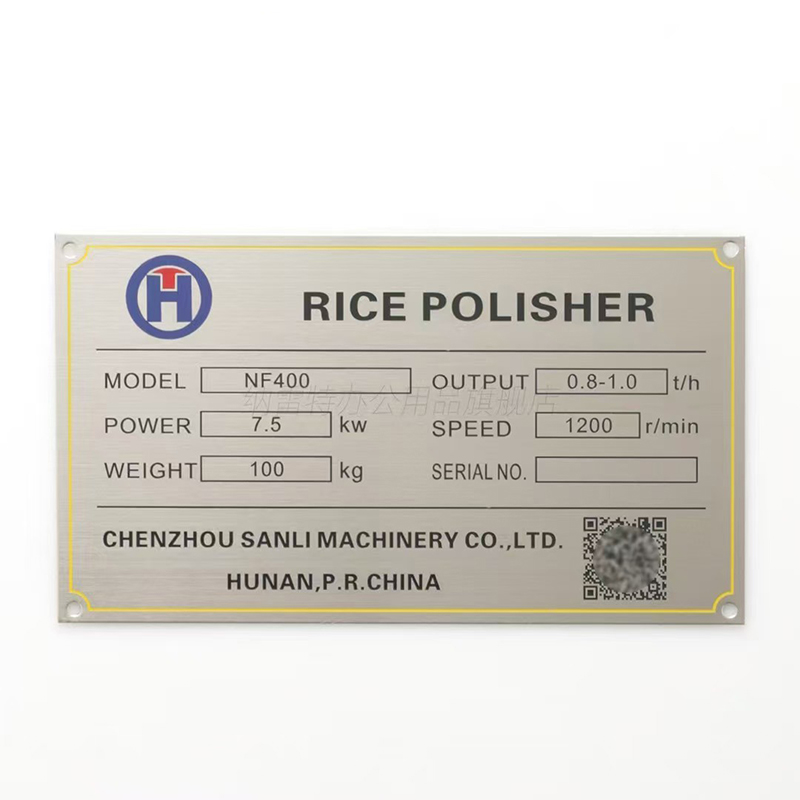
6. Lifecycle Cost Analysis: Calculating the True Cost of Tag Failure
When evaluating asset identification materials, procurement departments often focus on unit price, ignoring total cost of ownership (TCO). A thorough TCO analysis considers replacement labor, production downtime during re-labeling, and compliance risk. For a facility with 5,000 tracked assets, replacing a $0.50 polyester label annually (labor cost: $2.50 per tag) results in a 5-year TCO of $75,000. In contrast, a premium aluminum asset tag priced at $4.00 with a 15-year lifespan yields a 5-year TCO of $20,000 (assuming initial installation only). This represents a 73% cost reduction, not including the intangible savings from reduced audit failures and improved operational efficiency.
Furthermore, in industries with strict validation protocols (e.g., pharmaceutical GMP), replacing asset tags requires re-validation of equipment status—a process that can cost upwards of $500 per asset. Here, the case for permanent aluminum tags becomes financially irrefutable. The initial capital outlay is rapidly offset by the elimination of recurring validation cycles.
7. Future-Proofing: Digital Integration and Smart Asset Management
The evolution of Industry 4.0 is pushing asset identification beyond static text. Modern aluminum asset tags are being designed with layered data capabilities. Laser-etched QR codes can now link to digital twins, providing real-time maintenance history, warranty status, and geolocation. This convergence of physical marking and digital data requires a substrate that remains stable for the asset’s entire lifespan. Aluminum’s dimensional stability over time ensures that 2D codes remain within scanner tolerances, even after decades of thermal cycling.
Additionally, the integration of NFC (Near Field Communication) chips into aluminum frames is becoming standard for high-value assets. These passive chips, encapsulated within the tag structure, allow for instant data capture via smartphone, bridging the gap between legacy equipment and modern asset management software. As assets become smarter, the tag must act as a durable anchor for evolving data streams.
Frequently Asked Questions (FAQs)
Q1: What is the typical lead time for custom aluminum asset tags, and what specifications are required for ordering?
A1: For standard custom orders (embossed or printed), lead times range from 5 to 10 business days. For a comprehensive quote, we require the following: tag dimensions, hole pattern (if any), marking content (text, barcode type, data matrix specifications), substrate thickness (typically 0.020″ to 0.063″), and environmental exposure details (temperature extremes, chemical contact). At Hemawell Nameplate, we provide a digital proof within 24 hours to ensure accuracy.
Q2: Can aluminum asset tags be used on assets that require periodic non-destructive testing (NDT) or X-ray inspection?
A2: Yes. Aluminum has a low atomic number and is radiolucent compared to stainless steel. It does not interfere with radiographic or ultrasonic testing. For assets undergoing frequent electromagnetic inspections (e.g., eddy current), we can produce tags from non-conductive coated aluminum or specify attachment methods that avoid contact with inspection zones.
Q3: How do aluminum asset tags perform in cryogenic environments (e.g., liquid nitrogen storage)?
A3: Aluminum maintains ductility down to cryogenic temperatures (-196°C). However, adhesive systems become brittle at these extremes. For cryo-storage, we recommend mechanical fastening (stainless steel rivets) combined with tags that have a cryogenic-grade anodized finish. The tags will not crack or become illegible, unlike plastic alternatives that shatter.
Q4: Are there specific barcode symbologies recommended for aluminum tags in high-abrasion environments?
A4: For environments with physical abrasion, we recommend Data Matrix ECC 200 over linear barcodes. Data Matrix codes have built-in error correction and require less surface area, allowing them to be laser-etched in a recessed area of the tag. This physical protection, combined with error correction, ensures a 99.9% first-read rate even after surface wear.
Q5: What is the difference between “anodized” and “printed” aluminum asset tags in terms of durability?
A5: Photo-anodized tags have the marking sealed beneath the anodic layer, making them resistant to solvents, UV, and abrasion—ideal for permanent identification. Printed tags (using thermal transfer or screen printing) offer greater color and graphic flexibility but have the marking on the surface. For applications where the tag surface will be subjected to direct abrasion or harsh chemicals, anodized aluminum asset tags are the superior choice.
Disclaimer: Performance data cited is based on controlled testing and field reports. Actual durability may vary depending on specific environmental conditions and installation methods. For application-specific engineering support, consult with a technical specialist.