Hazard Label Meaning: Decoding Safety Symbols and Warning TagsEvery day, workers, consumers, and emergency responders encounter containers, packages, and areas marked with colorful symbols and warnings. Understanding the hazard label meaning behind these graphics is essential for preventing accidents, ensuring compliance, and protecting health. Hazard labels communicate risks at a glance – from flammability to toxicity – using standardized pictograms, colors, and signal words. This article breaks down the most common hazard label systems, explains how to interpret them, and highlights why this knowledge matters in workplaces and homes.

What Is the Hazard Label Meaning and Why Does It Matter?
A hazard label is a visual warning placed on hazardous products, containers, or areas. Its purpose is to immediately inform anyone handling or nearby about the nature of the danger and the precautions required. The hazard label meaning is conveyed through internationally agreed symbols, colors, and text. Without this clear communication, the risk of injury, fire, or chemical exposure rises significantly.
Regulatory bodies like OSHA (USA), the UN (through GHS), and transport authorities mandate specific label designs. Compliance ensures that a worker in one country can recognize a hazard symbol just as easily as someone in another. Understanding these labels is not optional – it is a fundamental part of safety training in industries like manufacturing, logistics, healthcare, and construction.
Common Types of Hazard Labels and Their Meanings
Several labeling systems exist, each tailored to different contexts – chemical containers, workplace areas, or transport vehicles. Below are the most widely used formats.
GHS Labels (Globally Harmonized System)
GHS labels are the standard for chemical containers worldwide. They include pictograms, signal words, hazard statements, and precautionary statements. Key pictograms and their meanings:
Flame: Flammable materials, self-reactive substances, or organic peroxides.
Skull and crossbones: Acute toxicity (fatal or toxic if swallowed, inhaled, or in contact with skin).
Corrosion: Causes severe skin burns and eye damage; corrosive to metals.
Exclamation mark: Irritant, skin sensitizer, or less severe toxicity.
Gas cylinder: Gases under pressure (compressed, liquefied, or dissolved).
Health hazard: Carcinogen, mutagen, respiratory sensitizer, or target organ toxicity.
Environment: Hazardous to the aquatic environment (not mandatory in all countries).
NFPA 704 Diamond (Fire Diamond)
Commonly seen on buildings, storage tanks, and laboratory doors, the NFPA diamond uses a color-coded square rotated 45 degrees. Each quadrant indicates a different type of hazard, rated from 0 (minimal) to 4 (severe).
Red (top): Flammability – how easily the material burns.
Blue (left): Health hazard – potential to cause injury or death.
Yellow (right): Reactivity/instability – potential to release energy or explode.
White (bottom): Special hazards – such as water reactivity (W), oxidizer (OX), or simple asphyxiant (SA).
DOT Hazard Class Labels (Transportation)
When hazardous materials are shipped by road, rail, air, or sea, they must display DOT (Department of Transportation) placards or labels. These are diamond-shaped and feature numbers (1–9) representing hazard classes:
Class 1: Explosives
Class 2: Gases (flammable, non-flammable, toxic)
Class 3: Flammable liquids
Class 4: Flammable solids, spontaneously combustible, dangerous when wet
Class 5: Oxidizers and organic peroxides
Class 6: Toxic and infectious substances
Class 7: Radioactive
Class 8: Corrosives
Class 9: Miscellaneous dangerous goods
WHMIS 2015 (Canada)
Canada’s Workplace Hazardous Materials Information System aligns with GHS. Its labels include similar pictograms and hazard statements, with both English and French text.
How to Read and Interpret Hazard Labels Correctly
To fully grasp a hazard label meaning, look at four key components:
Pictograms: Immediately identify the hazard type. Memorize the common symbols.
Signal words: "Danger" indicates more severe hazards; "Warning" indicates less severe.
Hazard statements: Phrases like "Fatal if swallowed" or "Causes skin irritation" describe the nature and severity.
Precautionary statements: Actions to take to prevent harm, such as "Wear protective gloves" or "Keep away from heat."
Always read the entire label, not just the pictogram. Some products may have multiple hazards, and the label will list them in order of severity.
The Importance of Understanding Hazard Label Meaning in the Workplace
Employers are responsible for ensuring that all employees can recognize and respond to hazard labels. Proper training reduces incidents and emergency response times. Workers who understand hazard label meaning are more likely to handle chemicals safely, wear appropriate PPE, and store materials correctly. Regular refresher courses and visible posted charts can reinforce this knowledge.
In warehouses and factories, misreading a label can lead to disastrous mixing of incompatible chemicals, spills, or fires. That is why OSHA’s Hazard Communication Standard (HCS) requires labels on all primary and secondary containers, along with Safety Data Sheets (SDS) for reference.
International Standards for Hazard Label Meaning
The hazard label meaning is largely harmonized through the UN’s GHS, adopted by many countries including the US (OSHA), EU (CLP Regulation), Canada (WHMIS), Japan, Australia, and others. However, regional variations exist:
EU CLP: Uses GHS pictograms but adds specific hazard and precautionary statements in all official EU languages.
OSHA: Requires GHS-compliant labels but allows some flexibility for workplace-specific labeling.
Transport labels: Follow UN Model Regulations and are enforced by bodies like IATA (air), IMDG (sea), and ADR (road in Europe).
Companies shipping or receiving materials across borders must ensure their labels meet both origin and destination requirements.
Where to Find Reliable Hazard Labels for Your Products
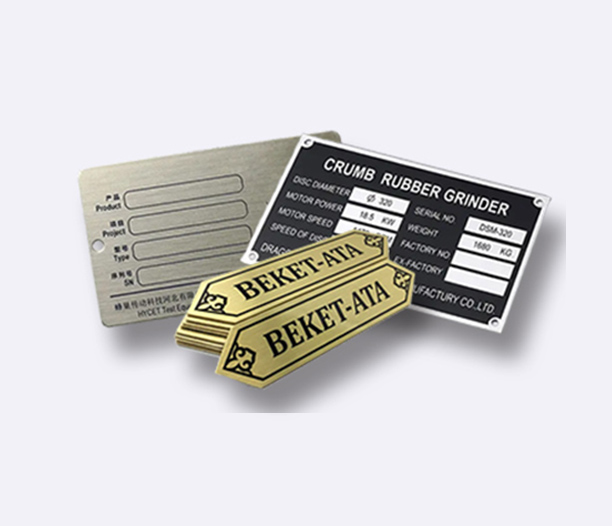
Creating compliant hazard labels requires attention to detail – correct pictograms, signal words, and durability. Many suppliers offer pre-printed or on-demand labels. For durable, long-lasting labels suitable for harsh environments, consider custom engraved tags from NYETER, which can be designed to display hazard symbols and text permanently. Engraved tags resist chemicals, abrasion, and weather, making them ideal for fixed equipment, outdoor storage, and repeated handling.
Conclusion
Whether you work in a laboratory, drive a truck carrying chemicals, or simply store cleaning products at home, knowing the hazard label meaning is a vital skill. Standardized symbols and colors cut through language barriers and provide instant recognition of danger. By taking the time to learn these labels and ensuring your own labels are compliant and legible, you contribute to a safer environment for everyone.
Frequently Asked Questions About Hazard Label Meaning
Q1: What does the skull and crossbones symbol mean on a hazard label?
A1: The skull and crossbones indicates acute toxicity – meaning the substance can be fatal or harmful if swallowed, inhaled, or absorbed through the skin. Even small amounts can cause serious health effects or death.
Q2: What is the difference between GHS hazard labels and NFPA 704 diamonds?
A2: GHS labels are used on individual chemical containers and provide detailed information about specific hazards, handling, and first aid. NFPA 704 diamonds are placed on buildings, tanks, or areas to warn emergency responders about the overall hazards of the materials inside, using a numeric rating system (0–4).
Q3: Are hazard labels required by law?
A3: Yes, in most countries, laws such as OSHA’s Hazard Communication Standard (US), the CLP Regulation (EU), and WHMIS (Canada) mandate that hazardous products be labeled with appropriate warnings. Employers must also label secondary containers used in the workplace.
Q4: What should I do if a hazard label is missing or damaged?
A4: Immediately replace or re-label the container. Do not use the product if you are unsure of its contents. Refer to the Safety Data Sheet (SDS) to obtain the correct label information, or contact the supplier for a replacement label.
Q5: How often should hazard labels be replaced?
A5: Labels must remain legible and attached throughout the life of the product. If a label becomes faded, torn, or detached, it should be replaced immediately. In harsh environments, using durable materials like laminated plastic or engraved metal can extend label life.
Q6: What do the numbers in the NFPA 704 diamond mean?
A6: The numbers range from 0 to 4. In the red (flammability) section, 0 means will not burn, 4 means extremely flammable. In the blue (health) section, 0 means no hazard, 4 means lethal. In the yellow (reactivity) section, 0 means stable, 4 means may detonate. The white section contains special symbols like W (reacts with water) or OX (oxidizer).
Q7: Can I print my own hazard labels?
A7: Yes, you can print your own labels as long as they meet regulatory requirements for size, color, and content. Ensure you use durable materials suitable for the environment. For permanent applications, engraved or embossed tags offer superior longevity.