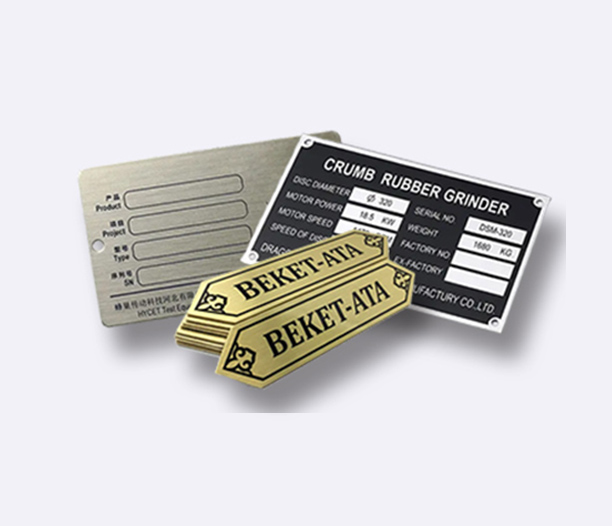
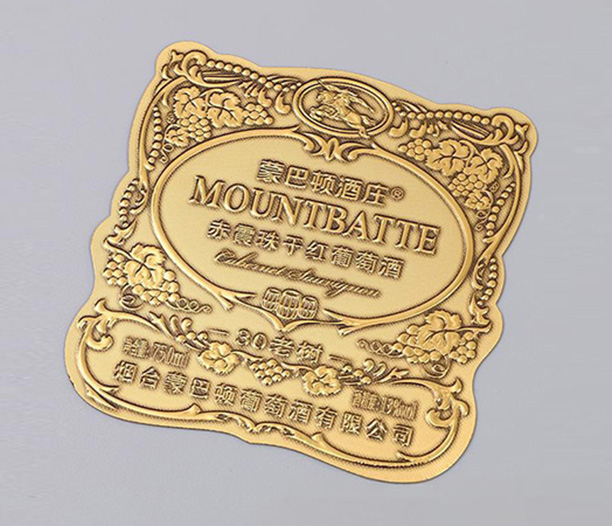
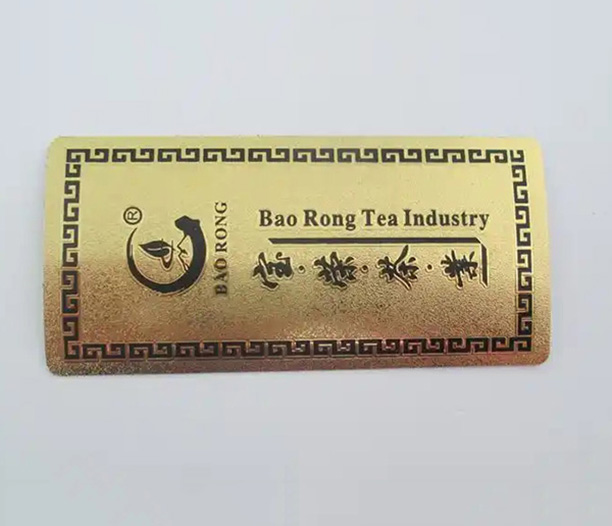
When your product needs a nameplate, the choice of supplier is more critical than many realize. The right nameplate serves as your product's permanent fingerprint, conveying brand, critical warnings, specifications, and compliance. The wrong one fades, peels, or fails to meet regulations, damaging your reputation.
This is where partnering with a reputable manufacturer becomes essential. While we won't name specific brands, we'll outline what defines a true quality name plate manufacturer and how to find one that aligns with your needs for durability, clarity, and precision.
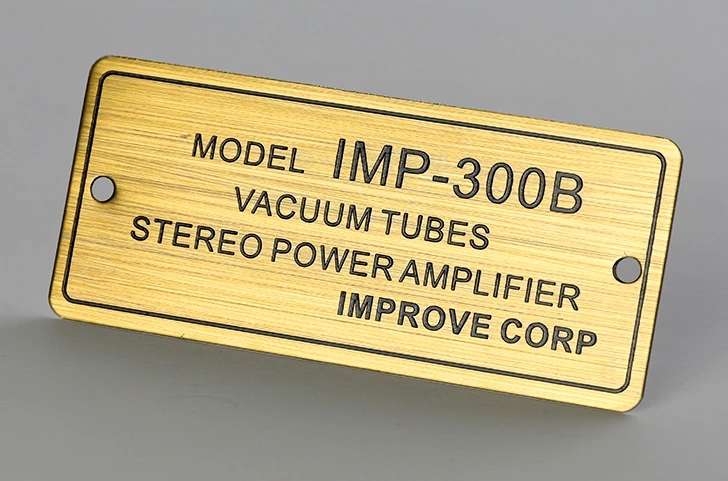
What Makes a Nameplate Manufacturer a "Quality" Partner?
A quality name plate manufacturer is defined by much more than just printing on metal or plastic. It's a combination of materials science, engineering precision, and rigorous processes.
First, it's about consistency. Every batch of nameplates must match the last in color, finish, and dimension. This requires controlled manufacturing environments and meticulous quality control checks at multiple stages.
Second, it's about material integrity. A top-tier manufacturer doesn't just offer materials; they advise on them. They understand how an aluminum nameplate reacts to salt spray versus how a polyester label holds up to UV exposure and chemical solvents.
Finally, it's about technical partnership. They act as an extension of your engineering and compliance teams, ensuring the final product meets not only your aesthetic specs but also industry standards like UL, CSA, or MIL-STD.
Core Applications: Where Precision Nameplates Are Non-Negotiable
The need for a quality name plate spans across industries where failure is not an option.
In heavy machinery and aerospace, nameplates must withstand extreme vibration, temperature swings, and corrosive fluids. They carry serial numbers for lifetime asset tracking and safety warnings that must remain legible for decades.
The medical device industry relies on ultra-durable labels for sterilization cycles (autoclaving), chemical disinfectants, and implantation. Information here is often life-critical.
Consumer electronics and appliances use nameplates for branding, model information, and regulatory compliance marks (FCC, CE). Here, aesthetic perfection and scratch resistance are paramount.
For electrical equipment, permanent warnings and certification marks are legally required. A faded electrical hazard warning is a significant liability.
In all cases, the manufacturer must understand the end-use environment intimately to recommend the correct solution.
Choosing Your Manufacturer: A Practical Guide
Selecting a manufacturer isn't just about price per unit. It's about total cost of ownership, which includes durability, application speed, and risk reduction.
Start by assessing their material portfolio. Do they offer a wide range, from anodized aluminum and stainless steel to specialized polyesters and vinyls? A broad portfolio indicates deeper expertise.
Examine their fabrication capabilities. Can they do more than just print? Look for in-house capabilities like etching, embossing, doming, sequential numbering, and barcoding. A manufacturer controlling more steps in-house ensures better quality control.
Ask about their testing facilities. Can they perform accelerated aging, adhesion tests, chemical resistance, and abrasion tests? A quality name plate inc-level provider will have data to back their material claims.
Review their design and proofing process. How do they handle artwork? A smooth, collaborative process for proofs and prototypes saves significant time and avoids costly production errors.
Finally, evaluate their compliance knowledge. They should be fluent in the labeling requirements of your specific industry.
Cost Factors: Understanding the Price of a Quality Nameplate
The cost of custom nameplates is influenced by several key variables. Understanding these helps in making informed decisions.
Material cost is the first factor. Stainless steel is more expensive than aluminum, and specialized chemical-resistant films cost more than standard vinyl. The right material for the job is seldom the cheapest.
The manufacturing process significantly impacts price. Simple screen printing is cost-effective for long runs. Photo-etching offers a premium, durable feel but at a higher cost. Digital printing allows for affordable, full-color, short-run labels without tooling fees.
Tooling and setup costs are often one-time charges for creating dies, screens, or digital templates. For large production runs, this cost is amortized. For small batches, it can be a major portion of the unit price.
Finishing touches like protective over-laminates, sequential numbering, or special adhesives (e.g., permanent, removable, high-temperature) add value and cost.
Volume is the ultimate lever. High-volume orders always reduce the unit price. A reliable manufacturer will work with you to find the most cost-effective process for your volume needs without sacrificing the core quality name plate requirements.
Technology and Craftsmanship Behind the Scenes
The best nameplates are born from a fusion of advanced technology and skilled craftsmanship.
On the technology front, digital printing has revolutionized short runs and complex graphics. High-end industrial printers can produce vibrant, weather-resistant images directly onto metals and plastics.
Laser marking and ablation offer permanent, contactless marking perfect for serialization and barcodes on uneven surfaces. Photo-etching uses light and chemistry to precisely remove material, creating elegant, deep, and durable marks.
Embossing and debossing use physical pressure to create raised or recessed lettering, adding a tactile, premium dimension.
The craftsmanship comes in the finishing. Skilled operators ensure precise cutting (die-cutting, laser cutting), consistent lamination, and perfect alignment of multiple layers. Hand-inspection stages are crucial for catching defects that machines might miss.
This blend ensures that a quality name plate manufacturer delivers products that are both technically sound and visually flawless.
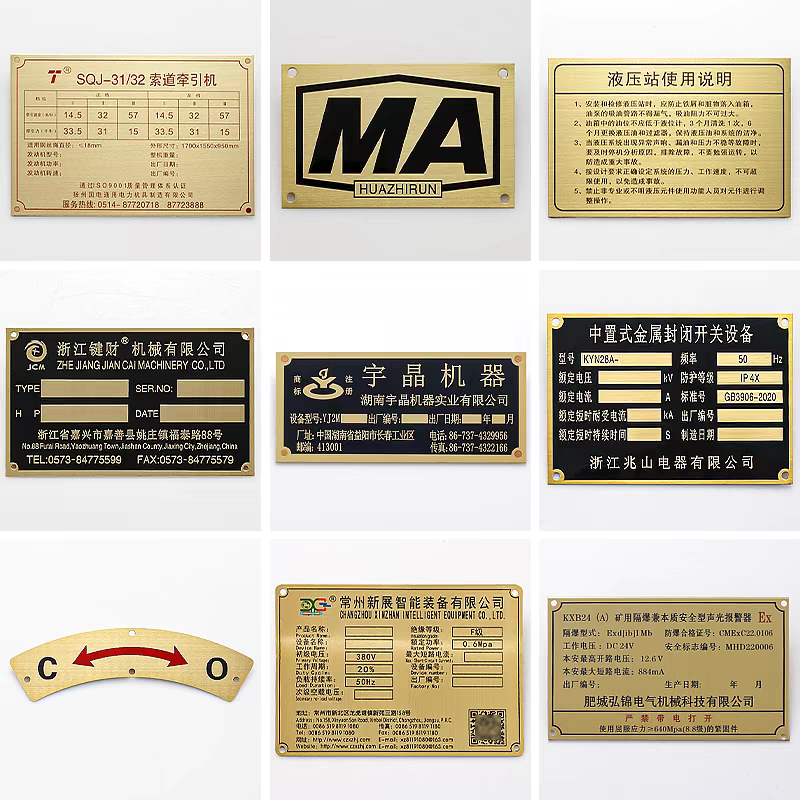
Finding a Reliable Industrial Nameplate Supplier
Begin your search with a focus on specialization. Look for companies that explicitly serve industrial, OEM, or B2B markets, not just retail signage.
Request detailed sample kits. A serious manufacturer will provide physical samples showcasing their material range, processes, and durability. Test these samples yourself—try to scratch them, expose them to a relevant solvent, or bend them.
Check for certifications. ISO 9001 certification is a strong indicator of a systematic approach to quality management. Industry-specific certifications are even better.
Assess their communication and project management. Are they responsive? Do they ask detailed questions about your application? A good partner is proactively engaged, ensuring all specifications are clear upfront.
Look at their lead times and scalability. Can they handle both your prototype needs and potential future high-volume production? Reliability in delivery is a key component of quality.
Frequently Asked Questions (FAQ)
Q1: What are the most durable materials for outdoor industrial nameplates?
A1: For harsh outdoor environments, anodized aluminum and stainless steel are top choices. Anodized aluminum forms a hard, oxide layer that resists corrosion and wear. Stainless steel offers exceptional strength and chemical resistance. For flexible applications, industrial-grade polyesters with UV-resistant inks and protective over-laminates are excellent.
Q2: What's the difference between etched and printed nameplates?
A2: Etched nameplates (photo-etched or chemically etched) have the information physically engraved into the material, often filled with ink. This makes the text incredibly durable and resistant to wear. Printed nameplates (screen or digital print) apply ink onto the surface. While modern inks are very tough, the print can eventually wear or scratch off under extreme abrasion. Etching is typically for permanent, high-end applications.
Q3: How long does it typically take to get custom nameplate samples?
A3: Lead time for prototypes or samples varies. For simple designs using existing materials, a quality name plate manufacturer might provide "soft" digital proofs within 1-2 days and physical samples within 5-10 business days. More complex designs requiring new tooling or special materials can take 2-3 weeks. Always discuss timelines during the initial quote.
Q4: Can you create nameplates that withstand high-temperature environments, like on engines?
A4: Yes. Specialized materials exist for this purpose. Nameplates made from metals like stainless steel or aluminum with high-temperature ceramic-based inks can withstand sustained temperatures exceeding 500°F (260°C). For extremely high heat, bare metal etching or stamping without adhesives is used, and the plate is often attached with mechanical fasteners instead of glue.
Q5: How do you handle secure or sequential numbering for asset tracking?
A5: This is a common requirement. A capable manufacturer will use specialized equipment like high-resolution digital printers or laser markers that can automatically increment serial numbers, barcodes (1D or 2D), or QR codes on every individual nameplate in a run. This ensures accuracy, eliminates human error in numbering, and integrates seamlessly with your asset management system.