You need your logo to stand out. Paper stickers fade. Plastic cracks. But metal endures. Getting your logo onto metal surfaces is a powerful way to signal quality, permanence, and strength.
But the term "logo printing on metal" covers several different processes. Each method creates a different look, feels different to the touch, and comes with its own price tag.
Choosing the wrong one can leave you with a product that doesn't match your vision or wears out too quickly. This isn't just about putting ink on steel; it's about choosing the right tool for your brand's identity.
Let's break down the most common techniques. We'll look at how they work, what they're best for, and how to decide.
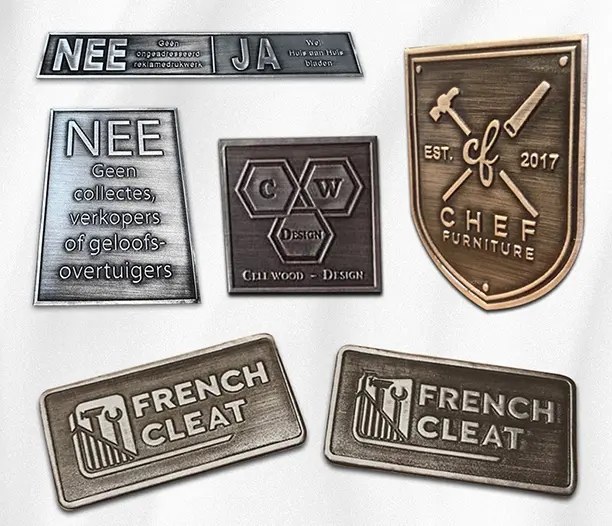
The Go-To for Flat Colors: Screen Printing
Screen printing is a classic. It's often the most cost-effective method for medium to large batches. Think of it like a sophisticated stencil.
A fine mesh screen is created, with open areas for your logo design. Ink is pushed through this screen onto the metal surface below. Each color in your logo requires a separate screen and pass.
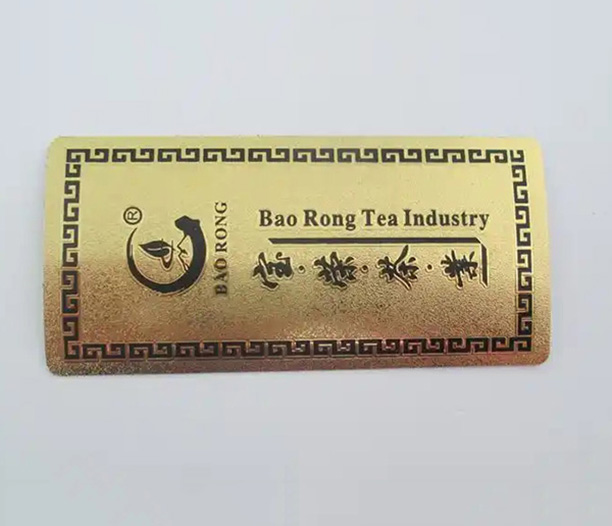
The result is a layer of ink sitting on top of the metal. It can be very vibrant and opaque, perfect for bold, simple logos. The finish is usually matte or slightly textured.
It's great for promotional items, machine panels, or signs where extreme durability isn't the primary concern. Over many years, the ink can potentially chip or scratch.
For Unmatched Durability: Powder Coating
This is less "printing" and more "fusing." Powder coating is how many appliances and automotive parts get their colored, tough finish.
A dry powder (pigment and resin) is electrostatically sprayed onto the metal. The metal item is then baked in an oven. The heat causes the powder to melt, flow, and form a hard, uniform skin.
For logos, this usually means applying a stencil or mask. The powder is applied to the exposed areas, then the whole piece is cured. The logo becomes part of the coating itself.
The finish is extremely resilient to chipping, scratching, UV light, and chemicals. It's ideal for outdoor signage, architectural features, and industrial equipment that faces harsh conditions.
The Modern Digital Choice: UV Printing
UV printing is the digital, direct-to-substrate champion. Imagine a high-end inkjet printer that can handle metal sheets.
Special inks are jetted directly onto the metal surface. They are instantly cured (dried) by powerful UV lights the moment they hit. This "curing" makes them hard and durable.
The biggest advantage is photographic quality. You can print full-color images, complex gradients, and intricate details without needing screens or plates. It's fantastic for low-volume runs or one-off custom pieces.
The finish can be glossy or matte. While durable for most indoor applications, it may not be as tough as powder coating for heavy outdoor use.
The Classic Engraved Look: Etching and Laser Marking
Sometimes you want the logo to be in the metal, not on it. These methods remove material to create a permanent mark.
Chemical etching uses an acid-resistant mask of your logo. The acid eats away at the exposed metal, leaving your design recessed. It creates a sophisticated, tamper-proof mark.
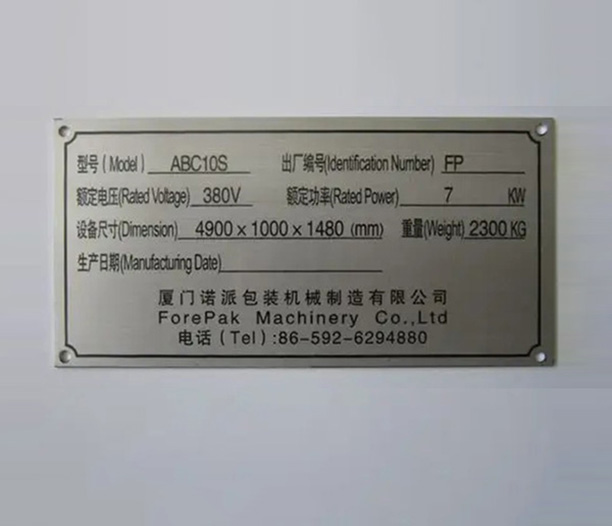
Laser marking/engraving uses a high-powered laser beam to alter the metal's surface. It can vaporize material for a deep engrave or simply change the metal's color through heat (laser annealing).
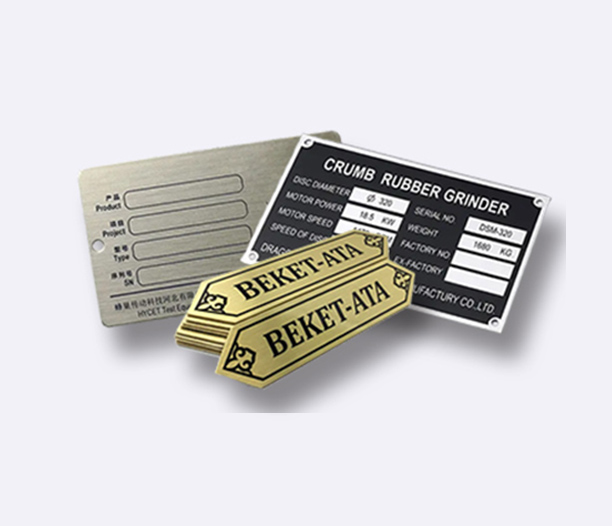
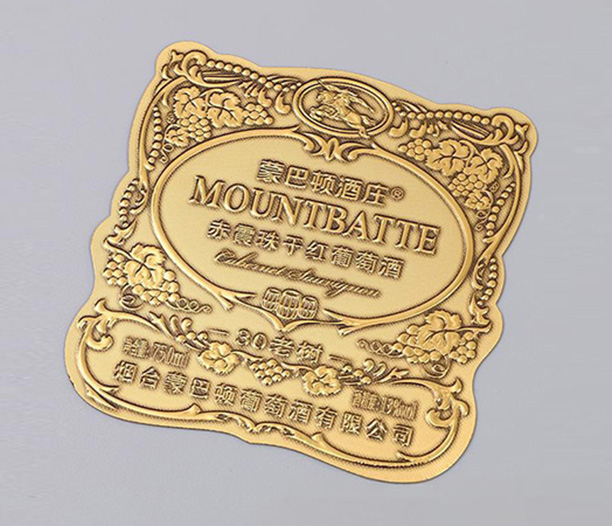
The result is permanent, elegant, and often feels high-end to the touch. It's perfect for serial plates, awards, premium nameplates, and medical devices. Color options are typically limited to the natural metal tones.
Making the Choice: A Quick Guide
So, which process fits your project? Ask yourself these questions.
First, consider the end use. Is it for outdoor weathering (powder coat)? Is it a promotional item for a trade show (screen print)? Is it a custom art piece with photos (UV print)? Is it a permanent identification tag (etching)?
Next, look at your logo's design. Does it have many colors or gradients (UV print)? Is it simple, one or two-color art (screen print)? Is it a line-based design suited for engraving?
Finally, be realistic about budget and quantity. Screen printing has high setup costs but low per-unit costs at volume. UV printing has minimal setup, making single items more feasible. Engraving is precise but can be slower.
Understanding the Costs Involved
The price for logo printing on metal isn't a single number. Several factors push it up or down.
Setup costs are key. Screen printing and etching require creating screens or masks. This is a fixed cost, so it's spread over your entire order quantity. For 10 items, the setup is a big part of the price. For 1000, it becomes minor.
Material and size matter. Printing on small aluminum tags costs less than large stainless steel sheets. The metal type itself is a major factor.
Complexity drives labor. A single-color print is straightforward. A multi-color design needing precise alignment, or a logo requiring a special finish like brushing or polishing before printing, will add cost.
Finding a Reliable Supplier
Not every shop offers every method. Your search for a "metal logo printing" supplier should be specific.
Start by looking at their portfolio. Do they show examples similar to what you want? A shop specializing in large outdoor signs may not be the best fit for delicate, etched jewelry tags.
Communication is crucial. A good supplier will ask about your intended use, environment, and expectations. They should offer advice on the best method, not just the one they prefer to do.
Always, always request physical samples. Seeing and feeling a sample of their work is the only way to truly judge quality. Check the sharpness of edges, the feel of the finish, and the color accuracy.
Caring for Your Metal Branding
To ensure longevity, proper care is simple but important.
For printed surfaces (screen, UV), clean with a soft cloth and mild detergent. Avoid abrasive pads or harsh solvents. For powder-coated items, they can generally withstand stronger cleaners.
Etched and laser-marked logos are the most worry-free. Since the mark is in the metal, cleaning won't damage it. Just keep the surface clean to maintain its visual impact.
Your logo is your identity. Putting it on metal makes a statement of quality. Taking the time to choose the right printing method ensures that statement is clear, professional, and lasts for years to come.
Frequently Asked Questions (FAQ)
Q1: What is the most durable type of metal logo printing for outdoor use?
A1: For long-term outdoor exposure to sun, rain, and temperature swings, powder coating is generally the most durable. The logo is fused into a tough, UV-resistant polymer layer. Deep etching or laser engraving is also permanently weatherproof, as it removes metal rather than adding an ink layer.
Q2: Can I print a full-color photograph onto a metal surface?
A2: Yes, UV flatbed printing is specifically designed for this. It can directly print high-fidelity, full-color images, including photographs, onto coated metal sheets. The result is vibrant and detailed, ideal for custom art pieces or distinctive signage.
Q3: What file format should I provide for my logo?
A3: Always provide a vector file if possible, such as .AI, .EPS, or .PDF. Vector graphics are based on mathematical paths, not pixels, so they can be scaled to any size without losing quality. This gives the printer a perfect source file to work from for any process.
Q4: Is it possible to print on curved or uneven metal surfaces?
A4: This is challenging for most methods. Screen printing and powder coating can handle slightly curved surfaces if the equipment is set up for it. UV printing typically requires a completely flat ("flatbed") surface. For heavily curved or 3D objects, a metal label made separately and then affixed might be a better solution.
Q5: How does the cost compare between these methods for a small batch of 50 items?
A5: For a small batch, methods with lower setup costs are often more economical per piece. UV printing usually has minimal setup, making it competitive for 50 units. Screen printing's setup cost is spread over only 50 items, raising the per-piece price. For simple, one-color designs, laser marking could also be cost-effective at this quantity. Always get quotes for your specific project.