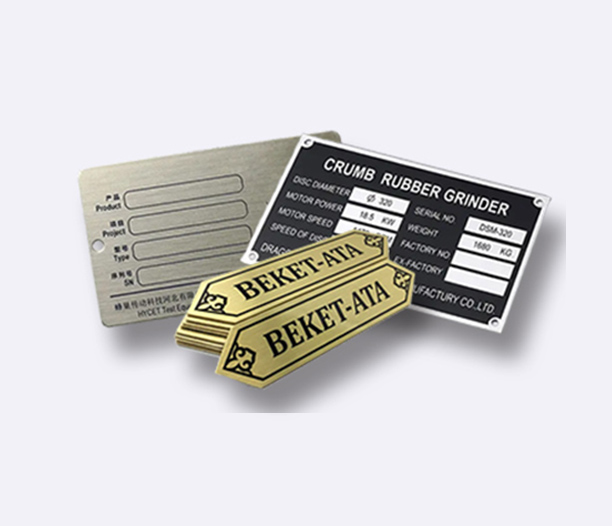
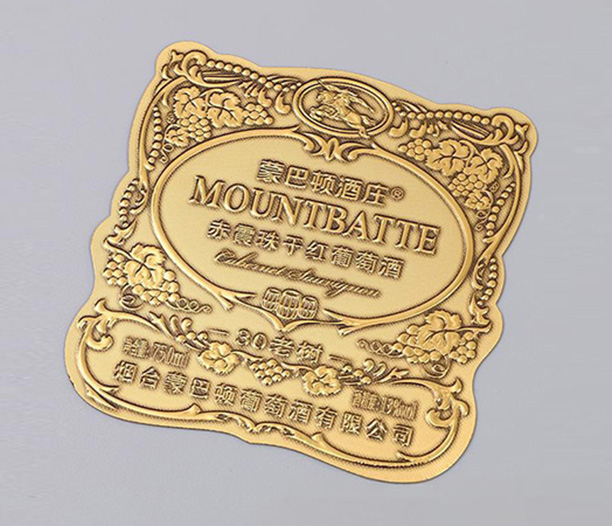
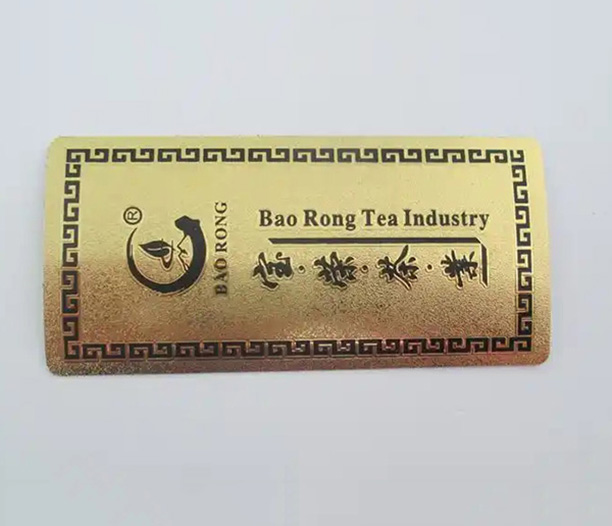
In industrial asset management, the difference between a temporary identifier
and a permanent solution often determines safety audit outcomes, maintenance
efficiency, and regulatory compliance. A stainless steel
tag represents the highest tier of identification durability,
combining corrosion resistance with mechanical robustness that survives decades
in environments ranging from subsea pipelines to high-temperature furnaces.
Unlike polymer or aluminum-based labels, stainless steel provides inherent
resistance to UV degradation, chemical attack, and physical abrasion without
requiring sacrificial coatings.
Drawing on metallurgical engineering principles and two decades of industrial
marking experience, Hemawell Nameplate has developed a
systematic approach to stainless steel tag engineering. This article examines
the technical nuances of substrate selection, marking technologies, and
performance validation—providing procurement engineers, facility managers, and
compliance officers with the data required to specify tags that outlast the
assets they identify.
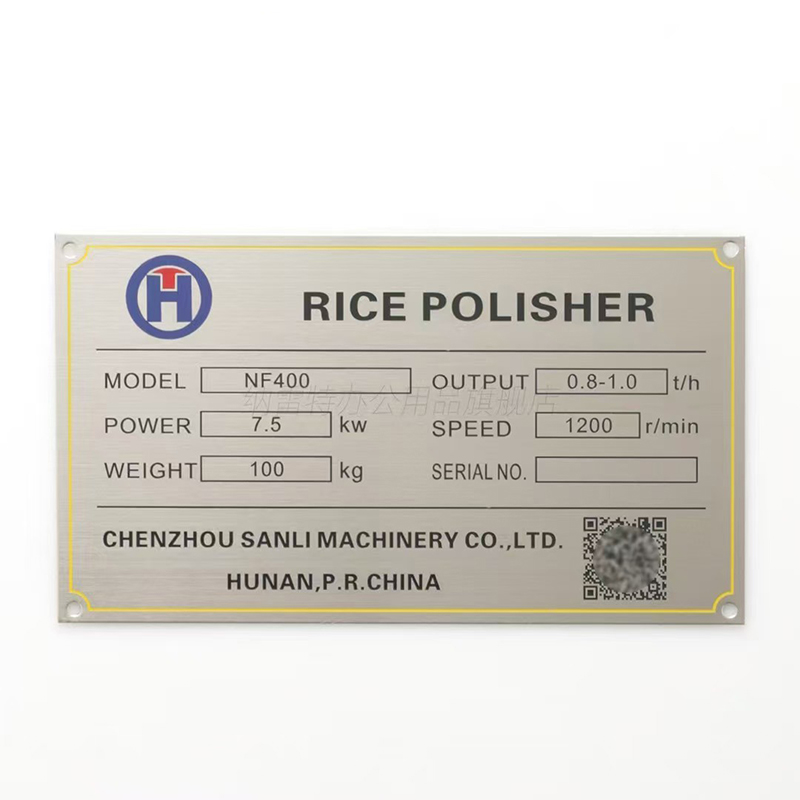
1. Metallurgical Foundation: Selecting the Optimal Stainless Steel
Grade
The performance of any stainless steel
tag begins with alloy chemistry. The following grades dominate
industrial applications, each selected based on specific environmental
stressors:
AISI 304 (18/8 Stainless): The most widely utilized
austenitic grade. With 18% chromium and 8% nickel, it provides excellent
resistance to atmospheric corrosion, organic chemicals, and oxidation up to
870°C intermittently. It is the baseline specification for indoor industrial
equipment, control panels, and general machinery identification. Its formability
allows for deep etching and complex contours.
AISI 316 / 316L Stainless: The marine-grade alloy
containing 2-3% molybdenum, which confers superior resistance to chlorides, salt
spray, and acidic environments. For offshore platforms, chemical processing
facilities, or any location exposed to de-icing salts or coastal atmospheres,
316L is the mandatory specification. It withstands ASTM B117 salt spray testing
beyond 1,000 hours without pitting or marking degradation.
430 Stainless (Ferritic): A lower-cost alternative with
good corrosion resistance in mild environments. It exhibits magnetic properties,
which can be advantageous for applications requiring magnetic attachment or
detection. However, it lacks the formability and weldability of austenitic
grades and is not recommended for chloride-rich exposures.
Duplex (2205 / 2507): For extreme applications involving
high mechanical stress combined with aggressive chemical exposure—such as subsea
oil & gas equipment—duplex grades offer twice the yield strength of 316L
while maintaining exceptional pitting resistance equivalent (PRE) values
exceeding 35.
Environmental corrosivity categories defined in ISO 9223 (C1 through CX)
provide a framework for selection. A properly specified stainless steel
tag in 316L is rated for CX environments, ensuring that critical
equipment identification remains intact after 25+ years of continuous exposure
to marine or industrial atmospheres.
2. Permanent Marking Technologies: Achieving Indelible Data
Material selection is necessary but insufficient. The marking method
determines whether serial numbers, barcodes, or regulatory warnings remain
legible throughout the asset’s lifecycle. Industrial manufacturers employ four
principal technologies, each with distinct performance characteristics:
2.1 Photochemical Etching (PCE)
This subtractive process uses photoresist masks and ferric chloride etchant
to create recessed features directly into the stainless steel surface.
Achievable depths range from 0.05 mm to 0.5 mm, producing burr-free, stress-free
markings. PCE enables sub-micron precision for high-density Data Matrix codes,
meeting MIL-STD-130 UID (Unique Identification) requirements. For a
stainless steel tag destined for aerospace or defense supply
chains, photochemical etching is the preferred method because the recessed
characters resist wear from routine cleaning and abrasive contact.
2.2 Fiber Laser Marking & Annealing
Fiber lasers operating at 1064 nm wavelength offer three distinct marking
modalities: ablation (removing surface coatings), deep engraving (vaporizing
material), and annealing (creating subsurface oxide layers). Annealed marks on
stainless steel produce a permanent, black contrast that does not compromise the
material’s passive layer—critical for medical devices, pharmaceutical equipment,
and cleanroom environments. Laser systems can produce 2D Data Matrix codes with
cell sizes as small as 0.3 mm, achieving “A” grade readability per ISO/IEC 15415
even after exposure to chemicals and high-pressure washing.
2.3 Electrochemical Etching (ECE)
ECE employs a stencil, conductive electrolyte, and low-voltage DC current to
create precise marks without mechanical stress or heat-affected zones. This
method is particularly effective for marking already-assembled components where
thermal or impact damage from laser or stamping is unacceptable. ECE delivers
consistent mark depths of 0.02–0.10 mm and is widely used for serializing large
production runs of industrial tags.
2.4 Mechanical Embossing & Stamping
For environments involving extreme temperatures (above 500°C) or where
electronic equipment is prohibited (e.g., explosive atmospheres), raised
characters via mechanical stamping offer ultimate resilience. Embossed
alphanumeric characters on a stainless steel tag remain readable even after
severe abrasion, sandblasting, or coating erosion. This method is specified for
permanent VIN plates on heavy construction equipment and for tags in foundries
and cement plants.
3. Industry Applications & Technical Challenges
Generic identification fails when confronted with sector-specific regulations
and operational hazards. Below are scenarios where engineered stainless steel
tags provide definitive solutions.
3.1 Oil & Gas / Petrochemical Facilities
ATEX and IECEx directives mandate that equipment identification remain
legible for the entire operational life in potentially explosive atmospheres.
Static discharge risks require that tags be conductive and non-sparking. A
stainless steel tag with laser-annealed marking eliminates static accumulation
and complies with NACE MR0175/ISO 15156 for sour service (H₂S environments).
Many operators now require high-contrast Data Matrix codes for digital twin
integration, which can be integrated via precision pocket milling while
maintaining full metallic integrity.
3.2 Marine & Offshore Engineering
IMO (International Maritime Organization) regulations require permanent fire
safety equipment identification. The combination of constant saltwater exposure,
cyclic humidity, and extreme UV radiation destroys organic labels within months.
A stainless steel
tag manufactured from 316L, combined with photochemical etching and
epoxy-filled graphics, surpasses ISO 12944-9 (formerly NORSOK M-501) for
offshore coating systems, providing at least 25 years of service without
degradation.
3.3 Food Processing & Pharmaceutical Manufacturing
FDA and EU Regulation (EC) 1935/2004 require that materials in contact with
food or pharmaceuticals be non-toxic and non-porous. Stainless steel tags
produced without porous coatings or organic inks are fully compliant. Marking
methods such as laser annealing or electrochemical etching produce no crevices
that could harbor bacteria, making them ideal for sanitary environments. Tags
must withstand daily sanitation cycles involving caustic cleaners and
high-temperature water jets.
4. Performance Validation & Compliance Frameworks
Engineering specifications require empirical validation. High-grade stainless
steel tag manufacturing should be supported by third-party testing and adherence
to international standards:
ASTM B117 / ISO 9227: Salt spray testing. Minimum 500 hours
without red rust or marking degradation for 304; 1,000+ hours for 316L.
MIL-STD-130N: U.S. Department of Defense standard for item
identification. Mandates marking durability and specific Data Matrix symbology
requirements for traceability.
ISO 9001:2015: Quality management systems ensuring
consistency in etching depth, laser parameters, and material traceability across
production batches.
UL 969: For electrical equipment identification, this
standard defines tests for adhesion, abrasion, and temperature resistance.
Stainless steel tags inherently meet or exceed UL requirements for flame
resistance, eliminating the risks associated with polymer labels.
At Hemawell Nameplate, each production
batch undergoes verification using coordinate measuring machines (CMM) and
optical comparators to ensure marking depth consistency and dimensional accuracy
to ±0.1 mm. This metrological discipline guarantees that every stainless steel
tag meets exact specifications required for global industrial compliance.
5. Lifecycle Cost Analysis: The Economics of Permanence
Procurement decisions often focus on initial unit cost, but total cost of
ownership (TCO) analysis reveals the economic advantage of stainless steel
identification. In a chemical processing facility, a failed identification tag
leads to downtime for re-identification, potential safety incidents, and
non-compliance fines that can exceed €75,000 per regulatory audit. Conversely, a
permanently marked stainless steel tag eliminates recurring replacement cycles
and mitigates liability exposure.
Consider a facility with 5,000 critical assets. Replacing adhesive polymer
labels every two years incurs labor, material, and interruption costs that over
a 20-year period are 5–6 times higher than a single installation of
corrosion-resistant stainless steel tags. Furthermore, the ability to integrate
QR codes linked to digital maintenance records transforms a simple tag into an
enabler of predictive maintenance and digital asset management.
6. Customization & Integration: Engineering to Specification
Modern industrial requirements extend beyond static text. Stainless steel
tags can now incorporate:
High-contrast color infill: Using epoxy-based paints
resistant to solvents (MEK, acetone) and caustic cleaners, ensuring safety
symbols and logos remain visible after repeated decontamination.
2D Data Matrix / QR codes: Laser-etched to achieve
permanent readability, even after exposure to sandblasting or high-pressure
washing (up to 2,000 psi).
RFID integration: Encapsulated transponders welded into
recessed cavities, allowing for automated scanning while maintaining a
continuous metal surface that resists environmental ingress.
Formed shapes: For pipe marking or curved machinery,
stainless steel tags can be precision-formed to radii as tight as 8 mm without
cracking the substrate or compromising marking integrity.
Engineers collaborating with Hemawell Nameplate benefit from a
consultative review where material grade, marking technology, and attachment
methods (adhesive, riveting, welding, or mechanical interlock) are optimized
based on environmental conditions and expected mechanical stresses.
The Strategic Value of Stainless Steel Identification
In critical infrastructure and heavy industry, identification is not a
peripheral accessory—it is a foundational component of safety, traceability, and
operational efficiency. The selection of a stainless steel
tag, executed with correct material science and precision
manufacturing, provides a lifecycle that aligns with the asset it identifies.
From offshore wind farms to semiconductor fabrication plants, the durability and
compliance assurance offered by engineered stainless steel tags represent a
low-risk, high-return investment that reduces total ownership costs while
enhancing safety protocols.
By integrating metallurgical expertise with advanced marking technologies,
Hemawell
Nameplate continues to establish benchmarks for industrial
identification, ensuring that every tag serves as a permanent, legally
compliant, and technically robust interface between physical assets and their
digital records.
Frequently Asked Questions (FAQ)
Q1: What is the difference between a 304 and 316 stainless
steel tag in terms of corrosion resistance?
A1: The primary difference lies in molybdenum content. Grade
304 offers excellent corrosion resistance in atmospheric and mild chemical
environments. Grade 316 contains 2-3% molybdenum, which provides superior
resistance to chlorides, salt spray, and acidic compounds. For marine, coastal,
or chemical processing applications, a 316 stainless steel tag is the standard
specification to prevent pitting corrosion and ensure decades of service without
degradation.
Q2: Which marking method provides the highest resistance to
abrasion and chemical cleaning?
A2: For environments with frequent abrasion or aggressive
chemical cleaning, photochemical etching (PCE) with recessed characters (depth
≥0.2 mm) offers the highest durability. The marking is below the surface plane,
protecting it from physical wear. Laser annealing on stainless steel creates a
subsurface oxide layer that is also highly chemical-resistant and does not
create crevices. Both methods withstand repeated exposure to caustic cleaners,
solvents, and high-pressure washing.
Q3: Can a stainless steel tag incorporate scannable barcodes
or data matrix codes?
A3: Yes. Modern fiber laser systems can produce 2D Data
Matrix codes with cell sizes as small as 0.3 mm directly on stainless steel.
When etched with optimal contrast (e.g., black annealed mark on a brushed
finish) and protected by the material's inherent corrosion resistance, these
codes maintain “A” grade readability per ISO/IEC 15415, even after exposure to
salt spray, extreme temperatures (-40°C to +350°C), and industrial cleaning
protocols.
Q4: What thickness and attachment method are recommended for
high-vibration equipment?
A4: For high-vibration applications such as diesel engines,
compressors, or mobile equipment, a stainless steel tag thickness of 0.8 mm to
1.2 mm is recommended to prevent resonant fatigue. Mechanical fastening with
stainless steel rivets or solid-welded attachments is superior to adhesives,
which can experience creep failure under sustained vibration. Hemawell Nameplate provides
engineering guidance on attachment methods based on specific dynamic load
calculations.
Q5: Are stainless steel tags compliant with food safety
regulations (FDA / EC 1935/2004)?
A5: Stainless steel tags manufactured without porous
coatings or organic inks are fully compliant with FDA and EU food contact
regulations. Grades 304 and 316 are listed as acceptable materials for food
contact surfaces. Marking methods such as laser annealing or electrochemical
etching produce no crevices that could harbor bacteria, making them suitable for
food processing, pharmaceutical, and sanitary environments. If colored infill is
required, only certified food-grade epoxy paints should be
used.
Q6: How do I validate that a stainless steel tag will
survive extreme temperature cycles?
A6: Request test reports based on thermal cycling per
standards such as MIL-STD-883 or IPC-TM-650. A properly specified stainless
steel tag should withstand temperatures from -40°C to +350°C without
delamination of markings or loss of adhesion. For cryogenic applications (down
to -196°C), austenitic grades like 304 and 316 maintain ductility and marking
integrity, whereas ferritic grades may become
brittle.
For technical datasheets, material certifications, and custom engineering
support, contact the specialists at Hemawell Nameplate.