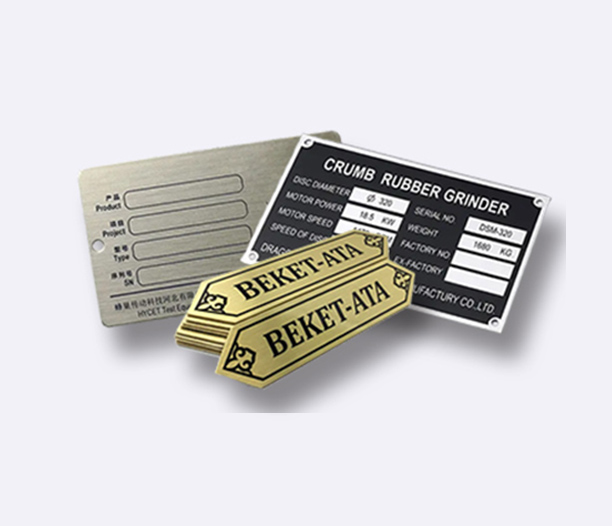
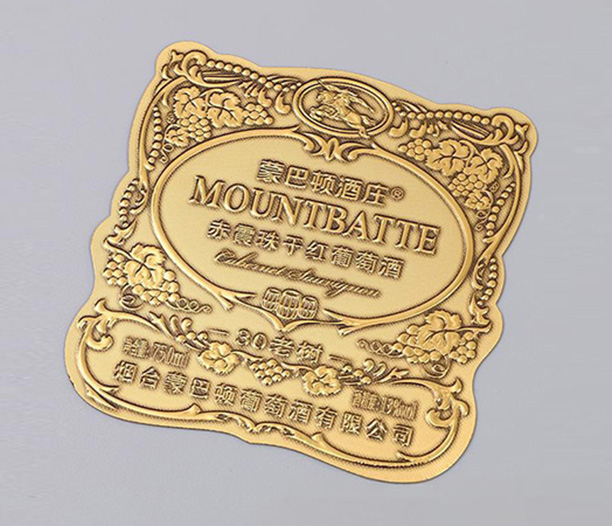
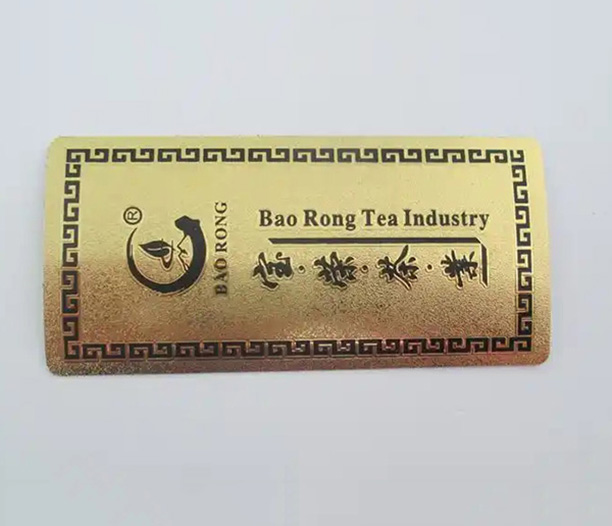
When you need a permanent, durable way to identify equipment, assets, or components, one material consistently stands out. Stainless steel tags are the industry workhorse for a reason. They offer a combination of strength and resilience that other materials simply can't match.
If you're managing machinery, tracking tools, or marking property, understanding why stainless steel tags are so widely used is crucial. This isn't just about putting a label on something; it's about ensuring critical information lasts for the life of the asset.
This article breaks down the practical benefits, common uses, and important details you should know before ordering your next set of identification plates.
Why Stainless Steel? Core Material Benefits
The choice of stainless steel isn't accidental. Its inherent properties solve many common problems found in industrial and outdoor settings.
Stainless steel is highly corrosion-resistant. This is its most famous trait. The chromium in the alloy forms an invisible protective layer. This means metal tags made from stainless steel won't rust when exposed to moisture, rain, or humidity. They survive in environments where plain steel tags would fail quickly.
These tags offer exceptional strength and durability. They are scratch-resistant, dent-resistant, and can withstand significant physical abuse. Unlike plastic or aluminum labels, stainless steel tags won't tear, peel, or deform easily under impact.
They handle extreme temperatures. Whether it's the high heat near engines and boilers or freezing outdoor conditions, stainless steel maintains its integrity. The information on the tag remains legible where other materials might melt, crack, or become brittle.
The material provides a professional, permanent look. A stainless steel tag conveys a sense of quality and permanence. It signals that the asset is important and that its identification is a long-term concern.
Common Types and Manufacturing Processes
Not all stless steel tags are made the same way. The best method depends on your needs for durability, detail, and budget.
Etched stainless steel tags are a top choice for permanent marking. The process uses chemicals or lasers to remove material, creating deep, recessed marks. This etching won't wear off. You can often add colored infill (like black or red) into the etched areas for high contrast and excellent readability.
Embossed or stamped metal tags are created by physically deforming the metal with a die. This raises the lettering and numbers from the surface. These embossed tags are incredibly tough and can be read even if the surface gets painted over, as the raised characters remain feelable.
Laser marking is a precise, computer-controlled method. It's perfect for complex logos, serial numbers, or barcodes. Laser marking can anneal the surface, change its color, or create a high-contrast engraving. It's ideal for tags that need to include scannable codes.
Printed stainless steel tags use specialized inks and a protective overcoat. While generally less permanent than etching or laser marking, modern industrial printing can be very durable. A clear protective laminate is usually applied to shield the print from abrasion and chemicals.
Primary Industrial Applications and Uses
Where do you actually see these stainless steel tags in action? Their use is widespread across many fields.
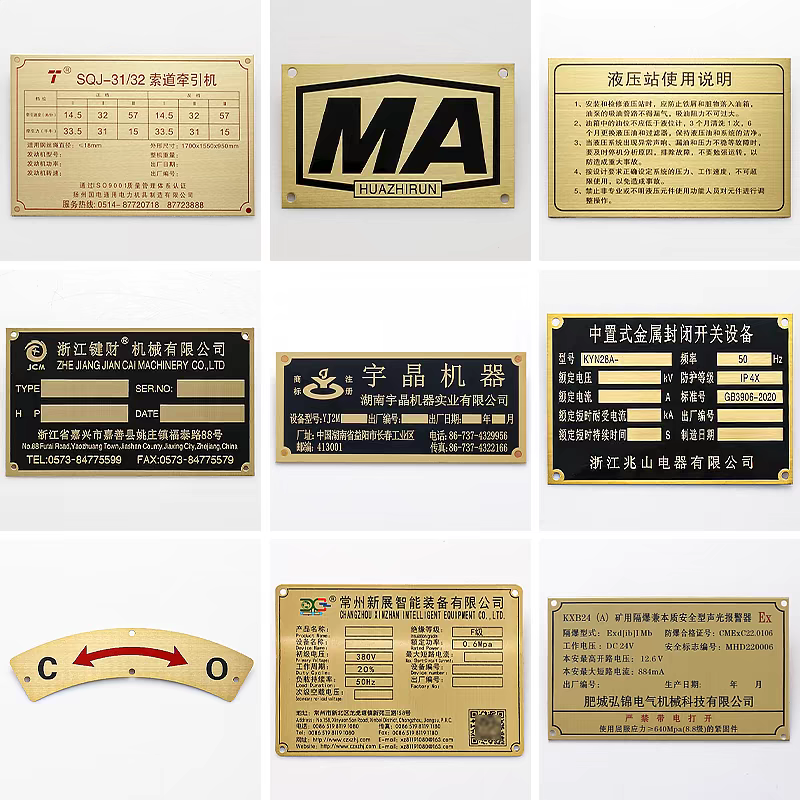
Equipment and Asset Identification is the most common use. Permanent metal asset tags are attached to machinery, tools, and test equipment. They display serial numbers, model numbers, and QR codes for inventory tracking and maintenance logs.
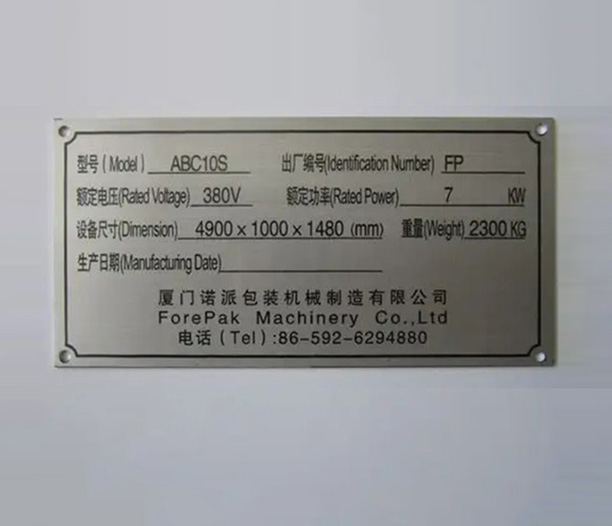
They are essential for compliance and safety labels. Many safety standards require permanent, corrosion-resistant markings. Stainless steel nameplates on electrical panels, pressure vessels, and valves show critical ratings, warnings, and certifications that must never fade or fall off.
In harsh environmental applications, they are unbeatable. Think of offshore oil rigs, marine equipment, chemical processing plants, and food production facilities. These areas expose tags to salt spray, harsh chemicals, high-pressure washdowns, and temperature swings. Stainless steel tags are one of the few options that can last.
They serve as high-security seals and property tags. The difficulty of altering or destroying a stainless steel tag makes it ideal for tamper-evident seals. They are also used for permanent property identification on buildings, infrastructure, and utility assets.
Choosing the Right Grade and Finish
Selecting the appropriate grade of stainless steel ensures your tags perform as expected in their specific environment.
Grade 304 stainless steel is the standard, all-purpose choice. It offers excellent corrosion resistance for most indoor and many outdoor applications. It's the most common and cost-effective grade for general-use metal tags.
Grade 316 stainless steel is the premium choice for highly corrosive settings. It contains molybdenum, which significantly increases resistance to chlorides and acids. Use 316 stainless steel tags for marine environments, coastal areas, chemical plants, or anywhere salt is present.
The finish affects both look and performance. A polished mirror finish is attractive but shows scratches easily. A brushed or satin finish hides minor scratches and is commonly used. A matte or bead-blasted finish provides a non-reflective, uniform surface that is excellent for laser marking.
Attachment Methods for a Permanent Hold
A tag is only as good as its attachment. The method must be as durable as the tag itself.
Industrial-grade adhesives are a clean option for smooth surfaces. High-performance acrylic or epoxy tapes can form a bond that is often stronger than the tag. Surface preparation is key for adhesive-backed stainless steel tags.
Rivets provide the most reliable mechanical fastening. They are ideal for heavy machinery, vehicles, and assets that face vibration or impact. Using stainless steel rivets with a stainless steel tag prevents galvanic corrosion.
Welding or spot-welding is a truly permanent solution. Small welding studs can be attached to the back of the tag, which are then welded to the asset. This is common in the automotive and heavy equipment industries.
Holes for screws or bolts are a simple, effective option. For panels or equipment with existing fasteners, a tag with pre-drilled holes can be easily secured. Use stainless steel hardware to match the tag and prevent rust.
Design Tips for Maximum Legibility and Longevity
A well-designed tag is easy to read for years. A few simple principles make a big difference.
Prioritize high-contrast marking. Dark infill in etched characters or dark laser marks on a silver background is highly readable. This contrast is critical in low-light industrial environments.
Keep the layout clean and simple. Include only the necessary information: asset ID, serial number, model, QR code, or critical rating. Avoid cluttering the metal tag with too much text.
Choose a durable data marking method. For permanent outdoor use, etching or deep laser engraving is superior to surface printing. The information is physically carved into the metal, not just sitting on top.
Consider size and placement. The tag must be large enough to be read easily but small enough to fit the asset. Place it on a stable, visible surface that is not prone to direct abrasion or impact during normal operation.
Frequently Asked Questions (FAQs)
Q1: Are stainless steel tags more expensive than aluminum tags?
A1: Yes, typically. Raw stainless steel material costs more than aluminum. However, for demanding applications, the longevity and reduced replacement frequency of stainless steel tags often lead to a lower total cost of ownership. You buy them once.
Q2: Can stainless steel tags rust?
A2: High-quality grades like 304 and 316 are highly resistant to rust (corrosion). In normal environments, they will not rust. However, under extreme conditions—like constant exposure to strong acids or chlorides in a low-oxygen setting—even stainless steel can experience corrosion. Grade 316 offers the best protection.
Q3: How do I clean a dirty stainless steel tag?
A3: For general dirt, use a soft cloth with mild soap and water. For grease or oil, a cloth with isopropyl alcohol works well. Avoid abrasive pads or steel wool, as they can scratch the surface. Always wipe in the direction of the metal's grain if it has a brushed finish.
Q4: Can information be added to a blank stainless steel tag later?
A4: Generally, no. The marking processes (etching, laser marking) are permanent and done during manufacturing. If you need to add a serial number later, you would need a new tag. Some suppliers offer pre-made blank tags with variable information fields that can be stamped or inscribed on-site with specialized tools.
Q5: What is the typical lead time for ordering custom stainless steel tags?
A5: Lead times vary by manufacturer, complexity, and order quantity. Simple, standard designs might ship in 5-10 business days. Complex designs with custom tooling (like embossing dies) or very large orders can take 3-6 weeks. Always request a timeline from your supplier early in the planning process.