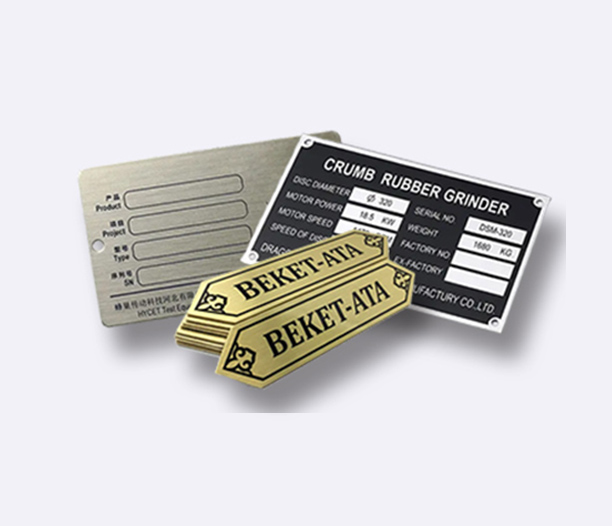
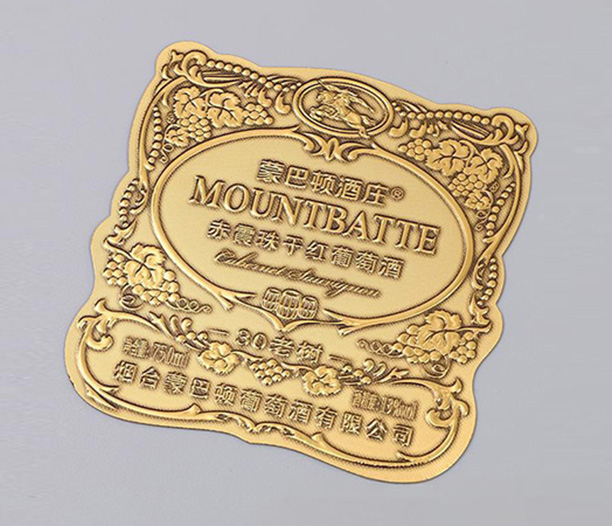
In workshops, factories, and construction sites worldwide, a simple component plays a critical role in organization, safety, and maintenance. These are metal equipment tags. Often overlooked, these durable labels are the unsung heroes of asset management. They provide permanent identification for everything from heavy machinery to electrical panels.
Choosing the right tag isn't just about slapping a number on an asset. It involves understanding materials, marking methods, and environmental challenges. This article dives into the world of metal equipment tags, exploring why they are essential, the options available, and how to select the best one for your needs.

Why Metal Equipment Tags Are a Non-Negotiable Asset
Why choose metal equipment tags over plastic or laminated labels? The answer lies in their inherent toughness. In demanding environments, identification must survive where other materials fail. Metal tags resist factors that would destroy lesser labels.
They withstand high temperatures, chemical exposure, abrasion, and UV radiation. This permanence is crucial for safety compliance, maintenance logs, and inventory tracking. A faded or missing tag can lead to operational delays or even hazardous situations.
Core Functions of Equipment Tags
Metal equipment tags serve several key purposes. First, they provide permanent asset identification. This includes serial numbers, model details, and unique asset IDs. This is the foundation of any reliable tracking system.
Second, they communicate critical safety and operational information. Warning labels, voltage ratings, and pressure limits are often stamped into metal tags for longevity. Third, they facilitate preventive maintenance. Technicians rely on the scannable or readable data on these tags to service equipment correctly and on schedule.
Exploring Common Types of Metal Equipment Tags
Not all metal equipment tags are created equal. The choice of material directly impacts performance, cost, and suitability. The three most common metals used are aluminum, stainless steel, and brass. Each has its own set of advantages for specific applications.
Understanding the differences helps you make a cost-effective and durable choice. The environment where the tag will live is the biggest deciding factor.
Aluminum Tags: The Versatile Workhorse
Aluminum equipment tags are perhaps the most widely used. They offer an excellent balance between durability, cost, and versatility. Aluminum is naturally corrosion-resistant, forming a protective oxide layer when exposed to air.
These tags are lightweight, easy to stamp or engrave, and accept finishes like anodizing for added color and protection. They are ideal for most indoor industrial environments and many outdoor applications where extreme corrosion isn't a primary concern. For general-purpose asset tagging, aluminum metal tags are often the go-to choice.
Stainless Steel Tags: For Extreme Conditions
When the environment gets tough, stainless steel equipment tags step in. Known for exceptional strength and corrosion resistance, they excel in harsh settings. Food processing plants, chemical facilities, marine applications, and outdoor installations subject to weathering all benefit from stainless steel.
These metal tags can withstand high pressures, steam cleaning, acidic exposure, and salt spray. While more expensive than aluminum, their longevity in severe conditions justifies the investment. They ensure identification remains intact for the entire lifespan of the equipment.
Brass and Other Specialty Metals
Brass metal equipment tags offer a distinct aesthetic with good corrosion resistance. They are often chosen for architectural applications, historical equipment, or where a classic, polished look is desired. Brass develops a patina over time, which can be appealing in certain contexts.
Other materials like galvanized steel or zinc alloy may be used for specific needs, such as high magnetic permeability or lower-cost options for temporary but sturdy identification. The key is matching the metal's properties to the tag's expected challenges.
Key Factors in Choosing Your Metal Equipment Tags
Selecting the right metal equipment tags involves more than picking a material. Several design and functional considerations determine whether the tag will succeed in its job. A tag that is hard to read, difficult to attach, or prone to snagging has failed, regardless of its material.
Thinking through these factors upfront saves time, money, and frustration down the line.
Attachment Methods: How Will It Stay On?
The best tag is useless if it falls off. The attachment method is a critical part of the design for metal equipment tags. Common options include adhesive backing, holes for rivets or screws, and wire loops.
Heavy-duty industrial equipment tags often use rivets for a permanent, vibration-proof bond. For surfaces that can't be drilled, high-strength industrial adhesives are available. Wire loops are perfect for valves or handles. The choice depends on the equipment's surface material, exposure to vibration, and whether the tag needs to be removable.
Marking and Legibility for the Long Haul
How information is applied to the metal tag determines its lifespan. Etching, stamping, and engraving are permanent methods that physically remove metal to create marks. These are excellent for serial numbers and core data that must never wear off.
For more complex graphics, barcodes, or color-coding, techniques like photographic anodizing (for aluminum) or digital printing with protective overlaminates are used. The goal is always maximum contrast and durability. A legible metal equipment tag is a functional one.
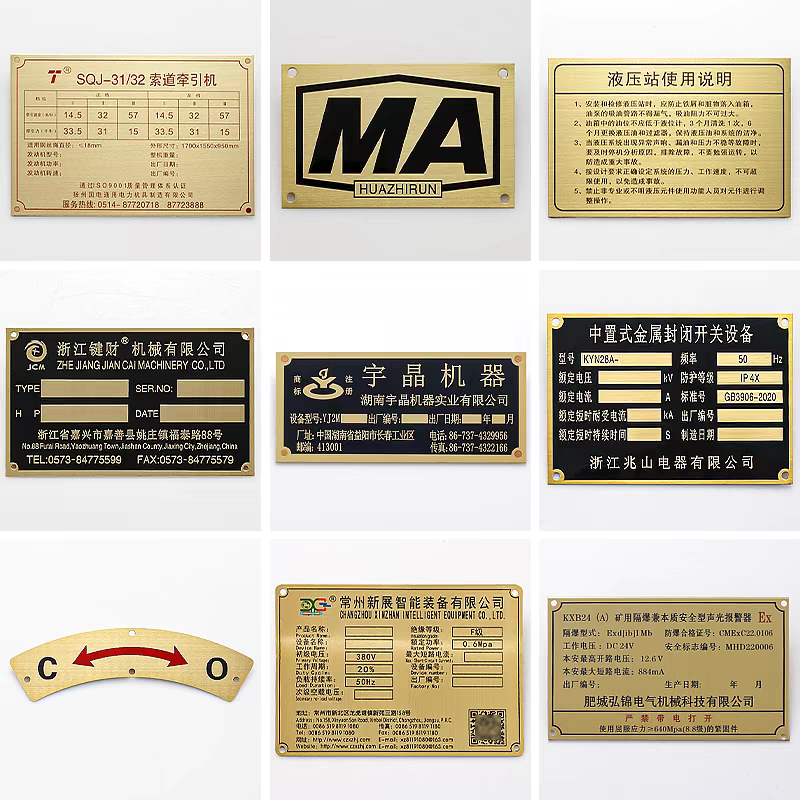
The Manufacturing and Customization Process
Modern metal equipment tags are highly customizable. The process typically starts with a blank sheet of metal, which is then sheared or stamped to size. Edges can be deburred for safety and given a specific finish, from mill to polished.
The marking process follows, using computer-controlled machines for precision. Finally, protective coatings or laminates may be applied. This allows for a wide range of custom metal tags tailored to exact specifications, from simple numbered plates to complex labels with logos, QR codes, and multi-color warnings.
Ensuring Compliance and Traceability
In many industries, metal equipment tags are not optional; they are required for compliance. Regulations may mandate that certain safety information, certification marks, or pressure ratings be permanently displayed on the equipment.
Durable metal tags provide this permanent record. They are also central to traceability systems in manufacturing, allowing companies to track a component's origin, batch, and maintenance history throughout its service life. This is invaluable for quality control and recall management.
Real-World Applications Across Industries
The use of metal equipment tags spans virtually every sector that relies on physical assets. Their robustness makes them indispensable wherever conditions are challenging or longevity is required.
In manufacturing, they identify machine tools, robotic arms, and assembly line components. In facilities management, tags are found on pumps, motors, HVAC units, and electrical switchgear.
Niche and Specialized Uses
Beyond general industry, specialized metal equipment tags serve unique roles. In the aerospace and defense sectors, tags meet stringent military specifications for materials and marking. For fire safety, brass or aluminum tags identify fire extinguishers, sprinkler valves, and hydrants, often with annual inspection records stamped directly onto them.
In utility and telecommunications, tags mark buried lines, poles, and transformers for field crews. In laboratories, corrosion-resistant tags withstand chemical exposure while identifying instruments and samples. The versatility of metal equipment tags ensures they have a solution for nearly every identification challenge.
Conclusion
Metal equipment tags are a fundamental tool for efficient and safe operations. They transform anonymous equipment into tracked, managed, and maintained assets. The investment in a high-quality, properly specified metal tag pays dividends through improved safety, reduced downtime, and streamlined inventory management.
By understanding the materials, attachment methods, and marking technologies available, you can select the perfect metal equipment tags for your specific environment. This ensures your critical identification remains clear, secure, and reliable for years to come.
Frequently Asked Questions
Q1: What is the most durable type of metal equipment tag?
A1: Stainless steel tags are generally the most durable option for metal equipment tags. They offer superior resistance to extreme temperatures, corrosion, chemicals, and physical abrasion, making them ideal for the harshest industrial and outdoor environments.
Q2: Can metal equipment tags be used outdoors?
A2: Absolutely. Many metal equipment tags, particularly those made from stainless steel or anodized aluminum, are specifically designed for outdoor use. They resist rust, UV fading, and weathering, ensuring information remains legible through rain, sun, and temperature swings.
Q3: How are metal equipment tags typically attached to equipment?
A3: Metal equipment tags can be attached using several methods. Common approaches include rivets or screws through pre-drilled holes for a permanent hold, high-strength industrial adhesives for surfaces that can't be drilled, and wire loops or chains for attaching to valves or handles.
Q4: Is it possible to get custom-shaped metal equipment tags?
A4: Yes, customization is a key advantage of metal equipment tags. They can be die-cut or machined into custom shapes and sizes beyond standard rectangles and circles to fit specific spaces or meet unique design requirements for branding or compliance.
Q5: How do I choose between etched, stamped, or printed information on a tag?
A5: The choice depends on need. Etching and stamping are permanent, physical processes ideal for core data that must never wear off. Printing allows for more complex graphics, barcodes, and color but often requires a protective laminate over the top for durability in tough conditions.