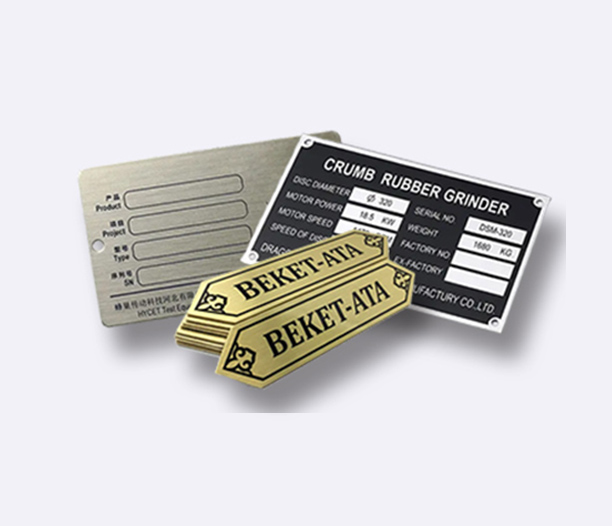
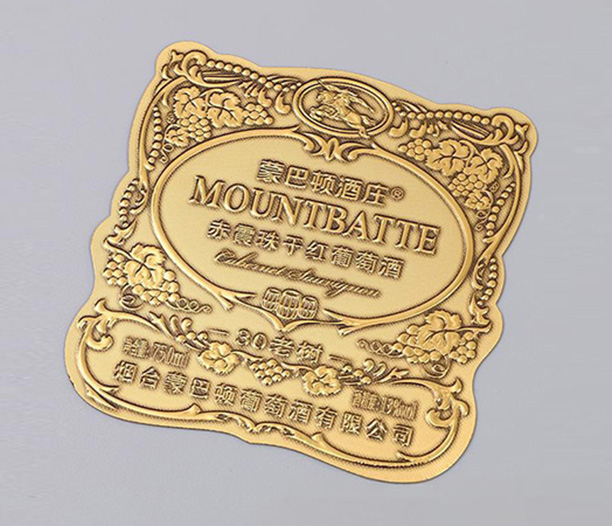
Aluminum Cable Tags for Harsh Environments | Hemawell NameplateIn industrial facilities, power plants, and network infrastructures, the ability to trace and identify cables quickly and accurately is non-negotiable. Poorly marked cables lead to costly downtime, safety hazards, and maintenance errors. Among the various identification methods, aluminum cable tags have emerged as the industry benchmark for longevity, readability, and cost-effectiveness. This article examines the metallurgical advantages, application-specific requirements, and engineering considerations that make aluminum the preferred material for cable identification, while providing procurement insights from a leading manufacturer, Hemawell Nameplate.
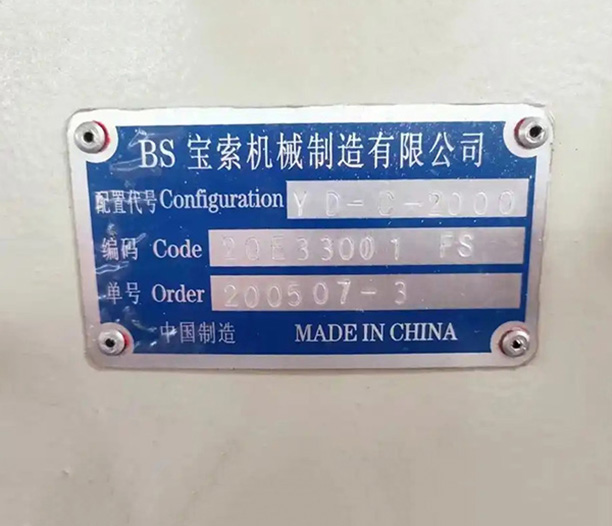
1. Why Aluminum? Material Properties and Performance Metrics
Selecting the right material for cable tags involves balancing mechanical strength, environmental resistance, and weight. Aluminum cable tags are typically fabricated from alloys such as 3003 or 5052, which offer a combination of formability and corrosion resistance. Compared to stainless steel, aluminum is 65% lighter, reducing the mechanical load on cables and ties, especially in vertical cable trays or high-vibration environments.
1.1 Corrosion Resistance and Surface Treatments
Aluminum naturally forms a passive oxide layer that protects against atmospheric corrosion. For extreme environments—such as offshore platforms or chemical plants—additional surface treatments like anodizing (Type II or III) increase thickness of the oxide layer to >25 microns. Anodized aluminum cable tags withstand 1,000+ hours of salt spray testing per ASTM B117, outperforming untreated carbon steel tags.
1.2 Thermal and Mechanical Resilience
Aluminum retains ductility at sub-zero temperatures and remains stable up to 220°C (428°F) with appropriate temper. This makes it suitable for applications ranging from Arctic pipelines to turbine enclosures. Tensile strength of 5052-H32 aluminum is approximately 210 MPa, ensuring tags resist tearing during installation with cable ties.
2. Industry-Specific Applications and Use Cases
Different sectors impose unique demands on cable identification. Below we detail four critical industries where aluminum cable tags are indispensable.
Power Generation & Distribution: In substations and switchyards, UV radiation and temperature swings degrade plastic tags within months. Aluminum tags with laser-etched text remain legible for over 25 years, ensuring compliance with NETA and IEEE standards.
Oil & Gas (Onshore/Offshore): Exposure to hydrocarbons, saltwater, and aggressive cleaning agents demands tags that are chemically inert. Aluminum tags with epoxy-based ink or embossing resist sour gas (H₂S) environments.
Data Centers and Telecommunications: High-density cabling requires thin, lightweight tags that fit into narrow pathways. Aluminum flag tags as thin as 0.5 mm provide clear identification without obstructing airflow.
Transportation Infrastructure: Tunnels, rail lines, and airports use aluminum cable tags because they are non-combustible and meet low-smoke, zero-halogen (LSZH) requirements when used with compatible ties.
3. Customization and Compliance: Meeting Industry Standards
Generic tags often fail to address specific regulatory or operational needs. Hemawell Nameplate specializes in custom aluminum cable tags that align with global standards, including ISO 14001, RoHS, and REACH. Key customization parameters include:
3.1 Marking Technologies
Laser marking: High-contrast, permanent marks suitable for barcodes, QR codes, and small font sizes (down to 4pt). Achieves 2D code readability per ISO/IEC 15415.
Embossing/Debossing: Raised or recessed characters for applications where paint or ink may be worn away by abrasion.
Photochemical etching: Cost-effective for medium-to-large runs, producing precise text and logos without mechanical stress.
3.2 Mounting Configurations
Engineers can choose from wrap-around tags, slot-mount styles, or adhesive-backed versions. Pre-punched holes (3–12 mm diameter) accommodate nylon, stainless steel, or Teflon cable ties. For high-vibration environments, double-hole mounting with stainless steel locking ties is recommended.
4. Installation Methods and Best Practices
Proper installation of aluminum cable tags ensures they remain secure and readable for the asset’s life. Field studies indicate that incorrectly attached tags account for 30% of identification failures. Adhere to these guidelines:
Material compatibility: Use ties made of 316 stainless steel or UV-stabilized nylon to avoid galvanic corrosion between aluminum and dissimilar metals.
Placement: Position tags at consistent distances from cable terminations (e.g., 300 mm from the gland) and orient them for easy viewing without bending or straining the cable.
Tie tension: Apply sufficient torque to prevent slippage, but avoid deforming the tag. A gap of 1–2 mm between tag and cable jacket allows for thermal expansion.
Redundancy: For buried or direct-embedded cables, attach two tags: one at the access point and one 1 meter below grade, using epoxy-coated aluminum for additional corrosion protection.
5. Common Challenges and How Premium Aluminum Tags Solve Them
Facility managers often encounter issues such as tag loss, illegibility, and premature aging. The table below outlines typical pain points and the engineering countermeasures provided by high-quality aluminum cable tags.
Challenge: Fading text due to UV exposure.
Solution: Laser marking penetrates the surface oxide, creating a permanent dark mark that does not fade under direct sunlight.
Challenge: Tags snapping during installation.
Solution: Hemawell’s 0.8 mm thick 5052-H32 aluminum tags offer yield strength sufficient to withstand repeated bending.
Challenge: Chemical attack from solvents or oils.
Solution: Anodized aluminum resists solvents, hydraulic fluids, and even mild acids (pH 4–9).
Challenge: Radio-frequency interference (RFI) with plastic tags containing metallic inks.
Solution: Solid aluminum tags are passive and do not generate RFI; they can also be used as RFID carriers when embedded with UHF inlays.
Challenge: Inventory management of multiple tag sizes.
Solution: Custom aluminum tags can be supplied in coiled strips or with break-off tabs for field sizing, reducing SKU count.
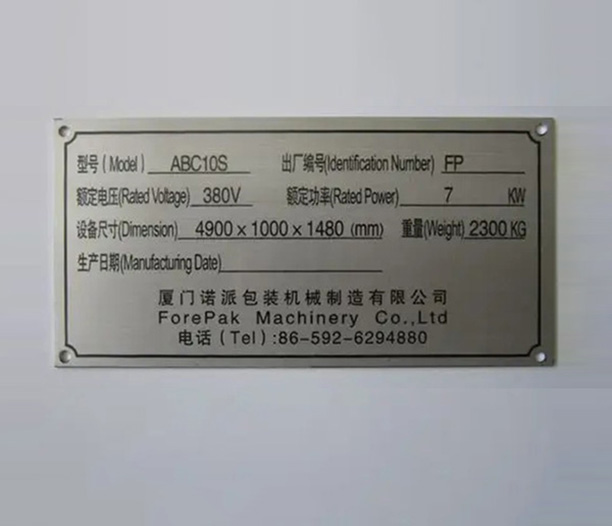
6. Why Partner with Hemawell Nameplate for Your Cable Tags
With over two decades of experience in industrial nameplates, Hemawell Nameplate combines engineering depth with flexible manufacturing. Our aluminum cable tags are produced in an ISO 9001:2015 facility, with each batch traceable via material certifications (mill test reports). We support prototyping with no minimum order quantity, and our in-house laser marking guarantees 99.9% verifiable barcodes. Whether you require tags for a 50‑cable substation or a 50,000‑cable offshore platform, Hemawell delivers consistent quality with lead times as short as three working days.
By integrating LSI keywords such as "cable markers," "wrap‑around cable tags," "laser etched aluminum," "UV resistant labels," and "NEMA rated tags," this article underscores the technical superiority of aluminum. For procurement specialists, the decision is clear: invest in aluminum cable tags to avoid re‑labeling cycles, reduce safety incidents, and maintain operational integrity.
Frequently Asked Questions (FAQ)
Q1: What is the difference between aluminum cable tags and stainless steel tags?
A1: Aluminum tags are approximately one‑third the weight of stainless steel, making them ideal for overhead trays and applications where weight is a concern. They offer excellent corrosion resistance without the risk of galvanic corrosion when used with aluminum cables. Stainless steel (typically 304 or 316) is harder and more abrasion‑resistant, but also more expensive and heavier. For 90% of industrial environments, anodized aluminum provides the best balance of durability and cost.
Q2: Can aluminum cable tags withstand extreme high temperatures?
A2: Yes. Untreated aluminum alloys maintain structural integrity up to 220°C (428°F). For higher temperatures (up to 500°C), ceramic‑coated aluminum tags are available. Always verify the temperature rating of the marking method—laser marking remains legible even after exposure to 300°C, while some paints may degrade.
Q3: Are there any minimum order quantities (MOQ) for custom aluminum cable tags?
A3: Hemawell Nameplate does not impose MOQs. We routinely produce prototypes or small batches (e.g., 10–50 pieces) for field trials, as well as volume orders of 50,000+ tags. This flexibility allows clients to validate designs before scaling up.
Q4: How are barcodes or QR codes applied to aluminum tags, and are they durable?
A4: We use fiber laser marking to etch 2D codes directly into the aluminum surface. The mark is permanent and cannot be removed without destroying the tag. Barcode contrast typically exceeds 70%, ensuring reliable scanning even after years of exposure to dirt or grease.
Q5: What mounting accessories do you recommend for aluminum cable tags?
A5: The choice depends on the environment. For indoor/clean environments, UV‑resistant nylon ties (PA66) are economical. For outdoor, corrosive, or high‑temperature areas, we recommend 316 stainless steel ties with a rolled edge to prevent cutting into the tag. Tags can also be supplied with pre‑drilled holes for screws or pop‑rivets.
Q6: Can aluminum tags be used on underground cables or direct burial applications?
A6: Yes, provided they are adequately protected. We offer a heavy‑duty anodized or epoxy‑coated version that resists moisture and soil chemicals. For direct burial, tags should be attached with stainless steel ties and positioned away from sharp rocks; a heat‑shrink sleeve over the tag and tie adds extra protection.
Q7: How do I specify the right thickness for my aluminum cable tags?
A7: Standard thickness ranges from 0.5 mm (light‑duty, indoor) to 1.5 mm (heavy‑duty, high‑abrasion). A good rule of thumb: for tags larger than 50 mm x 25 mm, use at least 0.8 mm to prevent warping. If tags will be handled frequently or installed in high‑traffic areas, 1.0 mm is recommended.