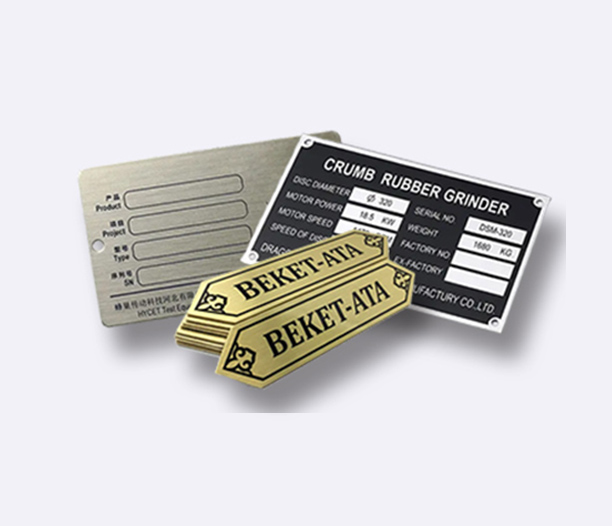
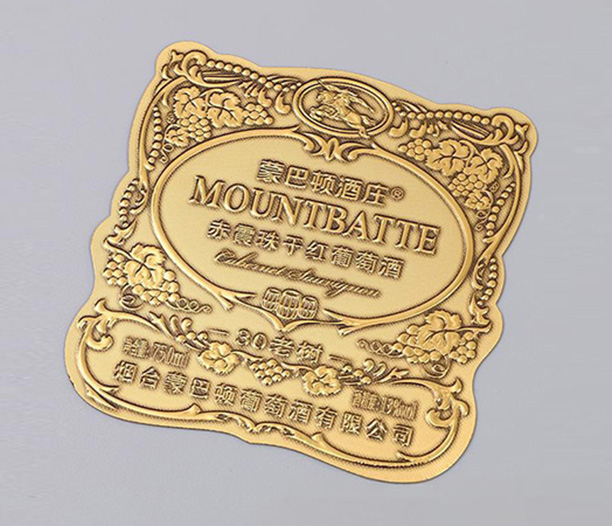
In the sphere of industrial asset identification, permanent marking solutions
are non-negotiable. While printed labels serve temporary purposes, critical
infrastructure, heavy machinery, and regulatory environments demand a medium
that withstands extreme thermal cycles, chemical exposure, and mechanical
abrasion. This is where blank aluminum
tags emerge as the industry standard. Unlike pre-printed
alternatives, these unmarked substrates provide the flexibility for on-site
variable data encoding—whether through mechanical stamping, laser engraving, or
electrochemical etching—while retaining the inherent corrosion resistance and
tensile strength of aluminum alloys. This guide dissects the metallurgical
characteristics, performance benchmarks, and application-specific engineering
considerations that separate commodity tags from professional-grade
identification systems, with a focus on solutions provided by Hemawell
Nameplate.
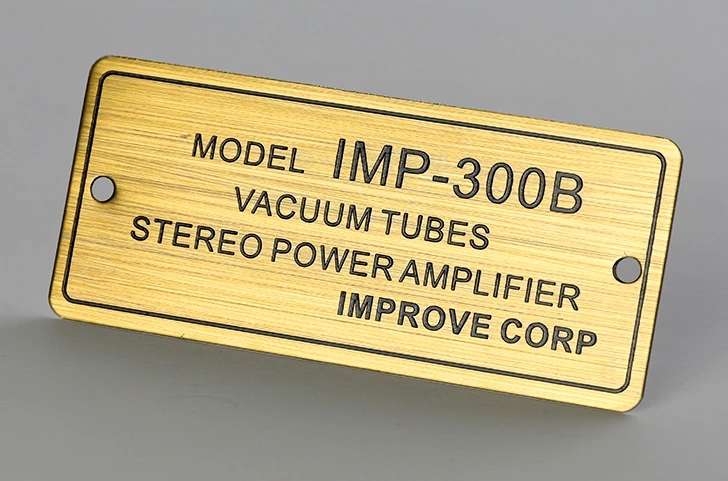
1. Metallurgical Composition and Material Science: Selecting the Right
Alloy
The performance of a blank aluminum tag is dictated by its alloy composition
and temper. Industrial applications require more than just a soft aluminum
sheet; they require a calibrated balance between formability for embossing and
rigidity for long-term service. The two dominant alloys in the North American
and European industrial sectors are 3003 and 5052, each serving distinct
operational profiles.
1.1 3003 Aluminum: The Formability Standard
3003 aluminum is the most widely used alloy for blank aluminum
tags intended for manual or machine stamping. Its primary alloying
element is manganese (1.2%), which provides moderate strength (tensile strength
~110-150 MPa) without compromising ductility. The H14 temper is preferred for
tags as it offers a semi-hard state that resists denting during installation
while remaining pliable enough for crisp character impressions. Tags
manufactured from 3003 exhibit excellent resistance to atmospheric corrosion,
making them suitable for outdoor electrical panel labeling, valve tags in
chemical plants, and asset tracking in marine environments.
1.2 5052 Aluminum: Superior Corrosion Resistance and Strength
For environments involving saltwater spray, high humidity, or direct chemical
exposure, 5052 aluminum provides a superior alternative. With magnesium as the
primary alloying element (2.5%), 5052 offers a higher tensile strength (210-260
MPa) and superior fatigue resistance compared to 3003. This alloy is the
material of choice for blank aluminum
tags used in offshore drilling platforms, food processing
facilities (where frequent sanitation cycles involve caustic cleaners), and
military ground equipment. It maintains structural integrity even when
perforated for wire or rivet mounting, ensuring that the tag remains legible for
the asset’s entire lifecycle.
2. Performance Parameters: Beyond Simple Identification
Professional-grade blank aluminum tags must satisfy quantifiable performance
criteria. These metrics are not marketing claims but engineering specifications
that dictate reliability in mission-critical applications.
Temperature Range: High-quality aluminum tags maintain
structural integrity across -40°C to 250°C (-40°F to 482°F). This range ensures
operability in cryogenic storage facilities, engine compartments, and industrial
ovens.
Salt Spray Resistance (ASTM B117): Premium blanks exceed
500 hours of exposure without pitting or significant corrosion, a critical
requirement for coastal infrastructure and transportation equipment.
UV Stability and Weathering: Unlike polymer-based tags that
become brittle under prolonged UV exposure, anodized aluminum blanks retain
their surface integrity for decades, even in equatorial climates.
Thickness Tolerances: Industrial blanks typically range
from 0.020” (0.5mm) to 0.032” (0.8mm) in thickness. Thinner gauges suit
wire-wrapping applications, while thicker gauges are mandatory for high-impact
zones like mining equipment or railway rolling stock.
Embossing Depth: Professional blanks are calibrated to
accept a minimum embossing depth of 0.015” to 0.020”. This depth ensures that
stamped characters remain legible even after decades of wear or
over-painting.
3. Application-Specific Engineering and Industry Pain Points
The shift from pre-printed labels to blank aluminum
tags is frequently driven by operational failures in existing
identification systems. Below is a breakdown of sector-specific requirements and
the engineering solutions that address them.
3.1 Oil, Gas, and Petrochemical Facilities
Pain Point: In refineries, traditional plastic or laminated
tags degrade rapidly due to exposure to hydrocarbons, sour gas (H₂S), and
steam-out cleaning cycles. Failed tags lead to safety incidents and operational
downtime during valve identification.
Solution: 5052-H32 aluminum blanks with a brushed or etched
surface preparation. The surface profile enhances the adhesion of secondary
epoxy coatings if color coding is required, while the metal substrate eliminates
flammability concerns associated with plastics. Hemawell
Nameplate supplies these tags with precision-sheared edges and
radiused corners to prevent worker injury during handling, complying with OSHA
safety requirements.
3.2 Electrical Power Generation and Distribution
Pain Point: Arc flash incidents and electromagnetic
interference (EMI) can destroy adhesive labels in switchgear and control
cabinets. Additionally, regulatory audits (NERC/FERC) require permanent,
non-removable asset identifiers that cannot be tampered with.
Solution: Using thick-gauge (0.032”) 3003 aluminum blanks
allows for permanent indentation using hand-held metal stampers or hydraulic
presses. The resulting raised characters are integral to the tag, rendering them
impervious to arc flash heat (short duration) and resistant to accidental
smearing. The metallic nature also ensures compatibility with RFID cavity
placement without signal interference.
3.3 Defense and Aerospace Maintenance
Pain Point: MIL-STD-130 mandates specific marking
permanence, contrast, and machine-readability for identification of government
property. Inconsistent marking surfaces lead to rework and non-compliance
penalties.
Solution: Aerospace-grade blank aluminum tags adhere to
strict flatness and surface finish requirements (Ra ≤ 32 µin) to accommodate
direct part marking (DPM) via dot peen or laser. The blanks must be free of
burrs and rolling oils to ensure that Data Matrix codes meet ANSI/ISO grading
standards (Grade A or B).
4. Marking Technologies: Matching the Blank to the Method
The versatility of blank aluminum tags lies in their compatibility with
multiple permanent marking technologies. The choice of technology depends on
production volume, character density, and data permanence requirements.
Mechanical Stamping (Hand or Press): The traditional method
for low-volume, high-durability applications. It creates a physical deformation
in the metal, leaving raised characters on the reverse side. Best suited for
3003-H14 aluminum due to its ductility.
Laser Engraving (Fiber Laser): A non-contact method that
creates high-contrast, permanent marks on anodized or coated aluminum. For raw
blanks, laser marking can create dark annealed marks. This method is ideal for
2D Data Matrix codes and serialization.
Electrochemical Etching: Utilizes an electrolyte and
stencil to remove a precise amount of metal, creating a smooth, permanent mark
without deformation. It is the preferred method for thin-gauge blanks (0.020”)
where embossing would compromise structural integrity.
Dot Peen Marking: A pneumatically driven stylus creates a
series of dots to form characters. This method works exceptionally well on 5052
aluminum, producing deep, machine-readable codes that withstand abrasive
environments.
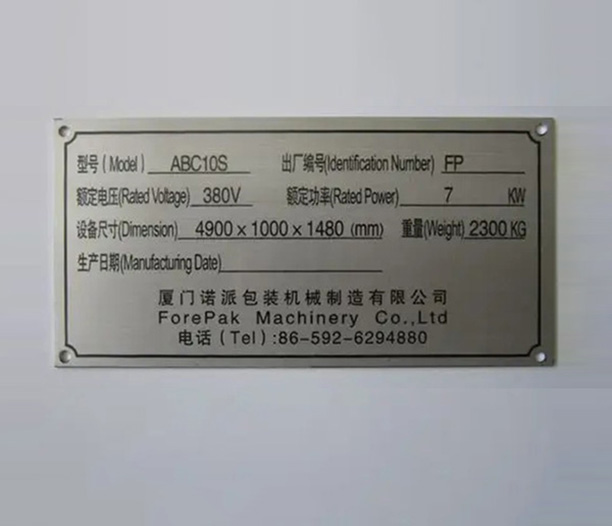
5. Compliance and Standardization: Meeting Global Requirements
Professional blank aluminum tags are not merely “tags”; they are compliance
tools. Adherence to international standards is a baseline expectation for
organizations operating in regulated industries.
5.1 ANSI/ISO 9001:2015 Traceability
Quality management systems require that traceability items remain legible for
the defined retention period. Suppliers like Hemawell
Nameplate provide certification of material composition and
thickness tolerances, ensuring that end-users can validate that their marking
substrates meet the required quality benchmarks.
5.2 MIL-STD-130N (Department of Defense)
For defense contractors, the tag’s surface finish must support a 2D Data
Matrix code with a minimum contrast of 25% between the mark and the background.
Blank aluminum tags designed for this standard are supplied with a specified
surface roughness and anodized layer thickness to guarantee mark quality.
5.3 NFPA 70E (Arc Flash Safety)
In electrical safety, labels must be non-conductive and resistant to the
effects of an arc flash. Aluminum tags with a high-grade anodized coating
provide a non-conductive surface (when coated) and will not support combustion,
making them superior to many non-metallic alternatives in arc flash risk
assessments.
6. Operational Economics: Total Cost of Ownership (TCO)
While the upfront unit cost of a blank aluminum tag may be higher than a
synthetic paper label, the total cost of ownership over a 10- to 20-year asset
lifecycle is significantly lower. Consider the following:
Replacement Frequency: Synthetic labels often require
replacement every 3-5 years, incurring labor costs for removal, surface
cleaning, and reapplication. Aluminum tags, once installed, typically outlast
the asset.
Data Integrity: The cost of misidentification in a process
plant—such as operating the wrong valve—can exceed hundreds of thousands of
dollars in remediation and lost production. Permanent metal marking eliminates
this risk.
Scalability: Stocking bulk blank aluminum tags in standard
sizes (e.g., 2” x 4”, 3” x 5”) allows facilities to mark assets on-demand with
manual stampers, reducing lead times from weeks to minutes compared to custom
pre-printed orders.
7. Procurement Considerations: From Raw Stock to Finished Application
When specifying blank aluminum
tags for a project, engineers and procurement specialists must
evaluate several critical parameters to ensure alignment with the operational
environment:
Surface Finish: Mill finish for raw stamping; brushed for
aesthetic consistency; anodized (clear or color) for added surface hardness and
corrosion resistance; or pre-treated for laser marking contrast.
Hole Configuration: Pre-punched holes (single, double, or
slot) for rivet, wire, or screw mounting reduce field fabrication time and
ensure consistent attachment methods.
Corner Style: Square corners for maximum area; radiused
corners for safety in high-traffic areas; or notched corners for specific
fastening systems.
Backing: Uncoated for welding or adhesive application; or
pre-applied pressure-sensitive adhesive (PSA) for permanent bonding to smooth
surfaces.
Frequently Asked Questions (FAQs)
Q1: What is the difference between anodized and
non-anodized blank aluminum tags, and which should I choose?
A1:
Anodizing is an electrochemical process that thickens the natural oxide layer on
aluminum, increasing surface hardness (up to 60 HRC), corrosion resistance, and
providing a substrate for dyeing (color coding). Non-anodized (mill finish) tags
are softer, making them easier to stamp by hand, and are suitable for indoor
applications or where cost minimization is critical. For outdoor or high-wear
environments, anodized blanks are the recommended choice.
Q2: Can I use a standard dot peen marking machine on
blank aluminum tags without causing distortion?
A2: Yes, but the
thickness and alloy matter. For dot peen marking, a minimum thickness of 0.025”
(0.64mm) in 5052 or 3003 aluminum is recommended to prevent backside
deformation. Thinner gauges may bulge or distort, affecting both the mark
quality and the tag’s flatness. Always test the specific alloy and thickness
with your marking machine’s energy settings before bulk production.
Q3: Are blank aluminum tags compliant with RoHS
(Restriction of Hazardous Substances) regulations? A3: Pure
aluminum and common alloys like 3003 and 5052 are inherently RoHS compliant as
they do not contain lead, mercury, cadmium, or other restricted substances in
concentrations above the threshold. However, if the tags undergo anodizing or
receive a colored coating, you must verify that the finishing chemicals used are
also RoHS compliant. Reputable suppliers like
Hemawell
Nameplate can provide RoHS certificates upon request.
Q4: How do I ensure that laser marking on a blank
aluminum tag achieves a high-contrast, readable code?
A4: For raw
(non-anodized) aluminum, a fiber laser creates a dark annealed mark by heating
the surface to produce an oxide layer. The contrast depends on the aluminum
alloy and surface finish. For maximum contrast (black mark on silver
background), you should either specify an anodized blank (where the laser
removes the anodized layer to expose the bare aluminum) or use a specialized
marking compound with a MOPA fiber laser. Always request a marking sample from
your tag supplier before committing to large orders.
Q5: What is the typical lead time for custom-sized
blank aluminum tags with specific hole patterns?
A5: For standard
thicknesses (0.020” to 0.032”) and common alloys, suppliers typically maintain
inventories that allow shearing and hole-punching to custom dimensions within 5
to 10 business days. For specialized requirements—such as non-standard
thicknesses, exotic alloys (e.g., 7075), or complex contour cutting—lead times
may extend to 2-4 weeks. Partnering with a manufacturer that maintains extensive
in-house fabrication capabilities ensures faster turnaround and tighter quality
control.
In conclusion, blank aluminum
tags represent a foundational element in industrial identification
strategies. Their value is derived not from complexity, but from material
integrity, marking versatility, and rigorous compliance with industry standards.
By selecting the correct alloy, thickness, and surface treatment for the
specific environmental stressors—and by utilizing established marking
technologies—organizations can achieve permanent traceability that reduces
operational risk and lowers long-term identification costs. For engineered
solutions that bridge the gap between raw material and field-ready
identification, Hemawell Nameplate provides the
technical expertise and fabrication precision required for mission-critical
applications.