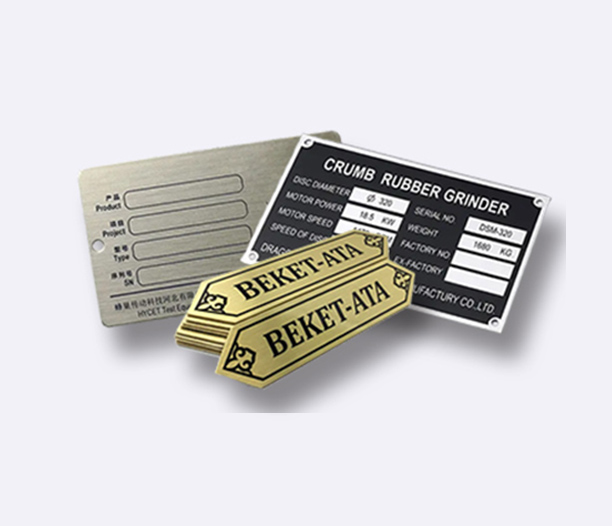
In the hum of a factory, the controlled chaos of a construction site, or the precise environment of a laboratory, every piece of equipment has a story. Its identity, its warnings, its maintenance history, and its next inspection date are not just details—they are critical data points for safety, organization, and operational flow. This vital information lives on custom equipment tags.
More than just stickers or generic labels, these tags are the durable, permanent voice of your assets. They communicate silently but authoritatively to every operator, technician, and inspector. Choosing the right industrial asset tags is not an administrative afterthought; it’s a fundamental investment in your operation’s backbone.
This article breaks down why custom equipment identification matters, how it’s done, and what you need to know to specify tags that perform under pressure.
What Are Custom Equipment Tags?
At their core, custom equipment tags are durable markers designed to be permanently attached to machinery, tools, electrical panels, and other assets. Unlike off-the-shelf labels, they are tailored to your specific needs.
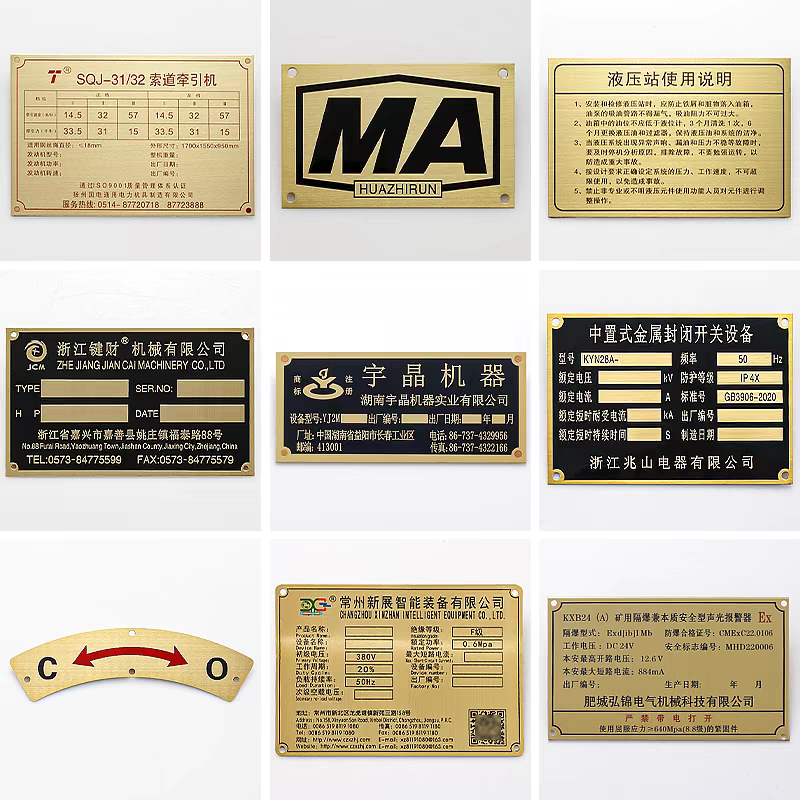
This customization can include your company logo, unique asset numbers, serial numbers, barcodes or QR codes, safety warnings, inspection dates, voltage ratings, and instructional text. They are manufactured from materials chosen to withstand the specific environment they will live in—whether that’s extreme heat, chemical exposure, abrasion, or outdoor weather.
The goal is to create a tag that lasts the lifetime of the asset, providing clear, unfading information. From metal asset tags on heavy machinery to chemical-resistant labels on drums, their purpose is universal: to provide permanent, reliable identification.
Why Your Operation Needs More Than Just a Label
Generic, handwritten, or poorly adhered labels fail. They peel, fade, and become illegible. Custom industrial tags are engineered to avoid these failures, delivering tangible benefits.
Safety and Compliance: This is paramount. Clearly marked warning tags, voltage ratings, lockout/tagout (LOTO) points, and pressure ratings are non-negotiable for OSHA and other regulatory compliance. A durable equipment identification tag ensures safety messages remain visible and enforceable, reducing workplace hazards.
Asset Management and Tracking: Knowing what you have, where it is, and its maintenance status is the foundation of good management. Custom asset tags with scannable barcodes or QR codes integrate directly into your Computerized Maintenance Management System (CMMS). This enables precise tracking, simplifies audits, and optimizes maintenance schedules.
Operational Efficiency: Time wasted searching for an asset number or deciphering a faded serial number is lost productivity. A permanent, clearly printed equipment nameplate provides instant identification. It streamlines inventory checks, speeds up repair part ordering, and helps new technicians get up to speed quickly.
Loss Prevention and Theft Deterrence: Permanently affixed, serialized custom metal tags act as a theft deterrent. They clearly mark company property and make reselling stolen goods more difficult. Their presence alone can discourage casual theft.
Professionalism and Branding: A fleet of well-maintained equipment with clean, consistent, and professional-looking custom identification tags projects an image of organization and quality control. It reflects a company culture that pays attention to details.
Key Materials for Durable Equipment Tags
The material choice is the most critical decision in creating effective custom equipment tags. The wrong material will degrade, leading to information loss and potential safety risks.
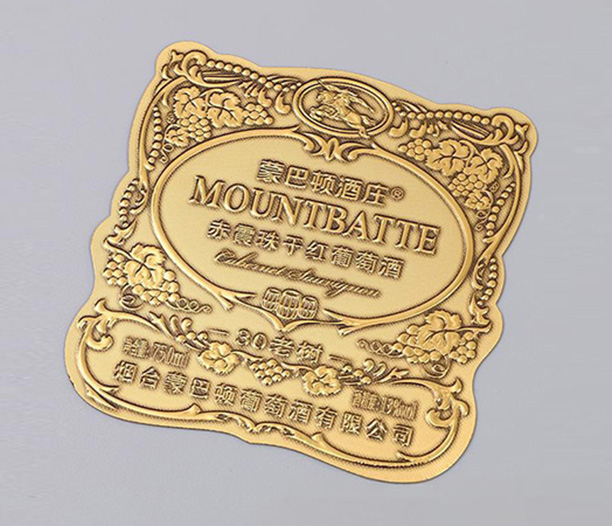
Metal Tags: The gold standard for durability. Anodized aluminum tags are lightweight, highly corrosion-resistant, and excellent for indoor or mild outdoor use. Stainless steel tags offer supreme strength and resistance to high heat, chemicals, and abrasion, ideal for harsh industrial or food processing environments. Brass tags are often chosen for their classic appearance in panels or on historical equipment.
Rigid Plastic Tags: Materials like ABS, Polycarbonate, or PVC offer a great balance of durability and cost. They can be engineered for excellent chemical resistance, UV stability, and are often used for electrical ratings, pipe markers, and industrial asset tags in controlled environments.
Foil and Polyester Labels: These flexible materials with aggressive adhesive backings are perfect for surfaces that can’t accommodate a rigid tag. A polyester equipment label with a protective laminate is superb for curved surfaces, handheld tools, and applications requiring UV and mild chemical resistance.
The choice depends entirely on your environmental challenges: heat, chemicals, abrasion, UV exposure, and required lifespan.
The Information That Belongs on Your Tags
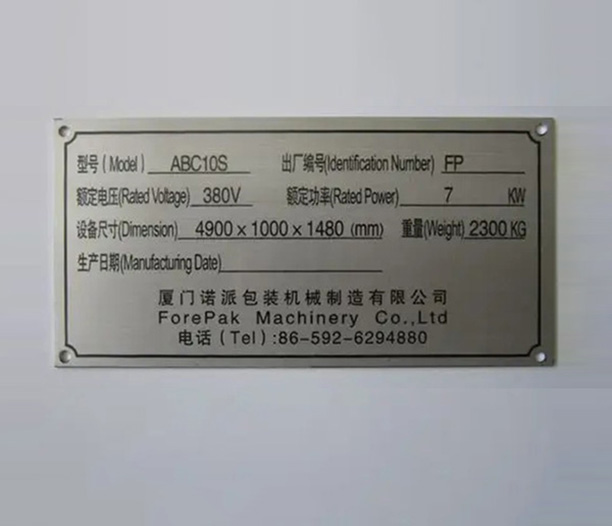
What you put on your custom equipment tags is as important as the tag itself. A well-designed tag communicates efficiently.
Essential Data:
- Asset ID/Serial Number: A unique, trackable number.
- Equipment Name/Model: Clear description of the asset.
- Company Name/Logo: For ownership and branding.
- Barcode/QR Code: Links directly to your database records.
- Manufacture/Install Date: For lifecycle tracking.
Safety & Operational Data:
- Warning Notices (e.g., “Danger: High Voltage,” “Hot Surface”).
- Capacity/Rating (e.g., weight limits, pressure ratings, voltage).
- Inspection Due Dates/Logs (often on writeable surfaces).
- Lockout/Tagout Points.
- Maintenance Instructions or Fluid Types.
Planning this information hierarchy before ordering ensures your custom asset tags are both comprehensive and easy to read under operational conditions.
Attachment Methods: Making Sure Your Tags Stay Put
A tag is only as good as its bond to the asset. The attachment method must be as durable as the tag itself.
Adhesives: High-performance industrial acrylic or epoxy adhesives are used for polyester equipment labels and some plastic tags. Surface preparation is key—clean, dry, and grease-free. These adhesives can form a bond stronger than the tag material itself, suitable for everything from tool crib items to control panels.
Mechanical Fasteners: For metal asset tags, rivets, screws, or bolts provide a permanent, physical attachment. This is essential for equipment that experiences high vibration, heat, or where adhesive bonds might be compromised. Hole placement and fastener material (e.g., stainless steel) must be specified.
Welding or Embossing: In some heavy-industry applications, tags can be directly welded onto an asset or the information can be embossed directly into a metal surface, creating an indented equipment identification tag.
Navigating the Custom Tag Ordering Process
Getting the right custom equipment tags doesn’t have to be complex. A clear process leads to the best results.
- Define Your Need: List the assets, their environments, and the key information each tag must hold. Consider future scalability.
- Choose Material & Attachment: Based on the environment and surface, select the material and how it will attach. A reputable supplier can advise here.
- Design Your Layout: Provide a sketch or sample of what you want. Include logos in vector format (.AI, .EPS) for clean reproduction. Specify font sizes for readability.
- Request Samples: Before a full production run, ask for material and print samples. Test them in your actual environment for adhesion, legibility, and durability.
- Integrate with Your System: Ensure the unique identifiers (like barcodes) on your custom identification tags are compatible with your existing asset tracking software.
Investing time in this upfront process prevents costly mistakes and ensures your tags perform as expected for years.
Common Questions About Custom Equipment Tags
Q1: How do I choose between metal and plastic for my custom equipment tags?
A1: The environment dictates the choice. For harsh conditions involving high heat, chemicals, abrasion, or outdoor exposure, metal asset tags like stainless steel or aluminum are best. For controlled indoor environments, electrical applications, or cost-sensitive projects where chemical resistance is still needed, engineered rigid plastics are an excellent and durable choice.
Q2: Can the information on these tags be updated or changed?
A2: Permanently marked data (etched, stamped, or printed under laminate) cannot be changed, which is ideal for fixed serial numbers. However, you can include a blank area or a writeable surface (like a metal-impressed area or a laminated write-on strip) for variable information such as next inspection dates or maintenance codes.
Q3: How long does it take to receive custom equipment tags after ordering?
A3: Lead times vary by complexity and quantity. For standard custom asset tags, expect 7-10 business days for production after final design approval. More complex projects, custom shapes, or very large quantities may require additional time. Always discuss timelines with your supplier during quoting.
Q4: Are these tags truly resistant to chemicals and solvents?
A4: Yes, when specified correctly. Materials like stainless steel, certain anodized metals, and specialty plastics (like Chemguard®-coated polyesters) are formulated to withstand specific chemical exposures. You must inform your supplier about the exact chemicals (e.g., oils, acids, solvents) the tags will encounter so they can recommend a compatible material and printing method.
Q5: What’s the best way to ensure my barcodes on the tags will scan reliably?
A5: Provide a high-resolution vector file of the barcode to your supplier. They will ensure it is printed with high contrast (typically black on a matte white background) and at an appropriate size for your scanning distance. Avoid reflective surfaces under the barcode, and consider testing a sample tag with your actual scanners in the lighting conditions where they will be used. A reputable supplier of industrial asset tags understands barcode symbology and print quality requirements.