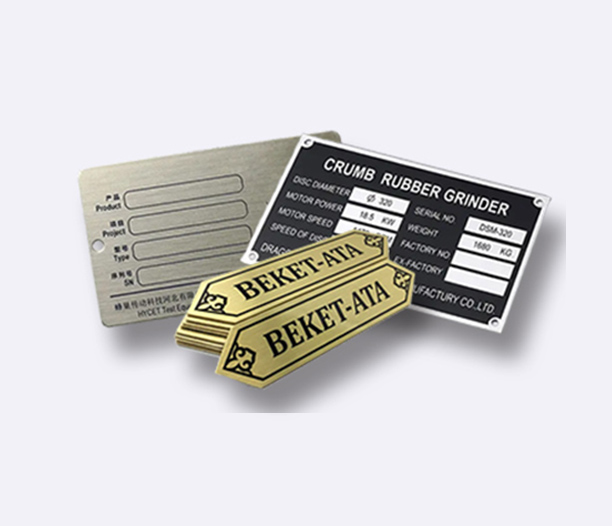
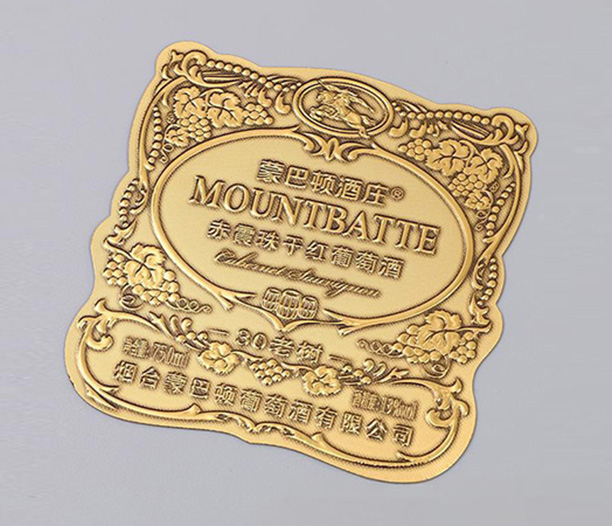
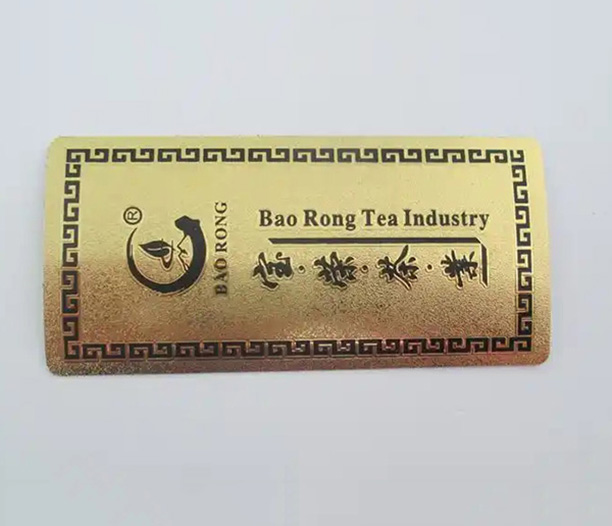
In a world of disposable products and fleeting digital messages, there is a profound appreciation for items that stand the test of time. This is where engraved brass labels firmly reside. More than simple identifiers, they are statements of permanence, quality, and tradition.
Whether you are overseeing a corporate facility, curating a museum collection, or adding a personal touch to a home, understanding the value of these labels is key. This article delves into why engraved brass plates remain a premier choice for durable identification.
What Exactly Are Engraved Brass Labels?
Engraved brass labels are precisely what the name suggests: tags or plates made from brass, a durable alloy of copper and zinc, into which information is permanently cut or etched. The engraving process physically removes material to create deep, recessed lettering, logos, or numbers.
This result is not a printed surface that can fade or peel. The information becomes an integral part of the metal itself. The exposed grooves are often filled with enamel paint, typically black or white, to provide a stark, high-contrast finish that is exceptionally easy to read.
The fundamental appeal lies in this combination of a classic, prestigious material with a permanent marking technique.
The Unmatched Benefits of Choosing Brass Engraved Labels
Why do professionals consistently choose brass nameplates over other materials? The advantages are clear and substantial.
First and foremost is durability. Brass is highly resistant to corrosion, rust, and tarnishing, especially when treated with a clear lacquer coating. It withstands exposure to weather, chemicals, UV rays, and physical abrasion far better than plastics or painted metals. An engraved brass label is an investment that lasts for decades.
Secondly, they offer legibility and permanence. The deep engraving ensures the text remains readable even if the surface paint were to wear over many years. The information cannot be accidentally rubbed off or altered, making it ideal for critical identification.
Third is professional appearance. Brass carries an inherent weight and aesthetic of quality. It conveys stability, heritage, and importance. Engraved brass plaques lend an air of authority and tradition to any setting, from an office door to a historical monument.
Finally, they are versatile. Brass can be polished to a bright, gleaming finish, brushed for a subdued matte look, or even chemically treated to achieve an antique verdigris patina. This allows custom brass labels to fit a wide range of architectural and design styles.
Key Applications for Durable Brass Labels
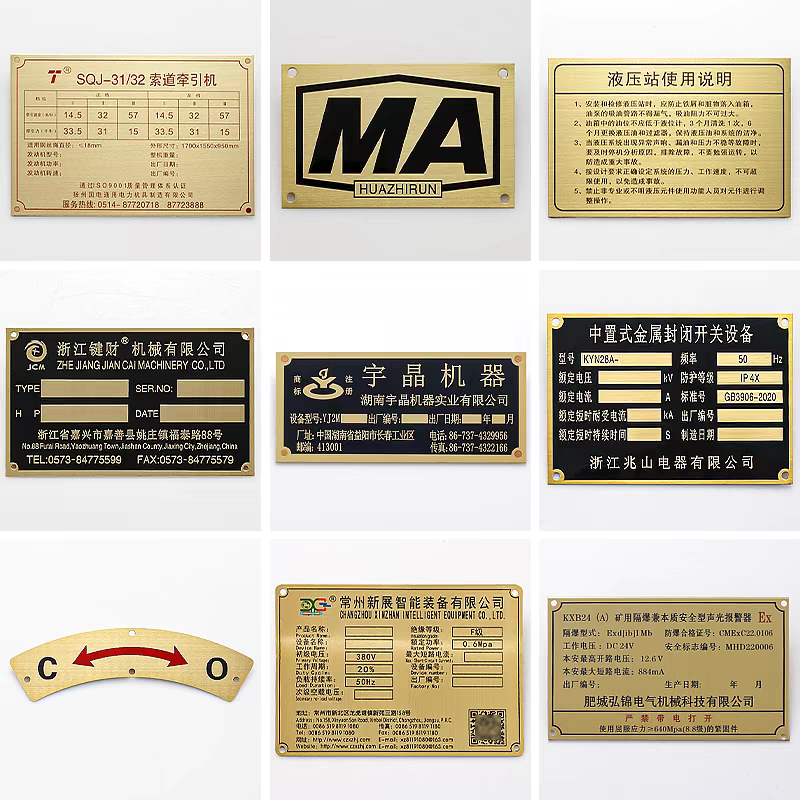
The use of engraved brass tags spans numerous industries and personal projects. Their functionality and elegance make them universally applicable.
In corporate and institutional settings, they are the standard for professional identification. This includes room numbers, directory boards, desk name plates, and awards. A brass door plaque instantly elevates the perception of a business.
For industrial and manufacturing environments, durability is critical. Engraved brass labels are used for asset tagging, equipment serial numbers, control panel legends, and warning signs where longevity is non-negotiable.
The public and historical sector heavily relies on them. Memorial dedications, donor recognition walls, museum exhibit descriptions, and historical site markers almost exclusively use engraved brass plaques for their dignified and permanent nature.
Even in personal and residential use, they add a special touch. Custom house numbers, mailbox plates, personalized gifts, and identification for valuable items like musical instruments or toolboxes are perfect projects for custom engraved labels.
The Engraving Process: How Brass Labels Are Made
Creating a premium engraved brass plate involves a blend of traditional craftsmanship and modern technology.
It typically begins with sheet brass, cut to the specified size and shape. The surface may be pre-finished (polished, brushed, etc.) before engraving. The two most common engraving methods are:
Computer-Controlled Rotary Engraving: A spinning cutter precisely removes brass along a path guided by a digital design file. This method is excellent for deep, clean grooves and is highly efficient for text and simple graphics.
Laser Engraving: A high-powered laser beam vaporizes the brass surface to create the marking. This allows for extremely fine detail, complex logos, and even photographic images on laser engraved brass labels. It offers great precision but may not cut as deeply as rotary tools.
After engraving, the recessed areas are carefully filled with durable enamel paint. Excess paint is wiped away, leaving only the engraved details colored. A final protective lacquer coat is often applied to seal the surface and prevent tarnishing, ensuring the brass nameplate stays looking new.
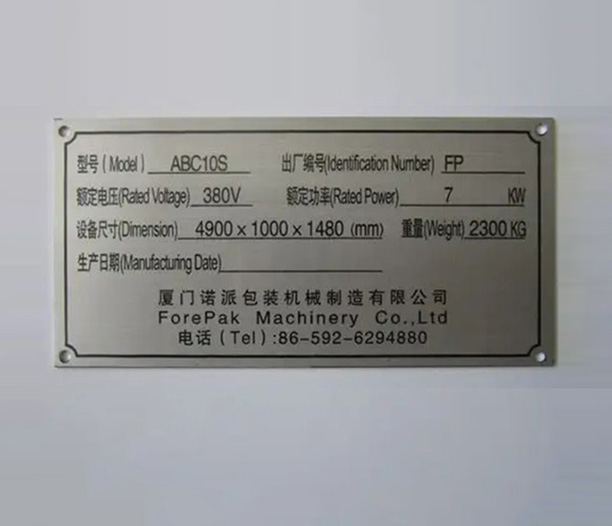
Caring for Your Brass Plaques and Labels
While incredibly tough, engraved brass labels benefit from simple care to maintain their appearance for generations.
For routine cleaning, use a soft, damp cloth with a mild soap. Avoid abrasive pads or harsh chemical cleaners, as these can scratch the lacquer finish or dull the metal.
If the protective lacquer eventually wears and the brass begins to tarnish naturally, it can be restored. Specialized brass polishes can bring back the shine. After polishing, a new coat of clear acrylic lacquer can be applied to preserve the finish.
The beauty of engraved brass tags is that even if left to develop a natural patina, the engraved information remains perfectly intact and legible, a testament to its permanent nature.
Frequently Asked Questions About Engraved Brass Labels
Q1: How weather-resistant are engraved brass labels?
A1: Extremely weather-resistant. Brass itself does not rust, and when professionally finished with a high-quality lacquer coat, engraved brass plates can endure decades of outdoor exposure to rain, sun, and temperature fluctuations without significant degradation. The engraving will not fade.
Q2: Can you include logos or custom graphics on a brass nameplate?
A2: Absolutely. Modern computer-guided engraving and laser technology allow for the inclusion of intricate logos, borders, and even graphic images on custom brass labels. It's best to provide a high-resolution vector file (like .AI or .EPS) for the cleanest reproduction.
Q3: What is the typical lead time for ordering custom engraved labels?
A3: Lead time depends on complexity and order volume. For standard text-based engraved brass tags, production often takes 5-10 business days after design approval. More complex projects with custom shapes or graphics may require additional time.
Q4: Are engraved brass labels a cost-effective option?
A4: While the initial cost may be higher than plastic or aluminum alternatives, engraved brass plaques are vastly more cost-effective over time due to their exceptional lifespan. You eliminate the need for frequent replacement, making them a wise long-term investment in quality and presentation.
Q5: How should I mount or attach my brass plate?
A5: Mounting options are flexible. Common methods include industrial-strength double-sided adhesive tape (for smooth surfaces), silicone adhesive, or discrete screw mounting through pre-drilled holes in the corners of the brass door plaque. The best method depends on the mounting surface material and whether you require a non-permanent installation.