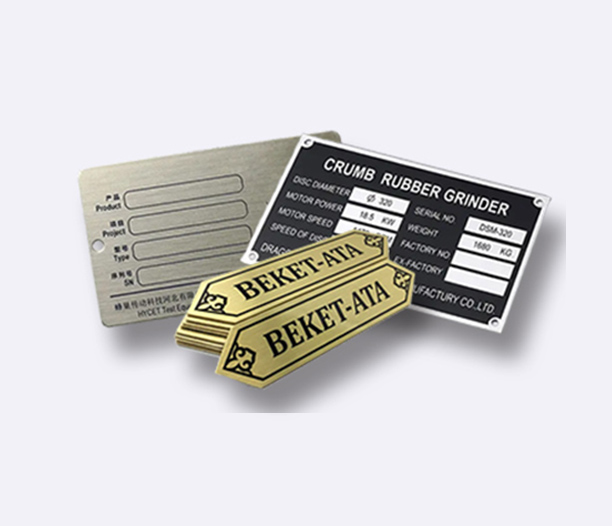
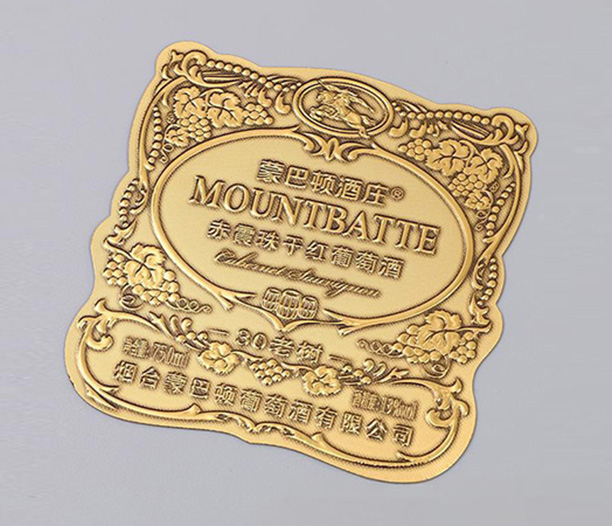
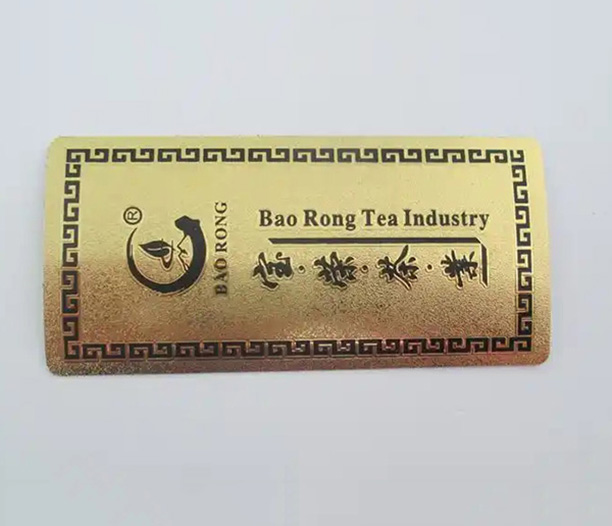
In the world of industrial manufacturing, energy, and heavy machinery, the humble equipment nameplate is often the silent sentinel of safety, traceability, and brand integrity. Far beyond a simple identification tag, a modern nameplate is an engineered component that must withstand extreme environments, comply with stringent international standards, and communicate critical data over decades of service. As a B2B content marketing specialist and an authority in the custom nameplate sector, I have witnessed how the right equipment nameplate can prevent costly downtime, ensure regulatory adherence, and streamline asset management across global supply chains. This article provides a technical deep dive into the materials, manufacturing techniques, and selection criteria that define a world-class nameplate, drawing on decades of industry practice and the proven expertise of Hemawell Nameplate.
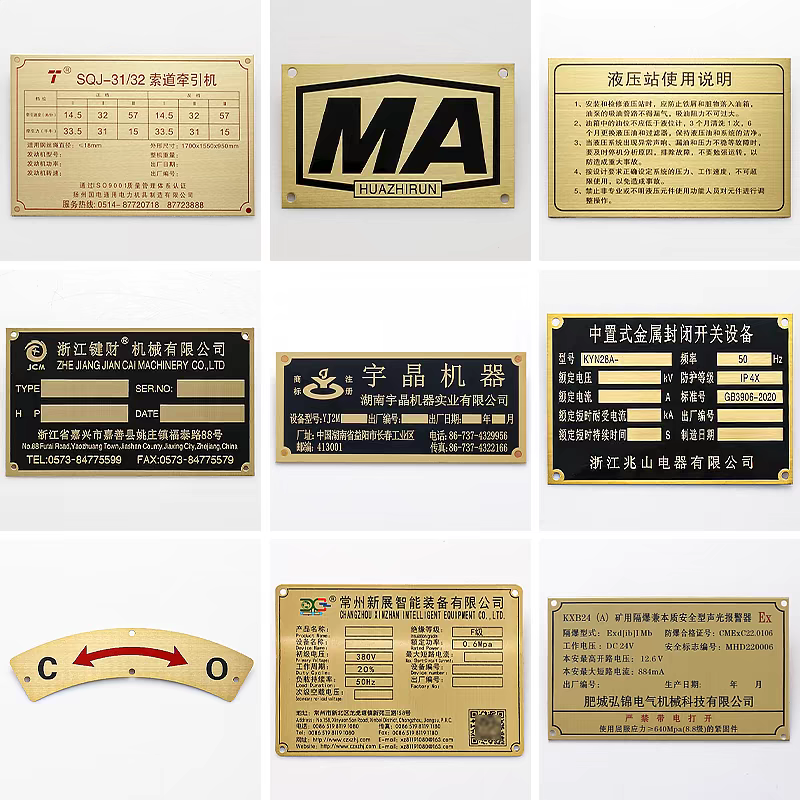
Essential Materials and Manufacturing Techniques for Long-Lasting Nameplates
The foundation of any durable equipment nameplate lies in the synergy of substrate and marking process. Engineers must consider operating temperature, chemical exposure, UV radiation, and mechanical abrasion when specifying a nameplate. Below is an analysis of the most robust materials and the technologies used to mark them permanently.
Metal Substrates: Aluminum, Stainless Steel, and Anodized Finishes
Anodized aluminum is the workhorse of the industry. With a hardness rating comparable to corundum, the anodized layer (typically 5–25 microns) provides exceptional resistance to salt spray (tested per ASTM B117 for 500+ hours) and UV fading. For offshore drilling or chemical processing, 316 stainless steel offers superior corrosion resistance, often specified with electrochemical etching to create a bond that is integral to the metal. Hemawell Nameplate utilizes laser-marked stainless steel for subsea control panels, where the nameplate must endure pressures exceeding 500 bar.
High-Performance Polymers and Laminates
Polycarbonate and polyester films (such as those meeting UL 969) are ideal for curved surfaces or when weight is a concern. These materials can be over-laminated with UV-stable films and printed using resin-based thermal transfer, achieving a durability of 8–10 years outdoors. For cleanroom environments (ISO Class 5), synthetic paper with acrylic adhesives ensures no particle shedding. The choice of adhesive is equally critical: permanent acrylic adhesives for powder-coated surfaces, or high-tack rubber-based variants for low-surface-energy plastics like polyethylene.
Marking Technologies: Laser, Chemical Etching, and Photographic Processes
The permanence of the data on an equipment nameplate depends on the marking method. Laser marking (fiber or CO₂) creates a contrast by annealing or ablating the surface, producing marks that are as durable as the base material. Electrochemical etching is preferred for stainless steel in hygienic applications (food/dairy) because it creates a smooth, crevice-free surface that inhibits bacterial growth. For complex graphics or variable data, digital offset printing on anodized aluminum offers photo-quality resolution while retaining the abrasion resistance of the anodized layer.
Compliance and Industry Standards: Meeting ANSI, ISO, and UL Requirements
An equipment nameplate is often a legally mandated component. In the pressure vessel sector, ASME Boiler and Pressure Vessel Code (Section VIII, Div. 1) requires nameplates to be permanently attached and contain specific stampings (e.g., ‘U’ stamp). Similarly, UL 969 outlines testing for label adhesion and durability under temperature and humidity cycles. The International Organization for Standardization (ISO) 9001:2015 places emphasis on traceability, where nameplates with unique identifiers (UIDs) per MIL-STD-130 or ISO/IEC 15459 are used to link physical assets to digital maintenance records. In the European Union, the Machinery Directive 2006/42/EC mandates that machinery bear a nameplate showing the manufacturer’s name, series designation, and year of construction. Non-compliance can result in machinery being denied entry to markets or severe liability issues. Experts at Hemawell Nameplate routinely audit their processes to meet these evolving regulations, ensuring their clients’ equipment passes any certification audit.
Industry-Specific Applications of Equipment Nameplates
The performance requirements for an equipment nameplate vary dramatically by industry. Here we examine four demanding sectors:
Oil & Gas (Upstream and Downstream): Nameplates on valves, pumps, and wellhead equipment must withstand sour gas (H₂S) and extreme temperatures (-50°C to +300°C). Metal tags with stamped or laser-engraved characters are standard, often attached with stainless steel wire or specialized epoxy. API 6A specifies requirements for nameplates on wellhead and Christmas tree equipment.
Aerospace & Defense: Here, traceability is paramount. UID marking compliant with MIL-STD-130 requires high-density 2D Data Matrix codes that remain readable after decades of service. Materials must be non-corrosive and non-outgassing; titanium or anodized aluminum are common. Vibration resistance is tested to RTCA/DO-160.
Food & Beverage Processing: Hygienic design rules out paper or plastic films that can harbor bacteria. Electropolished stainless steel nameplates, laser-marked and mechanically attached (often with spot welding or tamper-proof rivets), are used to survive daily high-pressure washdowns with caustic chemicals.
Power Generation (Renewable and Nuclear): Wind turbine nameplates face continuous vibration and UV. Photovoltaic modules require nameplates that retain legibility under 25+ years of sun exposure per IEC 61701. In nuclear facilities, nameplates must meet IEEE 323/344 for qualification to harsh environmental conditions (radiation, LOCA).
Overcoming Common Challenges: Durability, Legibility, and Counterfeiting
Despite advances in materials, end-users often face three persistent pain points: premature fading, illegibility due to corrosion, and counterfeiting of spare parts. Solutions are rooted in engineering and forensics.
Ensuring Durability Through Accelerated Life Testing
Leading manufacturers, including Hemawell Nameplate, perform rigorous testing: 1,000-hour salt spray (ASTM B117), 5,000-hour UV weathering (QUV), and thermal cycling from -40°C to +150°C. They also validate adhesion using ASTM D1000 peel tests. By simulating decades of stress in weeks, they select the optimal material-adhesive-ink combination.
Legibility: Micro-text and Machine-Readable Codes
Modern nameplates increasingly incorporate 2D barcodes (QR, Data Matrix) and RFID tags. The challenge is ensuring these codes remain scannable after years of grime or wear. Laser etching creates a cavity that contrasts regardless of surface contamination. For RFID, the inlay must be encapsulated in a material that does not shield the signal (e.g., using a non-metallic substrate or positioning the antenna correctly).
Anti-Counterfeiting Measures
Counterfeit parts cost the global economy billions annually. Security features on nameplates include micro-text (invisible to the naked eye), covert UV-fluorescent inks, and tamper-evident constructions that leave a "void" pattern if removed. Blockchain-ready serialization is now possible, where each nameplate carries a unique cryptographic signature that can be verified via a smartphone.
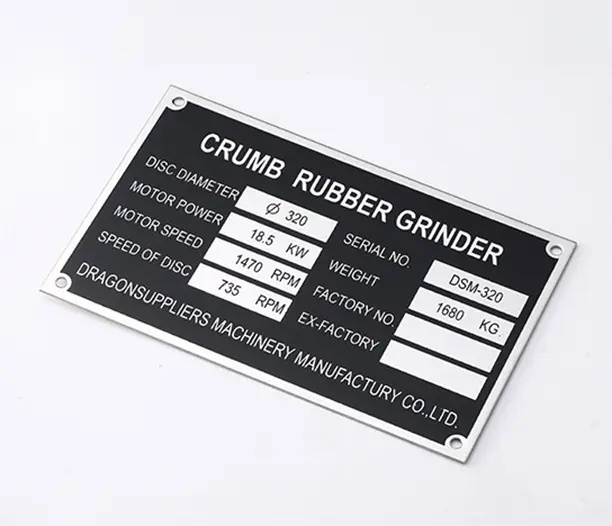
The Customization Process: From Artwork to Finished Product – A Step-by-Step Overview
Creating a bespoke equipment nameplate involves more than simply printing a logo. A structured engineering approach ensures the final product meets functional and aesthetic requirements.
Requirement Analysis: Define the environment (temperature, chemicals, abrasives), attachment method (rivets, adhesive, ties), and information content (static text, serial numbers, barcodes).
Material and Process Selection: Based on the analysis, the engineer selects a substrate and marking technology. For example, if the nameplate will be welded, a metal-backed tag without adhesive is chosen.
Artwork and Data Management: Vector artwork (AI, EPS) is preferred for clean reproduction. Variable data (serial numbers) are managed in secure databases to ensure no duplication.
Prototyping and Testing: A prototype run is subjected to the relevant standards (e.g., UL 969 for labels, or ASTM B117 for salt spray). Any failure leads to a revision.
Production and Quality Control: In-process inspections, such as barcode verification (ISO/IEC 15416) and adhesion checks, guarantee consistency. Hemawell Nameplate employs automated optical inspection to verify character accuracy on high-volume orders.
How to Select the Right Equipment Nameplate Partner
Choosing a supplier for your equipment nameplate needs should be based on technical capability, not just price. Evaluate potential partners on the following criteria:
Certifications: ISO 9001:2015 is a baseline. For critical industries, look for ISO 14001 (environmental) and specific industry approvals (e.g., UL Recognized Component, CSA).
In-House Testing: Does the supplier have a lab for salt spray, UV, and abrasion testing? Or do they outsource? Quick iteration is only possible with in-house validation.
Technology Portfolio: A partner offering multiple marking technologies (laser, chemical etch, thermal transfer) can advise the most cost-effective and durable method for your application.
Data Security: If you require unique serial numbers or UIDs, ensure the supplier has secure IT systems and auditable processes to prevent data leaks.
Supply Chain Flexibility: Can they handle just-in-time delivery? Do they stock raw materials for rapid response? Hemawell Nameplate, for instance, maintains a buffer inventory of common alloys and laminates to reduce lead times for clients.
Frequently Asked Questions About Equipment Nameplates
Q1: What is the most durable material for outdoor equipment nameplates exposed to coastal environments?
A1: For coastal or marine atmospheres, we recommend 316 stainless steel with laser etching, or heavy-gauge anodized aluminum (at least 20 microns anodic coating). Both offer excellent resistance to chloride-induced corrosion. Ensure the attachment method (e.g., stainless steel rivets) does not create a galvanic cell with the substrate.
Q2: Can nameplates include machine-readable codes like QR or Data Matrix, and how can I ensure they remain scannable?
A2: Yes, 2D barcodes are standard. For long-term scannability, the code must be produced with high contrast and precision. Laser marking creates a permanent cavity that withstands dirt and grease. Verify the code grade using a verifier (ISO/IEC 15415) during production and consider adding a human-readable interpretation below the code.
Q3: What standards apply to nameplates for equipment used in hazardous locations (Class I, Division 1)?
A3: Hazardous location nameplates must meet NEC Article 500 or IEC 60079-0. They must be made of non-sparking materials (e.g., bronze, aluminum) and marked with the specific protection concepts (Ex d, Ex e, etc.). The nameplate itself cannot generate static; avoid plastic films unless they are antistatic.
Q4: How do I ensure my nameplate will withstand frequent chemical washdowns in a pharmaceutical plant?
A4: You need a nameplate with a non-porous surface that resists aggressive cleaning agents. Electrochemically etched stainless steel with no overlaminates is ideal. The adhesive (if used) must be a chemical-resistant acrylic, and edges should be sealed. Alternatively, mechanical attachment (rivets) eliminates adhesive failure.
Q5: What is the typical lead time for custom equipment nameplates, and how can I expedite it?
A5: Standard lead times range from 5 to 15 business days, depending on complexity and quantity. To expedite, work with suppliers like Hemawell Nameplate who offer DFM (Design for Manufacturability) feedback upfront. Providing high-resolution vector art and approving a digital proof quickly reduces delays. Some suppliers also offer rush services for an additional fee.
Q6: Can I get nameplates that match existing legacy equipment for retrofitting projects?
A6: Absolutely. This is a common requirement. You can send a sample of the old nameplate (or detailed photos with dimensions) to a specialist. They can reverse-engineer the material, font, and layout, and produce exact replicas, often with modernized durability.
In conclusion, the selection and specification of an equipment nameplate is a technical decision that impacts asset lifecycle, compliance, and brand reputation. By partnering with an experienced manufacturer like Hemawell Nameplate, you gain access to deep materials science knowledge and manufacturing precision, ensuring that every nameplate performs flawlessly in its intended environment. Whether you require a single prototype or millions of serialized tags, the principles of durability, clarity, and compliance should guide every choice.