If you operate, maintain, or work near machinery, you see them every day. Those bold, graphic labels with exclamation points and clear text. They are not suggestions or decorations. Machine warning labels are a critical line of defense against workplace injuries. They communicate hazards where engineering controls or guarding cannot eliminate risk entirely.
This article explains why these labels are mandatory, not optional. We will look at the standards that govern them, the different types you need, and how to use them effectively. Properly applied machine warning labels are a sign of a responsible and compliant operation. They protect your team and your business.
What Are Machine Warning Labels?
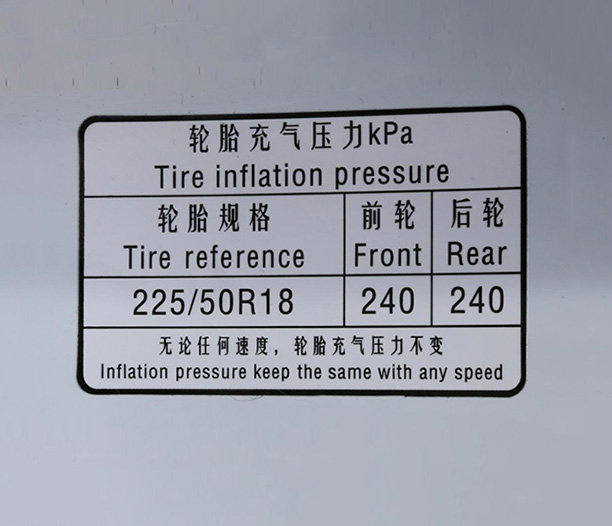
Machine warning labels are standardized visual safety signs affixed directly to equipment. Their job is to alert individuals to specific, immediate hazards associated with operating, maintaining, or being near the machine. Think of them as permanent, concise safety briefings.
These labels use a combination of signal words (DANGER, WARNING, CAUTION), pictograms, and brief text. This multi-method approach ensures the message is understood quickly, regardless of language. They address hazards like electrical shock, crushing points, cutting or shearing actions, high temperature, and toxic emissions.
Unlike general facility signage, machine warning labels are part of the machine itself. They are designed to withstand the machine's environment—oil, coolant, UV light, and abrasion. Manufacturers must install them, and end-users must keep them legible and intact.
Why Machine Warning Labels Are Non-Negotiable for Safety
The primary reason is simple: they prevent accidents and save lives. A clear, well-placed label can stop an operator from reaching into a pinch point or remind a technician to lock out power. They provide constant, at-the-point-of-risk hazard communication.
Beyond safety, they are a legal and regulatory requirement. Organizations like OSHA in the United States mandate that employers inform workers of hazards. Using ANSI-compliant machine warning labels is a proven way to meet this obligation. In the event of an incident, properly installed labels demonstrate a commitment to safety and can be a factor in liability determinations.
They also serve as essential training tools. For new employees or contractors, these labels offer immediate, on-the-job hazard awareness. They reinforce formal training and serve as a daily reminder of safe procedures. Investing in high-quality machine warning labels is a fundamental component of any robust safety culture.
Understanding the Standards: ANSI and ISO
Not all labels are created equal. To be effective, machine warning labels must follow recognized design standards. This ensures consistency and comprehension. The two key standards are ANSI Z535.4 and ISO 3864-2.
The ANSI Z535.4 standard is widely used in North America. It defines a specific format:
- Signal Word Panel: Uses DANGER (serious injury or death), WARNING (potential serious injury), or CAUTION (potential minor/moderate injury).
- Message Panel: Includes a symbolic pictogram and concise text describing the hazard and how to avoid it.
- Color: The signal word panel color corresponds to the hazard level (red for DANGER, orange for WARNING, yellow for CAUTION).
The ISO 3864-2 standard is used internationally. It relies heavily on standardized, red-outline-on-yellow hazard pictograms. Text is often separate. Many machine builders use a hybrid approach, especially for equipment sold globally, combining ISO pictograms with ANSI-style layout.
Using compliant machine safety labels is not just about best practice. It ensures your warnings are legally defensible and universally understood by a diverse workforce.
Common Types of Machine Warning Labels
Different hazards require specific warnings. Here are some of the most common types of machine warning labels you will encounter:
- Electrical Hazard Labels: Warn of high voltage, shock risk, or the need for lockout/tagout before servicing.
- Pinch Point and Crush Hazard Labels: Identify areas where body parts can be caught between moving parts or closing surfaces.
- Hot Surface Labels: Alert personnel to components that can cause burns, such as motors, pipes, or welding surfaces.
- Rotating Part & Entanglement Labels: Found on shafts, couplings, and fans to warn of entanglement dangers.
- Noise Hazard Labels: Indicate areas where hearing protection is required due to high decibel levels.
- Chemical Exposure Labels: Warn of fluid injection hazards, toxic coolant mist, or lubricant exposure.
- Laser Radiation Labels: Required on equipment with Class 3B or 4 lasers, indicating a severe eye and skin hazard.
A single machine may require multiple, specific machine warning labels placed at each point of hazard.
Designing and Applying Effective Warning Labels
Placing a generic "Danger" sticker is not enough. Effective hazard communication through labels requires thought.
- Clarity is Key: The message must be understood in seconds. Use the strongest, most appropriate signal word. The pictogram should be simple and recognizable. Text should be direct: state the hazard and the consequence (e.g., "Crush Hazard. Keep hands clear.").
- Durability Matters: Labels must last the life of the machine. Choose materials that resist the environment: chemical-laminated polyester for most industrial settings, or etched metal for extreme heat or abrasion. The adhesive must bond permanently to the machine's surface.
- Placement for Visibility: Install labels where they will be seen before the hazard is accessed. This is often on or near the guard, on the control panel, or directly on the hazardous component. Ensure they are not obscured by pipes, cables, or aftermarket modifications. Viewing angle and lighting are important considerations.
- Consistency Across the Facility: Use the same design standard (ANSI or ISO) and similar label styles on all equipment. This reduces confusion and helps workers instantly recognize the level of hazard, no matter which machine they are using.
Choosing the Right Material for Your Environment
The harsh reality of the factory floor destroys cheap labels. Selecting the right material is as important as the message.
For most indoor industrial machinery, a durable vinyl with an industrial-grade permanent adhesive and a protective polyester overlaminate works well. It resists oils, coolants, and mild solvents.
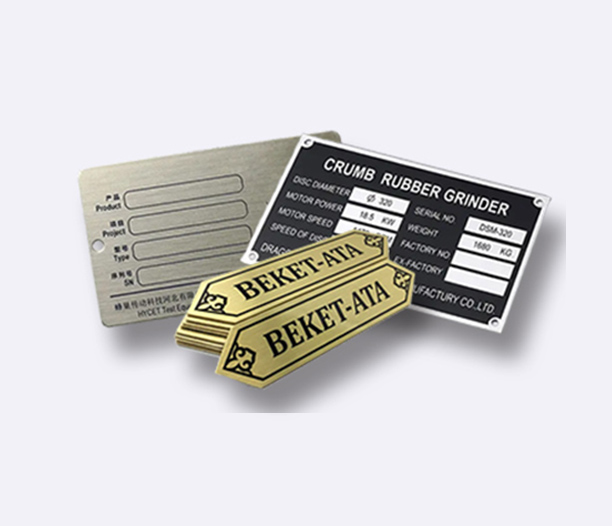
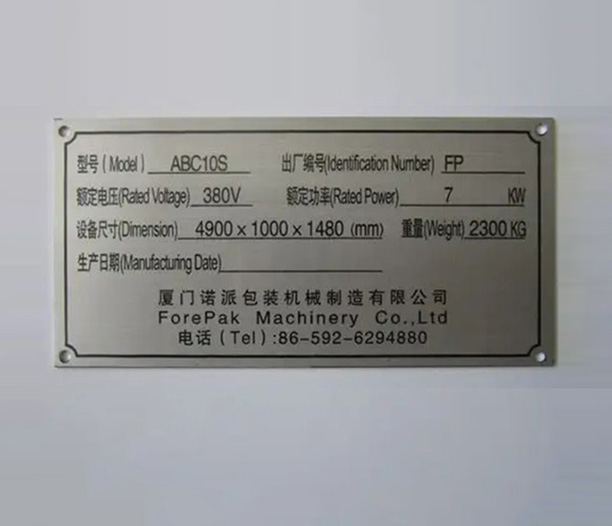
For outdoor equipment, machines in washdown areas (food, pharmaceutical), or exposed to extreme weather, you need more. Polyester or vinyl labels with specific chemical-resistant coatings are necessary. For the most severe conditions—high heat, welding spatter, direct chemical exposure—etched stainless steel or anodized aluminum machine warning labels are the only long-term solution. They are often attached with rivets or screws.
A faded, peeling, or illegible warning label is a safety failure and a compliance violation. Invest in materials that endure.
Maintenance and Compliance: Keeping Labels Legible
Machine warning labels are not "install and forget" items. OSHA requires that hazard communications remain legible. A routine inspection should be part of your preventive maintenance schedule.
Check for labels that are:
- Faded or discolored by sunlight or chemicals.
- Peeling at the edges.
- Scratched or gouged.
- Covered by paint, dirt, or new components.
- Removed and not replaced after repairs.
Damaged or missing machine safety labels must be replaced immediately. Keep a record of the original label specifications or work with a supplier who can provide durable, compliant replacements. This proactive maintenance keeps your safety messaging strong and your compliance status intact.
Frequently Asked Questions (FAQ)
Q1: What is the difference between DANGER, WARNING, and CAUTION on machine warning labels?
A1: These are standardized signal words defining hazard severity. DANGER indicates a hazard that will cause serious injury or death. WARNING indicates a hazard that could cause serious injury or death. CAUTION indicates a hazard that could cause minor or moderate injury.
Q2: Am I responsible for labels if I buy used machinery missing them?
A2: Yes. As the end-user and employer, OSHA holds you responsible for identifying workplace hazards and informing employees. If original machine warning labels are missing or illegible, you must conduct a hazard assessment and install compliant labels.
Q3: Can I create my own warning labels in-house?
A3: You can, but you must ensure they fully comply with ANSI Z535.4 or ISO 3864-2 standards for format, color, pictograms, and text. Using pre-designed templates from a reputable safety label supplier is often more reliable and ensures legal defensibility.
Q4: How do I clean machine warning labels without damaging them?
A4: Use a soft cloth with mild soap and water. Avoid abrasive pads, high-pressure sprays directly on the label edge, or harsh solvents like acetone, which can degrade the laminate and ink.
Q5: Where is the best place to put a warning label on a machine?
A5: The label should be placed as close as possible to the hazard, in a location that is clearly visible to the operator or maintenance personnel before they are exposed to the risk. Common spots include on safety guards, near access points, on control panels, or directly on the hazardous component itself.