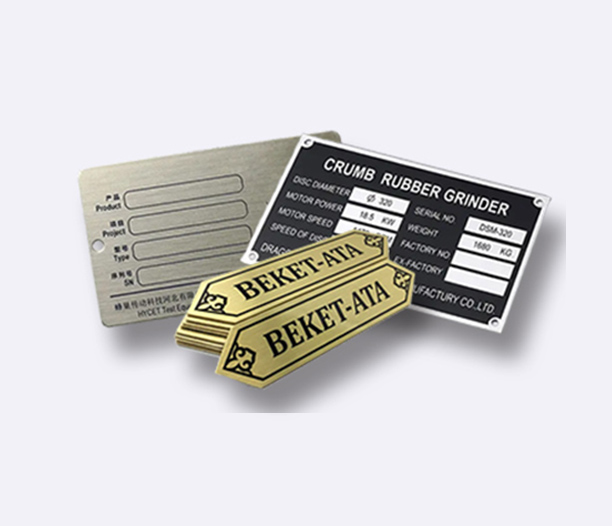
When you manage expensive machinery or track critical assets, standard paper labels simply do not work. They rip, they fade, and they fall off. In industrial environments, durability is the only metric that matters. This is why companies worldwide rely on metal tags and plates to keep their operations running smoothly.
Whether you are identifying a valve in an oil refinery or placing a brand logo on a high-end appliance, the solution almost always involves metal. These markers provide a permanent link between the physical object and the data associated with it.
Choosing the right identification solution can be confusing because there are so many metals and manufacturing processes available. This article breaks down everything you need to know about metal tags and plates, from material selection to attachment methods, ensuring you get a product that lasts as long as your equipment.
Why Plastic Labels Fail Where Metal Succeeds
The primary reason industries switch to metal tags and plates is environmental stress. A vinyl sticker might last a few months in a warehouse, but it will fail within days on an outdoor construction site.
Sunlight is a major enemy of standard labels. UV rays break down ink and turn plastic brittle. Metal tags and plates, particularly those made from anodized aluminum or stainless steel, are impervious to sunlight. They maintain readability for decades, not just years.
Heat is another factor. Engines, generators, and industrial ovens generate temperatures that melt adhesives and warp plastic. A stainless steel plate can withstand extreme heat without deforming or losing its text.
Chemical exposure is also a daily reality in manufacturing. Cleaning solvents, grease, and fuels will wipe the ink right off a standard label. Metal tags and plates that are etched or embossed hold their data even when doused in harsh chemicals.
Stainless Steel: The Heavy-Duty Choice
When people think of durability, they usually think of stainless steel. It is the most popular material for metal tags and plates used in corrosive environments.
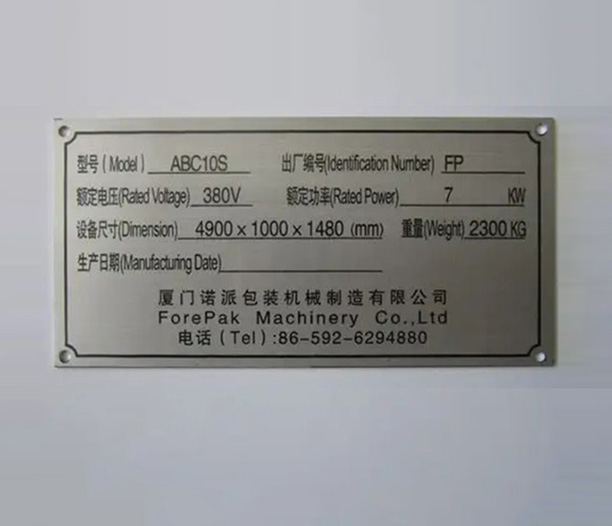
There are different grades of stainless steel to consider. Type 304 is the standard industry grade. It is tough, looks good, and resists most forms of corrosion. It is widely used for asset tags and rating plates in factories.
For marine environments or food processing plants, Type 316 stainless steel is the better option. It contains molybdenum, which gives it extra resistance to salt water and chlorides. If your metal tags and plates are going on an offshore rig or a boat, Type 316 is a requirement, not a suggestion.
The finish on stainless steel tags can vary. Some users prefer a matte finish to reduce glare when scanning barcodes, while others prefer a brushed look for a premium aesthetic on brand plates.
Anodized Aluminum for Versatility and Color
Aluminum is lighter than steel and offers a unique advantage: color. Through the process of anodization, the surface of the aluminum is hardened, and dyes can be sealed inside the metal pores.
This makes anodized aluminum an excellent choice for metal tags and plates that need color-coding. You can use red plates for danger warnings, blue for water lines, and green for safety information. The color is not just painted on; it is part of the metal surface, so it won't chip off.
Aluminum is also easier to machine than steel. This makes it cheaper to produce metal tags and plates in custom shapes or with complex cutouts. It is the standard material for aircraft identification, military nameplates, and barcode asset tags where weight is a concern.
The Classic Look of Brass
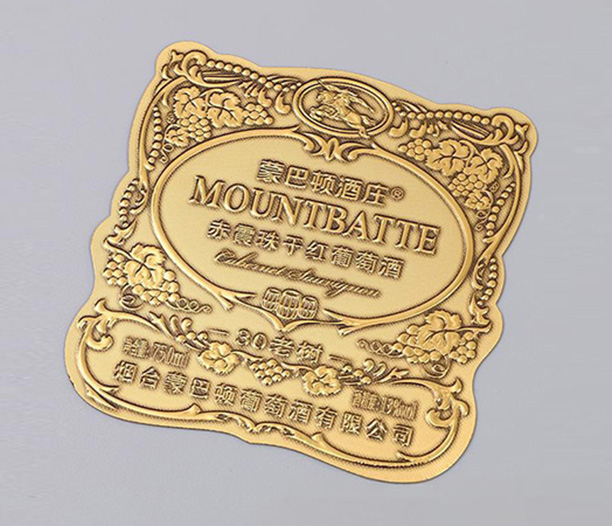
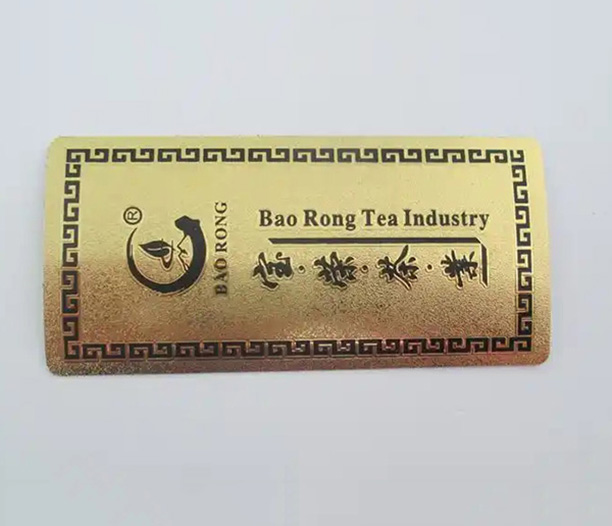
Brass is less common today than steel or aluminum, but it still has a place. It is primarily used for its aesthetic appeal. High-end furniture makers and luxury goods manufacturers often use brass metal tags and plates for branding.
Functionally, brass is resistant to salt water and is non-sparking. This non-sparking quality makes brass an option in explosive environments, such as old-school mining operations or gas storage facilities.
However, brass tarnishes over time. For some, this patina is desirable. For others who need crisp readability, brass metal tags and plates require a lacquer coating to maintain their shine.
Etching and Filling: Deep Durability
The manufacturing process is just as important as the material. Etching is one of the most reliable ways to create text on metal tags and plates.
In this process, acid is used to eat away layers of the metal, creating recessed text or graphics. These recessed areas are then often filled with a colored enamel paint.
Even if the paint eventually wears away due to extreme abrasion, the text remains legible because it is physically etched into the metal depth. This makes etched metal tags and plates ideal for machinery that sees rough handling.
Embossing and Stamping for Harsh Conditions
If you need the toughest possible solution, look at embossing or stamping. These methods deform the metal to create the characters.
Stamping presses the characters down into the metal. Embossing raises the characters up. In both cases, there is no ink involved. The contrast comes from the shadow and light on the metal relief.
These metal tags and plates are often used in painting processes. For example, a chassis tag on a truck might be painted over. If the tag was printed with ink, the data would be lost. Since the tag is embossed, the raised characters can still be read even under a layer of paint.
This method is also essential for outdoor valves and utility poles. Even if the tag gets covered in mud or grease, you can wipe it off or even read the raised numbers by feel.
Integrating Barcodes and QR Codes
Modern inventory management relies on digital scanning. Fortunately, you can put barcodes and QR codes on metal tags and plates.
The most durable way to do this is through a process often called "Metalphoto" or photosensitive anodized aluminum. The barcode image is sealed inside the anodized layer of the aluminum. It is as smooth as glass and extremely sharp.
Laser marking is another popular method. A high-powered laser burns the carbon into the surface of stainless steel, creating a high-contrast black mark. These QR codes are easy to scan and do not fade.
Using scannable metal tags and plates eliminates data entry errors. A technician can walk up to a pump, scan the metal tag, and instantly see the maintenance history on their tablet.
Custom Shapes and Thicknesses
One size does not fit all. Metal tags and plates can be cut to any dimension you require.
Thickness is a key specification. For a tag that hangs on a wire, you need a thin gauge so it isn't too heavy, but thick enough not to bend easily. Usually, 0.020" or 0.032" aluminum is standard for hanging tags.
For a data plate that is riveted to a motor, you might want something more substantial, like a 0.030" or 0.060" stainless steel plate. The thicker the plate, the more it feels like a permanent part of the machine.
You can also order metal tags and plates with rounded corners to prevent snagging on clothing or cutting skin. Custom cutouts for switches or dials are also common for control panel overlays.
Attachment Methods: Keeping the Plate in Place
A tag is useless if it falls off. Selecting the right attachment method for your metal tags and plates is critical.
Holes and RivetsThis is the most secure method. Physical fasteners like screws or rivets ensure the plate isn't going anywhere. When ordering, you need to specify the number of holes and their diameter.
Industrial AdhesiveModern adhesives are incredibly strong. 3M VHB (Very High Bond) tape is often used on the back of metal tags and plates. It works well on flat, clean surfaces. It is a great alternative when you cannot drill holes into the equipment, such as on a pressurized tank.
Wires and TiesFor valves or wire bundles, the tag needs to hang. Metal tags and plates for this purpose usually have a single hole. You can use stainless steel wire or metal cable ties to secure them. This allows the tag to move freely without being lost.
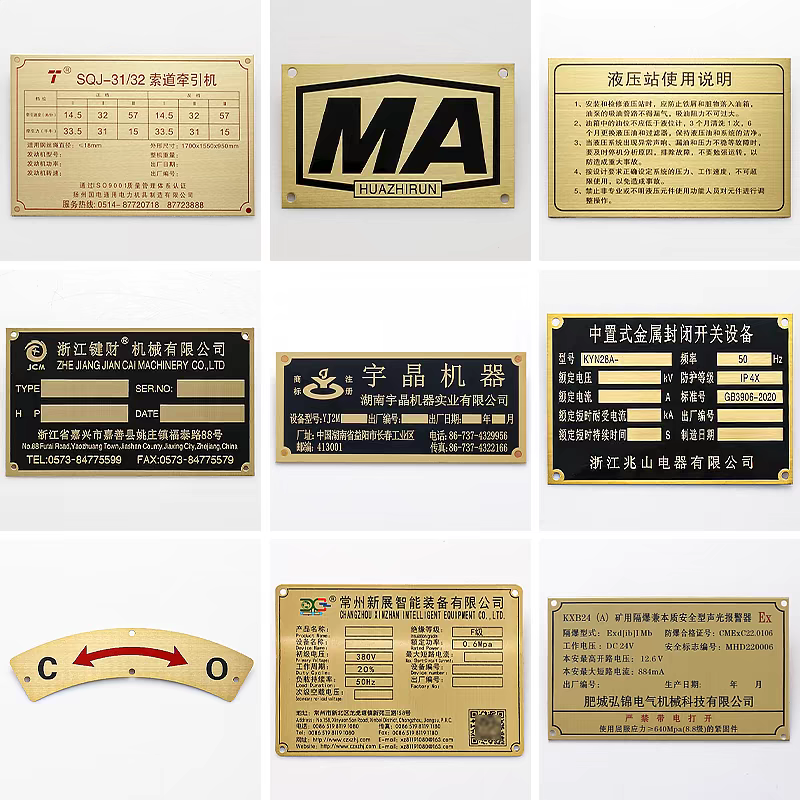
Applications in Compliance and Safety
Safety is a huge driver for the use of metal tags and plates. OSHA and other regulatory bodies often require that load limits, voltage ratings, and safety warnings be permanently attached to equipment.
A paper sticker warning of "High Voltage" that peels off creates a liability. A red anodized aluminum plate with the same warning will stay there for the life of the machine.
Lifting slings and chains also require capacity tags. These metal tags and plates must be durable enough to survive being dragged across concrete floors and smashed against steel beams. If the tag is unreadable, the sling often has to be taken out of service, costing the company money.
Variable Data and Serialization
Most industrial orders for metal tags and plates involve variable data. You rarely need 1,000 tags that all say the same thing. You usually need tags numbered 001 through 1000.
Manufacturers can easily handle this serialization. Whether it is sequential numbering or random database imports, the data can be etched or laser marked onto each plate.
This applies to UID (Unique Identification) tags used by the military. These metal tags and plates require a specific code structure and data matrix that must be unique to that specific item globally.
Cost Considerations and Lead Times
The cost of metal tags and plates varies based on material and quantity. Generally, aluminum is cheaper than stainless steel.
Setup costs can be a factor. Processes like etching often require film and tooling, which can make small runs expensive. Digital printing or laser marking often has lower setup costs, making them better for small batches of metal tags and plates.
Lead times depend on the complexity. A simple stamped tag might ship in a few days. A complex, multi-color chemically etched plate with variable data might take two or three weeks. It is always best to plan ahead when ordering custom identification.
In the world of industry, if you want it to last, you make it out of metal. Metal tags and plates provide the reliability, durability, and professional appearance that serious businesses require.
From the salt spray of the ocean to the heat of a foundry, there is a material and process designed to handle the environment. By understanding the differences between stainless steel and aluminum, and between etching and printing, you can ensure your assets are tracked and your team is safe.
Do not let a faded label cause a safety incident or a lost asset. Invest in high-quality metal tags and plates and solve the identification problem permanently.
Frequently Asked Questions (FAQ)
Q1: What is the best material for metal tags and plates used in saltwater environments?
A1: The best material for saltwater environments is Grade 316 stainless steel. It contains molybdenum, which specifically resists pitting and corrosion caused by chlorides and salt spray, making it superior to standard 304 stainless steel or aluminum for marine applications.
Q2: Can metal tags and plates be curved to fit around a pipe?
A2: Yes, metal tags and plates can be formed or rolled to fit curved surfaces. Thinner materials, such as 0.020" aluminum, can even be bent by hand during installation. For thicker plates, you should request the manufacturer to pre-roll them to the specific diameter of your pipe or cylinder.
Q3: Will the text on laser-marked metal tags and plates fade in the sun?
A3: No, laser marking on stainless steel or anodized aluminum is permanent. The laser physically alters the surface of the material (often creating a carbon bond or removing a top layer), which is UV stable. Unlike ink, which can break down under UV rays, laser-marked text will remain readable for years outdoors.
Q4: How do I attach metal tags and plates if I cannot drill holes in my equipment?
A4: If you cannot drill holes, you should use a high-strength industrial adhesive. Pressure-sensitive adhesives, such as 3M VHB tape, are commonly applied to the back of metal tags and plates. Ensure the surface is thoroughly cleaned with isopropyl alcohol before application to ensure a permanent bond.
Q5: What is the difference between etching and engraving on metal tags?
A5: Engraving involves a physical tool cutting into the metal to remove material, which can be slow and is often done for single items. Etching uses acid to chemically remove layers of metal to create the design. Etching is generally more efficient for producing large quantities of durable metal tags and plates with complex logos or fine text.