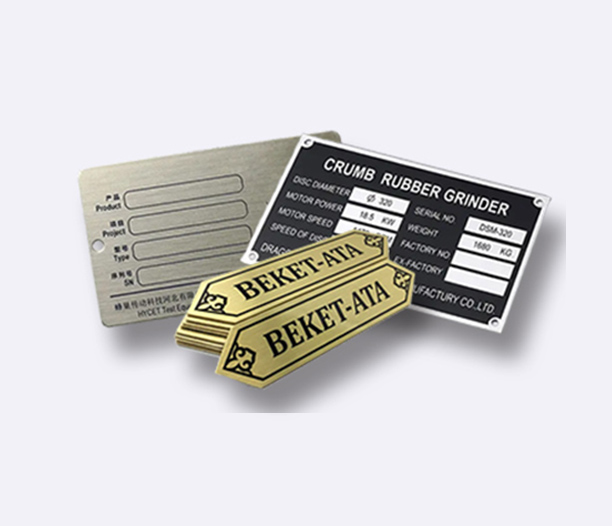
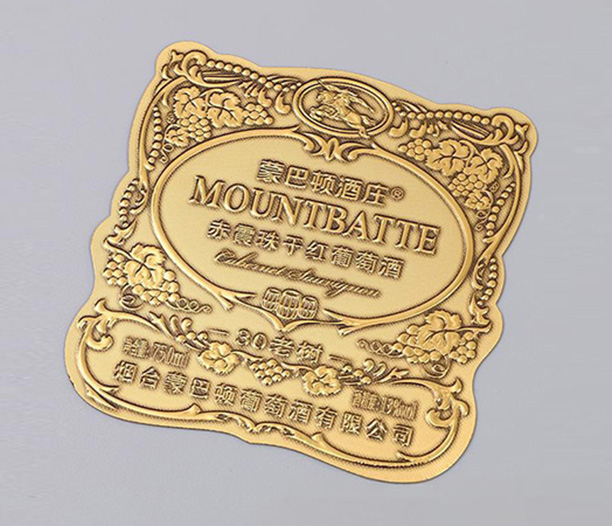
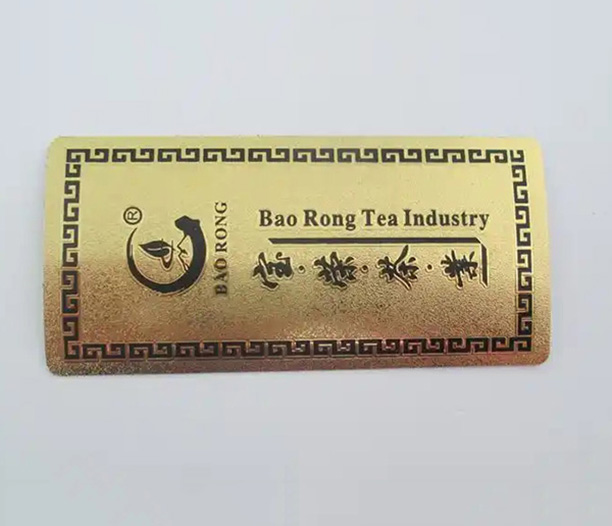
In the realm of B2B manufacturing, a brand’s identity is often communicated
through the durability and precision of its physical marking. For industries
where equipment operates under extreme thermal cycles, chemical exposure, or
mechanical stress—such as aerospace, oil & gas, and heavy machinery—a
standard printed or etched label fails to meet longevity requirements. This is
where the metal
embossed logo transitions from a simple aesthetic choice to a critical
engineering specification. Unlike surface-level printing, embossing physically
displaces material, creating a permanent, raised relief that withstands abrasion
and corrosion. At Hemawell Nameplate, we approach embossed identity systems not
as decorative elements, but as integral components of product lifecycle
management, governed by strict tolerances and material standards.
1. Defining the Technical Parameters of Metal Embossing
The term "embossing" is frequently misunderstood in industrial procurement. A
true metal embossed logo is achieved through controlled
deformation of the substrate—typically using matched dies (male and female) in a
hydraulic or mechanical press. This process induces permanent plastic
deformation without compromising the structural integrity of the base metal. The
result is a three-dimensional profile with raised features that can be measured
in precise depths, ranging from 0.2 mm to 1.5 mm depending on material thickness
and malleability.
1.1 Material Selection and Formability
Material science dictates the success of an embossing project. While aluminum
(series 1100, 3003, and 5052) remains the industry standard due to its excellent
ductility-to-weight ratio, we frequently specify stainless steel (304, 316L) for
environments requiring superior corrosion resistance or compliance with sanitary
standards. For high-temperature applications, such as turbine or engine
branding, titanium and specialized nickel alloys are employed. The key metric
here is the material’s elongation percentage—a value we analyze to ensure that
the embossed depth does not approach the material’s ultimate tensile strength,
which could lead to micro-fractures or stress concentration points that
compromise durability.
1.2 Tooling and Die Precision
Producing a high-definition metal embossed logo requires
tooling manufactured to sub-micron tolerances. Our process at Hemawell Nameplate
begins with CNC-machined dies, often utilizing hardened tool steel for runs
exceeding 10,000 units. For prototypes or short-run custom projects, we
implement photo-etched or 3D-printed tooling that allows for rapid iteration
without sacrificing edge definition. The clearance between the male and female
die—typically 10-15% of the material thickness—must be mathematically calculated
to prevent shearing or excessive thinning of the logo’s peak features. This
level of engineering ensures that even logos with intricate serif fonts or
complex geometric patterns maintain their readability after years of field
exposure.
2. Addressing Industry-Specific Pain Points Through Embossed Branding
Procurement managers and engineers often approach industrial branding with a
list of critical failures they have experienced with previous solutions. Faded
inkjet codes, delaminating adhesive labels, and corroded laser etching are
common complaints. The shift toward a metal embossed logo solves these operational risks by creating a monolithic identification
system—the logo is part of the parent material, eliminating the risk of
separation.
2.1 Case Study: Heavy Equipment and Abrasion Resistance
In the construction and mining sectors, equipment nameplates are subject to
constant impact from debris, pressure washing, and abrasive materials. A raised
metal embossed logo offers a distinct advantage over recessed
or surface-level markings. Because the logo is raised, it naturally sheds
particulate matter and water, reducing the potential for chemical entrapment
that accelerates galvanic corrosion. In field tests conducted on excavator
control panels, embossed aluminum plates showed zero legibility degradation
after 5,000 hours of operational vibration and sandblasting conditions, whereas
printed overlays showed 60% loss of readability within 1,200 hours.
2.2 Compliance and Traceability in Medical Devices
Medical device manufacturers face stringent UDI (Unique Device
Identification) requirements from bodies like the FDA. These regulations demand
that labeling remain legible and attached for the intended life of the device,
even through repeated sterilization cycles using autoclaves, gamma radiation, or
chemical sterilants. A metal embossed logo integrated with
laser-engraved UDI data creates a permanent marking solution that survives
hundreds of sterilization cycles. We frequently combine embossing for brand
prominence with secondary laser marking for variable data, ensuring that the
primary identifier remains physically anchored to the device—a solution that
adhesive labels cannot legally guarantee.
3. The Manufacturing Process: From Concept to Certified Production
Executing a high-quality metal embossed logo project
involves a structured workflow that balances aesthetic precision with functional
durability. Our standard operating procedure at Hemawell
Nameplate integrates four key stages: engineering validation, die
fabrication, forming, and post-processing.
Engineering Validation: We utilize finite element analysis
(FEA) to simulate the embossing process. This predicts material flow, thinning
percentages, and spring-back effects. For logos requiring raised text as low as
0.3mm, FEA ensures that the material’s yield strength is not exceeded,
preventing “orange peel” surface defects.
Die Fabrication: Our in-house tool room produces dies with
hardness ratings of 58-62 HRC for long-run projects. For complex logos requiring
sharp corners (minimum internal radius of 0.2mm), we employ wire EDM (electrical
discharge machining) to achieve the necessary precision without burrs.
Forming & Press Selection: Depending on the material
thickness (0.5mm to 3.0mm) and embossing depth, we utilize hydraulic presses
with pressure control ranging from 10 to 200 tons. Progressive tooling is used
for high-volume orders, allowing for simultaneous embossing, piercing, and
blanking in a single cycle to maintain positional tolerances of ±0.1mm.
Post-Processing & Finishing: The embossed state is
often followed by secondary finishing to enhance corrosion resistance and
aesthetics. This includes anodizing (Type II or Type III hard coat) for
aluminum, passivation for stainless steel, or powder coating. Crucially, we
apply finishes after embossing to ensure that the coating thickness
does not fill in the fine details of the raised logo. Color filling using epoxy
inks or enamel is then applied to the recessed background to create
high-contrast branding that meets ADA (Americans with Disabilities Act) tactile
requirements if required.
4. Economic and Logistical Advantages of Permanent Embossed Identity
While the upfront tooling cost for a custom embossed logo is higher than
digital printing or adhesive labels, the total cost of ownership (TCO) analysis
consistently favors permanent metal embossing in industrial contexts. Downtime
costs associated with label replacement, warranty disputes caused by illegible
serial numbers, and non-compliance fines often dwarf the initial investment. For
Original Equipment Manufacturers (OEMs), integrating a metal embossed
logo into the component itself streamlines the supply chain—there are
no separate label inventories, no application labor, and no risk of misalignment
during assembly.
Furthermore, the environmental footprint is reduced. Unlike vinyl labels that
contribute to plastic waste and require solvent-based adhesives, embossed metal
plates are fully recyclable at end-of-life and involve no chemical bonding
agents. This aligns with the sustainability goals increasingly mandated by EU
directives and corporate ESG (Environmental, Social, and Governance)
frameworks.
5. Quality Assurance and Verification Protocols
To meet the rigorous demands of our clients in the defense, aerospace, and
automotive sectors, every batch of metal embossed logo units
undergoes a multi-stage QA process. This is not merely visual inspection; it
involves dimensional verification and mechanical testing.
Optical Measurement: Key dimensions—including logo height,
width, embossing depth, and positional relationship to mounting holes—are
verified using vision measurement systems with 0.001mm resolution.
Adhesion & Wear Testing: For post-process filled
colors, we perform cross-hatch adhesion tests (ASTM D3359) and abrasion
resistance tests (Taber Abraser) to confirm that the fill material will not
degrade under contact.
Salt Spray & Humidity: Samples are subjected to ASTM
B117 salt fog testing for up to 1,000 hours to validate that the base material
and finish do not exhibit corrosion around the raised features, which are stress
points where corrosion can initiate if the process was not controlled
correctly.
6. Customization Beyond the Logo: Integrating Functional Features
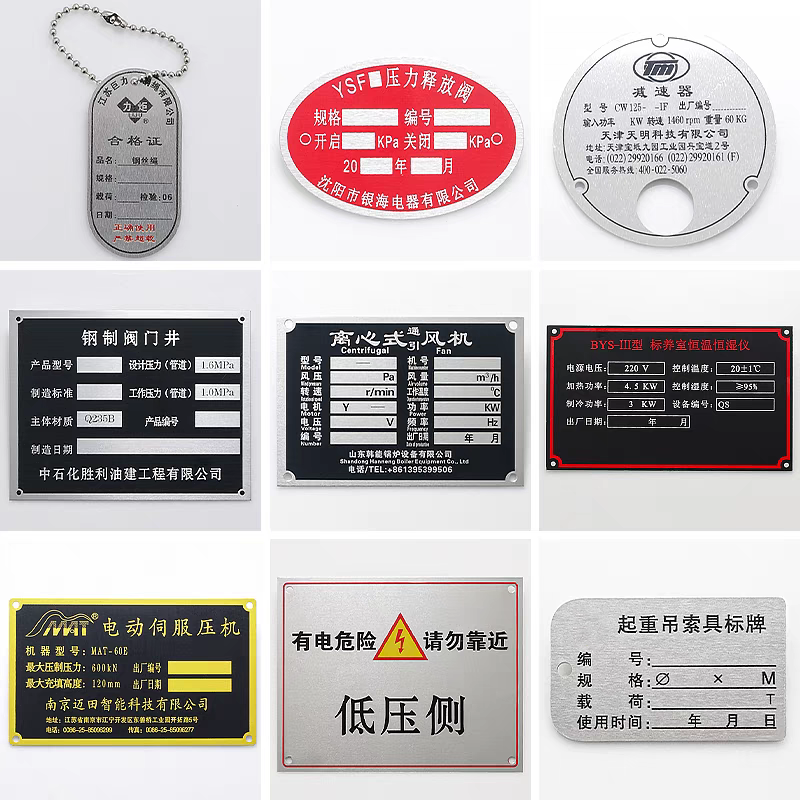
The expertise required for producing a metal embossed logo often overlaps with the creation of complex nameplates and control panels. At
Hemawell Nameplate, we frequently integrate embossed branding with additional
functional features to create a unified component.
Embossed + Laser Engraving: Combining a raised company logo
with laser-engraved serial numbers, QR codes, or data matrix codes for Industry
4.0 traceability.
Embossed + Formed Features: Integrating mounting flanges,
standoffs, or curved profiles (to match cylindrical equipment surfaces) into the
same tooling operation, ensuring that the logo orientation remains consistent on
curved components.
Embossed + Backer Adhesives: For applications where welding
or riveting is not feasible, we apply high-bond acrylic adhesives (such as 3M
VHB) to the back of the embossed plate, ensuring the raised logo remains
prominent while the mounting system is concealed.
7. Expert Perspective: Why Material Grade and Grain Direction Matter
One of the most overlooked variables in metal embossing is the grain
direction of the raw material. Metals are anisotropic; their formability varies
depending on the rolling direction. When we design a die for a metal
embossed logo, we specify the grain direction relative to the logo’s
longest axis. For logos featuring long, uninterrupted strokes (such as extended
lines in a logo’s design), aligning the grain direction with the stroke
minimizes the risk of cracking. This level of detail is rarely considered by
generalist fabricators but is standard practice in our engineering reviews.
Additionally, we only utilize “dead soft” tempers (such as O temper for aluminum
or 1/4 hard for stainless) specifically for embossing to maximize formability
before any heat treatment or aging processes are applied to the final
component.
The Strategic Value of Permanent Branding
In the competitive landscape of industrial manufacturing, the distinction
between a temporary label and a permanent identity is the difference between
liability and reliability. A metal embossed logo is an
investment in product longevity, regulatory compliance, and brand integrity. By
controlling the entire process—from material selection and die engineering to
post-processing and validation—Hemawell Nameplate ensures that
your branding not only meets but exceeds the demands of your operational
environment. As industries continue to push the boundaries of equipment
durability, the move toward integrated, permanent identification is not merely a
trend; it is a standard of excellence.
Frequently Asked Questions (FAQ) About Metal Embossed Logos
Q1: What is the minimum thickness of metal required to produce a
durable embossed logo without risking material fatigue?
A1: For most
applications, we recommend a minimum substrate thickness of 0.5mm (0.020 inches)
for aluminum and 0.4mm for stainless steel to achieve an embossing depth of
0.2mm to 0.4mm without causing stress fractures. For deeper embossing (up to
1.0mm), a starting thickness of 0.8mm to 1.2mm is standard. The specific ratio
depends on the alloy’s elongation properties and the complexity of the logo
geometry.
Q2: Can a metal embossed logo be combined with color, and how is the
color applied to ensure it lasts in outdoor environments?
A2: Yes,
color is commonly applied using two methods: epoxy ink filling into the recessed
areas after embossing, or through anodizing with selective masking. For outdoor
environments, we use UV-stable, high-temperature epoxy paints that are baked on.
This ensures the color withstands UV exposure, salt spray, and temperatures
ranging from -40°C to 150°C without fading or peeling.
Q3: What are the typical lead times for a custom metal embossed logo
project, and what factors influence them?
A3: Lead times vary based
on tooling complexity. For simple logos with basic shapes and standard fonts,
prototype tooling can be completed in 10-14 business days, with production runs
following. For highly intricate designs requiring hardened steel tooling or
multi-stage progressive dies, the engineering and tooling phase may extend to
4-6 weeks. At Hemawell Nameplate, we offer expedited services for urgent
validation samples.
Q4: Is there a limit to the size or aspect ratio for an embossed logo
on metal plates?
A4: There is no theoretical limit to size, but
practical considerations involve press tonnage and material stability. For logos
exceeding 600mm in length, we utilize progressive or transfer presses to
maintain flatness. Aspect ratios are managed by incorporating strategic
stiffening beads or specifying thicker gauge materials to prevent warping during
the embossing process. We can accommodate logos from miniature electronic
components (10mm x 10mm) to large industrial panels exceeding 1 meter.
Q5: How does a metal embossed logo compare to laser etching in terms
of long-term durability and cost?
A5: Laser etching removes material
to create a mark, which can be susceptible to corrosion if the protective oxide
layer is compromised. Embossing, conversely, displaces material, preserving the
original surface coating. While laser etching has a lower upfront cost (no
tooling), its per-unit cost remains static. Embossing requires tooling
investment but yields a lower per-unit cost at scale, and offers superior
durability against abrasion and chemical exposure—making it more cost-effective
over the product lifecycle for high-volume or mission-critical
applications.
`