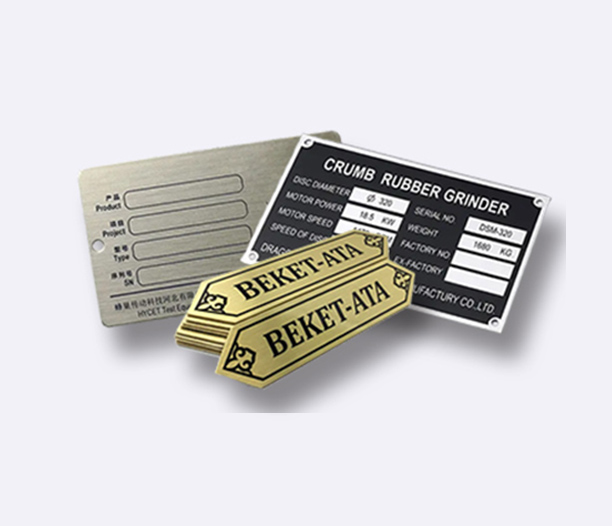
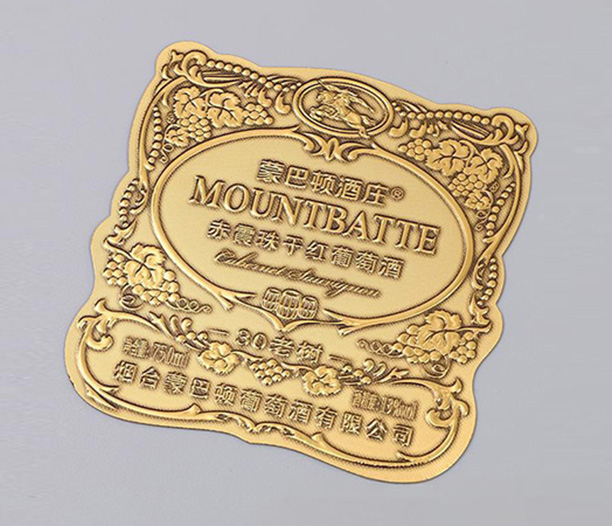
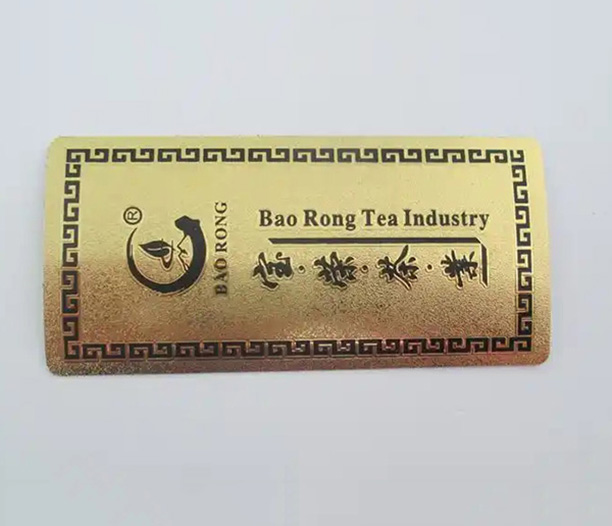
In industries where equipment failure translates to operational downtime,
regulatory non-compliance, or safety hazards, asset identification must
transcend basic labeling. Metal engraved
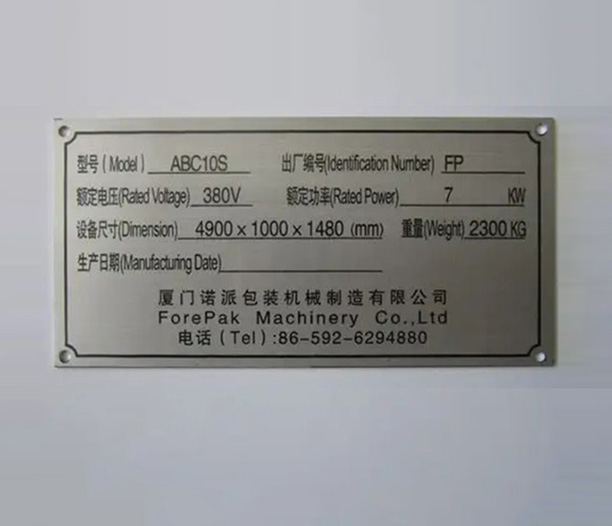
tags represent the gold standard for permanent identification,
offering a service life that often exceeds the machinery they accompany. Unlike
printed labels that fade or adhesive-backed alternatives that delaminate under
extreme conditions, true engraved metal identification provides a physical,
irreversible marking that withstands chemical exposure, thermal cycling, UV
radiation, and mechanical abrasion.
As a specialist serving the energy, aerospace, defense, and heavy equipment
sectors, I have witnessed how specifying the wrong marking technique or
substrate can lead to asset tracking failures, audit findings, and costly
re-identification projects. This guide delivers a technical deep-dive into the
engineering, material science, and application-specific nuances of
high-integrity metal engraved
tags, providing procurement engineers and quality managers with the
criteria to select a solution that aligns with ISO, MIL-STD, and
industry-specific durability requirements.
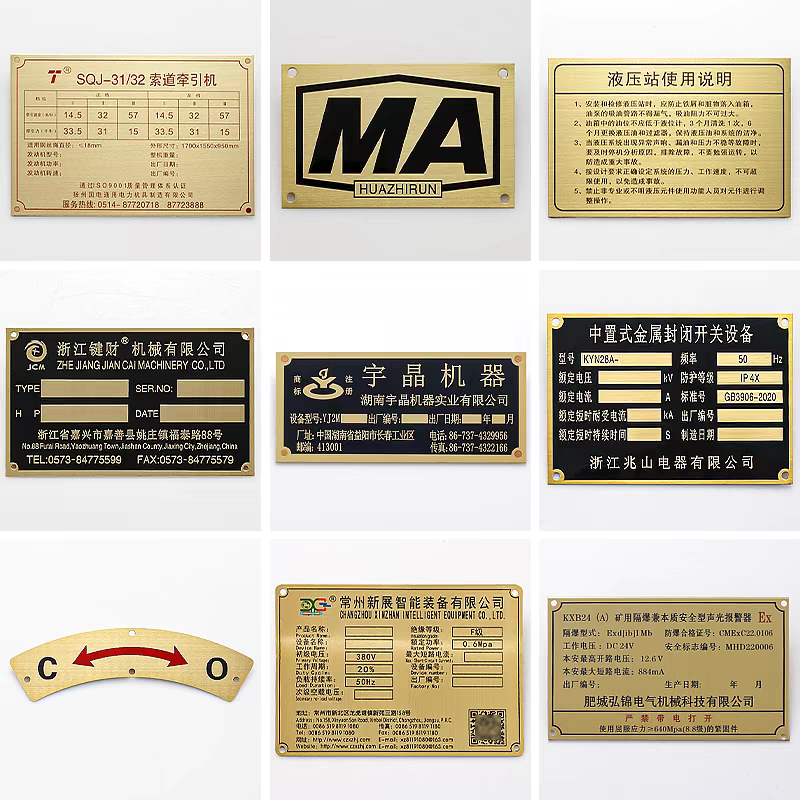
1. Defining the Technical Edge: Engraving Methods Compared
The term "engraved" encompasses several distinct manufacturing processes,
each imparting unique characteristics to the final tag. Understanding these
differences is the first step toward matching the identification method to the
operational hazard profile.
Laser Engraving (Fiber Laser Systems)
Fiber laser technology has become the dominant method for serialized and
high-density data matrix codes. The process uses a focused beam to vaporize the
surface layer of the metal, creating a permanent mark with exceptional contrast
and resolution.
Depth & Durability: Achieves engraving depths between
0.001” to 0.005” in a single pass. For tags requiring additional abrasion
resistance, deeper passes can be made, though cycle time increases.
Material Compatibility: Optimized for stainless steel (304,
316), aluminum (6061, anodized), and coated brass. Laser marking on anodized
aluminum yields a near-white mark against the dark anodized layer, ideal for
barcode readability.
Data Density: Supports 2D Data Matrix codes as small as 3mm
x 3mm with ISO/IEC 15415 verification grades of A or B, crucial for automated
scanning in asset management systems.
Heat Affected Zone (HAZ): Minimal HAZ prevents material
warping on thin-gauge tags (0.020” thickness), preserving dimensional stability
for tags used in electrical or precision assemblies.
Chemical Etching (Photochemical Machining)
For high-volume orders or applications requiring extremely fine detail
without mechanical stress, chemical etching remains the preferred method. The
process uses a photoresist and etchant to dissolve unprotected areas, creating a
recessed image.
Stress-Free Marking: No mechanical impact or thermal
stress, making it ideal for thin foils or tags that will be welded onto pressure
vessels where structural integrity is paramount.
Depth Control: Etching depths typically range from 0.002”
to 0.015”, with tolerance variations of ±10%. The resulting recessed area can be
color-filled with epoxy inks for enhanced contrast against the base metal.
Cost Efficiency: For runs exceeding 500 identical tags,
etching becomes more economical than laser engraving due to parallel processing
on panels.
Edge Quality: Produces burr-free edges, eliminating the
need for secondary deburring operations, which is critical for tags that must
not snag personal protective equipment (PPE) or wiring harnesses.
Mechanical (Rotary) Engraving
While less common for ultra-high-density data, mechanical engraving using
diamond drag or spindle cutters excels when tactile depth and extreme durability
are required, such as for valve tags in offshore oil platforms where coating
thickness is high.
Depth Capability: Achieves depths up to 0.020” or more,
ensuring legibility even after repeated sandblasting or coating
applications.
Material Range: Handles hard-to-mark materials like
hardened stainless steel, titanium, and phenolic-backed metals.
2. Material Science: Selecting the Optimal Substrate
The substrate of a metal engraved
tag dictates its resistance to corrosion, operating temperature
range, and compatibility with the attachment method. Industrial engineers must
evaluate the environmental matrix—chemical agents, temperature extremes, salt
spray exposure, and UV index—before finalizing material selection.
Stainless Steel (304, 316, 316L)
Stainless steel is the default choice for applications demanding superior
corrosion resistance. Grade 316L, with molybdenum addition, offers enhanced
pitting resistance in chloride environments, making it mandatory for marine
equipment, chemical processing plants, and pharmaceutical cleanrooms where
frequent sterilization occurs.
Temperature Range: Maintains structural integrity from
-325°F to +1200°F, suitable for furnace-adjacent equipment and cryogenic storage
vessels.
Surface Finishes: Available in #4 brushed, #8 mirror, or
bead-blasted finishes. Bead-blasted surfaces are preferred for laser engraving
as they reduce glare and improve barcode scan contrast by 35% compared to
polished surfaces.
Aluminum (Anodized & Non-Anodized)
For applications where weight reduction is critical (aerospace, automotive)
or where non-magnetic properties are required, aluminum offers an optimal
solution. Anodized aluminum tags, where a controlled oxide layer is formed,
provide a durable surface that accepts laser engraving with high contrast.
Durability Note: Hard coat anodizing (Type III) yields a
surface hardness of 60-70 Rockwell C, significantly outlasting standard anodized
finishes in high-abrasion environments like mining equipment.
Cost-Effectiveness: Aluminum tags typically cost 40-60%
less than equivalent stainless steel tags, making them viable for high-volume
asset tracking where environmental conditions are moderate.
Brass & Copper
Brass and copper tags are selected for their inherent anti-galling
properties, electrical conductivity, and aesthetic requirements in legacy
equipment or architectural applications. Their natural patina offers a degree of
self-protection, but for chemical resistance, they often require a protective
clear coating.
3. Industry-Specific Application Cases and Pain Points
Generic identification fails in mission-critical environments. Below are
sector-specific scenarios where correctly specified metal engraved
tags resolve persistent operational challenges.
Oil & Gas: Subsea and Wellhead Equipment
Components deployed in subsea environments face hydrostatic pressure,
saltwater corrosion, and marine growth. The industry pain point is tag
detachment or illegibility after 12-24 months. The solution involves using 316L
stainless steel tags with laser-engraved serial numbers, attached via 316L
stainless steel wires or inconel fasteners. Hemawell Nameplate provides tags
that undergo accelerated salt spray testing per ASTM B117 for 2,000 hours
without red rust or marking degradation, ensuring compliance with API and NACE
standards.
Aerospace & Defense: UID and IUID Compliance
Department of Defense (DoD) mandates require Unique Identification (UID)
marking on all deliverable assets. The industry challenge is achieving
permanent, machine-readable Data Matrix codes that withstand aircraft fluids
(hydraulic oil, jet fuel, de-icing chemicals) and altitude pressure cycles.
Laser-engraved stainless steel or aluminum tags, manufactured to MIL-STD-130,
provide the required permanence. The engraving must achieve a permanent "P"
durability classification, meaning the mark remains legible after 50 cycles of
cleaning with specified solvents. Our fabrication process ensures verification
of data matrix quality using calibrated verifiers, guaranteeing MIL-STD-130
compliance.
Heavy Machinery & Construction: High-Abrasion Zones
Equipment operating in mining, quarrying, or demolition experiences constant
abrasive wear from dust, rock impact, and pressure washing. The typical failure
is painted or anodized markings being worn away. The optimal solution involves
deep mechanical engraving (0.015” depth) into thick-gauge stainless steel tags
(0.032” thickness) with the engraved recess left unfilled. This creates a shadow
effect that remains legible even after the tag surface is abraded by sand and
debris. Tag attachment uses rivets or spot welding rather than adhesives to
prevent loss due to vibration.
Medical Device & Laboratory Equipment
In surgical environments, tags must resist aggressive sterilization cycles
including autoclaving (steam at 134°C), ethylene oxide (EtO), and gamma
irradiation. The pain point is yellowing of coatings or adhesive failure on
plastic labels. Chemically etched stainless steel tags with black epoxy fill
provide a non-porous surface that withstands hundreds of autoclave cycles
without discoloration, maintaining traceability of surgical instruments and
implantable device trays.
4. Standards, Certification & Lifecycle Cost Analysis
When evaluating suppliers for metal engraved
tags, procurement professionals should demand adherence to
recognized testing protocols. Durability claims must be substantiated by data
from standardized tests:
Salt Spray Resistance: ASTM B117 – Minimum 1,000 hours for
coastal or chemical environments.
UV Exposure: ASTM G154 – 500 hours minimum to validate
color contrast and mark permanence.
Solvent Resistance: MIL-STD-202, Method 215 – Resistance to
isopropyl alcohol, acetone, and jet fuel.
Abraison Resistance: Taber Abraser test per ASTM D4060 –
Measuring weight loss after 1,000 cycles.
Lifecycle cost analysis consistently shows that upfront investment in a
high-quality engraved metal tag reduces total cost of ownership by 60-80%
compared to replacing laminated polyester labels every 2-3 years in harsh
environments. For a fleet of 5,000 assets, the labor cost alone for
re-identification can exceed $150,000, dwarfing the marginal cost difference
between premium metal tags and disposable labels.
5. Customization, Serialization & Integration
Modern industrial identification is not merely about a static logo; it is
about dynamic data integration. Hemawell Nameplate specializes in
custom-engineered solutions that bridge physical marking and digital asset
management systems.
Variable Data Printing (VDP): Utilizing advanced fiber
laser systems with vision alignment, we engrave sequential serial numbers,
unique Data Matrix codes, and even QR codes that link to CMMS (Computerized
Maintenance Management Systems) such as SAP or IBM Maximo.
High-Contrast Filling: For applications requiring enhanced
legibility in low-light conditions, we offer epoxy color filling in black,
white, red, or custom Pantone colors. The epoxy is formulated for
high-temperature resistance (up to 300°F continuous).
Attachment Engineering: Proper attachment is the number one
cause of tag loss. We provide comprehensive solutions including industrial-grade
adhesives (VHB), stainless steel wire ties, tamper-resistant drive rivets, and
custom-welded studs, each selected based on the substrate and environmental
vibration analysis.
6. Why Supplier Expertise Matters: Avoiding Counterfeit and Substandard
Tags
The market for engraved tags includes vendors who use ink-jet marking on
metal and incorrectly market it as "engraved." True engraving, whether laser or
mechanical, creates a permanent relief that cannot be removed without physically
destroying the tag. Suppliers lacking in-house laser or etching capabilities
often outsource, introducing quality control gaps. By partnering with a
manufacturer that controls the entire process—from material sourcing to final
verification—you ensure traceability and consistency.
Hemawell
Nameplate maintains a vertically integrated facility, allowing for
rapid prototyping, consistent quality assurance, and the ability to certify
material composition (Mill Certificates available upon request). This level of
control is essential for aerospace, nuclear, and defense applications where
material traceability is non-negotiable.
Engineering Certainty into Asset Identification
Selecting metal engraved
tags is a decision that impacts operational efficiency, regulatory
compliance, and safety. By moving beyond generic specifications and focusing on
the interplay of engraving technology, substrate metallurgy, attachment
methodology, and applicable industry standards, organizations can achieve
identification systems that perform with absolute reliability for decades.
Whether the requirement is for deep-engraved stainless steel tags for subsea
manifolds or high-contrast laser-marked aluminum tags for aerospace assemblies,
the technical foundation remains the same: permanent, unambiguous, and
verifiable marking.
Frequently Asked Questions (FAQ)
Q1: What is the typical lead time for custom metal engraved tags, and
what factors influence it?
A1: Lead times vary based on engraving
method, quantity, and complexity. For laser-engraved tags without variable data,
typical lead time is 5-7 business days after artwork approval. For chemical
etching with color fill and sequential serialization, allow 10-15 business days.
Rush services are available for urgent maintenance shutdowns, often reducing
lead time to 2-3 days for standard materials.
Q2: How do I verify the permanence rating of a metal engraved tag for
military or aerospace applications?
A2: For DoD applications, verify
that the supplier adheres to MIL-STD-130 and can provide test reports
demonstrating that the marking meets the "P" (Permanent) classification. This
involves testing for legibility after exposure to fluids, abrasion, and
accelerated weathering. Request a Certificate of Conformance that explicitly
states compliance with the latest revision of the standard.
Q3: Can metal engraved tags be applied to curved surfaces, such as
pipes or hydraulic cylinders?
A3: Yes. We offer tags with pre-curved
profiles to match specific pipe diameters (e.g., 2” to 24” OD). For extremely
small radii, thin-gauge stainless steel (0.005” to 0.010”) with high-bond
adhesives or banding straps conforms without cracking the engraving. The key is
to specify the radius and surface finish during the design phase to ensure
proper adhesion and legibility.
Q4: What is the difference between "laser marked" and "laser
engraved" tags, and which is more durable?
A4: Laser marking
typically refers to surface annealing or color change without significant
material removal, common on anodized aluminum. While durable, it offers less
depth. Laser engraving removes material to create a recessed cavity. For
applications involving high abrasion (e.g., sandblasting, shovel loading),
engraved tags with at least 0.003” depth are recommended, as the marking remains
legible even after the top surface wears.
Q5: How do I ensure the Data Matrix or barcode on my metal tags
remains scannable after years of field use?
A5: Scannability depends
on three factors: engraving contrast, module size, and verification. We
recommend a minimum module size of 0.020” (0.5 mm) for direct part marking.
After engraving, each code is verified to ISO/IEC 15415 standards, achieving a
grade A (4.0) or B (3.0) depending on material. Periodic field audits using
handheld verifiers can ensure long-term readability, but starting with a
high-contrast laser engraving on a bead-blasted substrate yields the highest
initial grade.