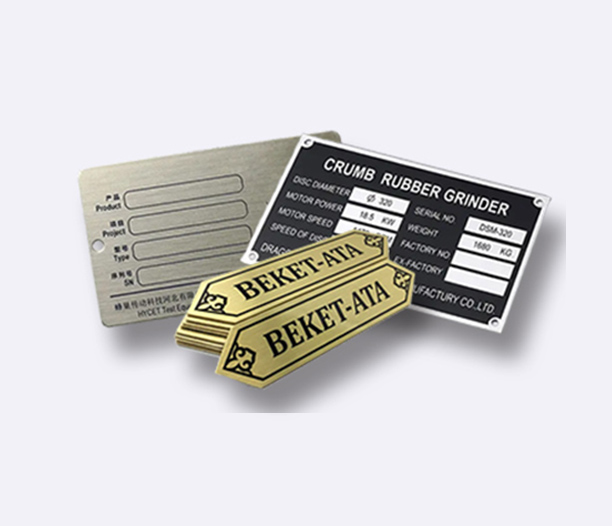
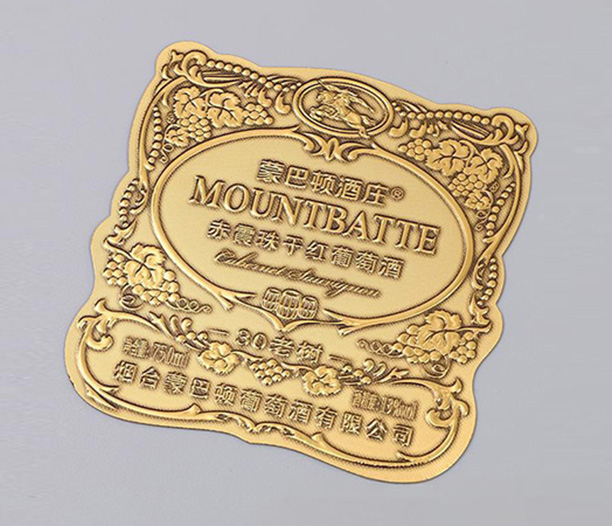
For electric, telecommunication, and joint-use utilities, the passive infrastructure of millions of poles requires permanent, verifiable identification. The humble telephone pole tags must survive decades of UV exposure, temperature cycling, fungal decay, and physical impact while remaining legible for inspectors, linemen, and GIS data collection. This article provides a technical deep dive into the engineering, metallurgy, marking processes, and application methods for high-reliability utility pole markers.
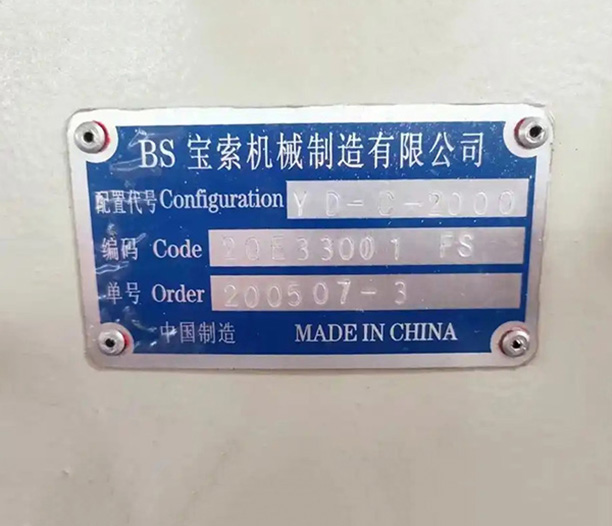
1. Environmental Challenges and Material Selection for Utility Pole Markers
Selecting a substrate for telephone pole tags requires analyzing the specific microenvironment. A tag on a pole in a desert climate faces different degradation mechanisms than one in a coastal marsh or boreal forest. Based on over 15 years of supplying critical infrastructure components, Hemawell Nameplate evaluates materials based on quantifiable metrics and field performance data.
1.1 Aluminum Alloys: The Industry Standard for Weight and Corrosion Resistance
The vast majority of utility specifications call for aluminum tags, typically alloy 5052-H32. The rationale is supported by decades of field service:
Corrosion Resistance: The magnesium in 5052 provides excellent resistance to atmospheric corrosion, including salt spray in coastal counties. For most inland applications, it offers a 30-40 year service life without significant degradation. Anodized finishes (Type II) add an extra barrier for harsh chemical environments.
Formability: The H32 temper allows for embossing (raised characters) during manufacturing, a common requirement for utility tags to ensure readability even if the surface is scratched, coated with dirt, or obscured by lichen growth.
Weight and Wind Load: At approximately 2.68 g/cm³, aluminum minimizes wind load and long-term stress on the nail or fastener over decades of thermal expansion and contraction.
1.2 Stainless Steel (Type 304/316): For High-Risk and Coastal Environments
In specific scenarios, stainless steel becomes the required substrate for telephone pole tags:
Type 304 (18-8): Offers superior mechanical strength and corrosion resistance compared to aluminum, suitable for areas with heavy industrial pollution.
Type 316 (Marine Grade): With the addition of molybdenum, Type 316 is specified for direct marine immersion or splash zones—such as poles on wharves, bridges, or in highly corrosive coastal atmospheres. It resists pitting from chlorides.
Wildfire and High-Heat Areas: Stainless steel tags are often specified when the identification must survive wildfire exposure without melting or degrading, maintaining legibility for post-event analysis and reconstruction.
The trade-off is increased weight and cost, as well as the critical need for stainless steel fasteners to prevent galvanic corrosion when attached to the pole.
2. Marking Technologies: Ensuring Permanence and Machine Readability
The method used to apply data to the tag determines its long-term legibility and resistance to tampering. Utility specifications often mandate specific processes based on the expected lifespan and data density.
2.1 Embossing and Debossing: Mechanical Permanence
Embossing (raised characters) or debossing (recessed characters) physically displaces the metal. This is the most durable marking method, as the information is integral to the tag. It cannot be worn away by abrasion, sandstorms, or cleaning. We utilize hydraulic presses and progressive dies to create clean, consistent characters on aluminum blanks. This method is ideal for numbering schemes where high contrast is achieved by the shadow created by the raised surface, requiring no ink or paint that could fade. It is the preferred method for many rural electric cooperatives.
2.2 Chemical Etching: Precision and Data Matrix Codes
For tags requiring logos, QR codes, or Data Matrix codes for digital asset management and GIS integration, chemical etching offers a permanent solution. An acidic solution carves the design into the metal surface. At Hemawell Nameplate, we control the etch depth between 0.0015" and 0.008" depending on material thickness. This process leaves a perfectly defined, recessed area that can be left as-is or filled with a contrasting epoxy for high visibility. Etched 2D barcodes remain scannable for the life of the tag, even after decades of UV exposure.
2.3 Screen Printing for High-Visibility Warnings
When telephone pole tags must convey warnings (e.g., "HIGH VOLTAGE," "FIBER OPTIC," or utility ownership) in high-contrast colors, screen printing with UV-stable ceramic inks is employed. The ink is fused to the metal surface via heat curing, creating a bond that resists fading and chalking. We match inks to specific utility color standards (e.g., ANSI Z535.1 safety colors) using Pantone matching systems to ensure compliance and immediate recognition by field crews.
3. Attachment Mechanisms and Field Installation
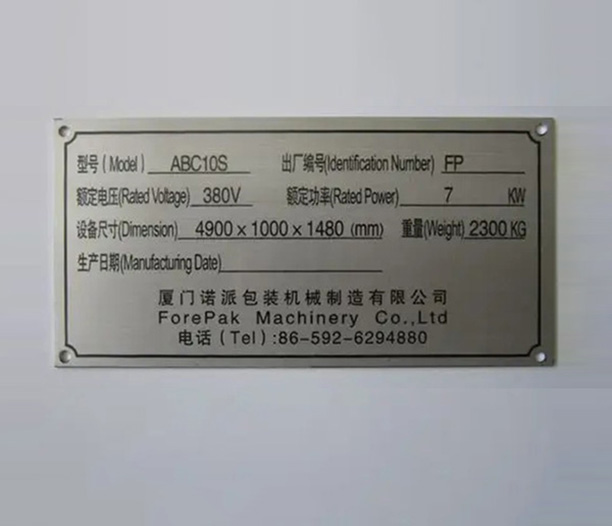
The best tag is useless if it falls off. Attachment methods must account for the pole material (wood, concrete, steel, or composite), the tools available to line crews, and long-term security against vandalism or wildlife.
3.1 Nailing and Stapling: The Traditional Approach for Wood Poles
For wooden poles, aluminum tags are often attached with aluminum or stainless steel nails. The key specification is nail metallurgy: using dissimilar metals (e.g., galvanized steel nails with aluminum tags) can lead to galvanic corrosion and nail failure within 5-10 years. We recommend:
Aluminum Nails: Best match for aluminum tags, eliminating galvanic corrosion. Softer, but adequate for most applications.
Stainless Steel Nails (Type 316): Required for stainless steel tags and for the highest holding strength in dense wood, especially in hurricane-prone regions.
Proper nail placement (avoiding checking and deep enough to allow for future growth of the wood) is also critical.
3.2 Banding and Strapping: For Concrete, Steel, and Composite Poles
Non-wood poles cannot be nailed. For these, and for wooden poles where nailing is undesirable, banding systems are used:
Stainless Steel Banding: 3/8" or 1/2" wide Type 316 stainless steel strap is wrapped around the pole and secured with a crimp-style or bolt-style buckle. The tag is either pre-attached to the band or slides onto it.
UV-Stabilized Nylon Banding: For lighter-weight tags and where non-conductivity is required, heavy-duty nylon banding with a stainless steel locking mechanism can be used.
3.3 Adhesive-Backed Tags for Specific Use Cases
For indoor utility applications or on poles with smooth, clean surfaces (like some composites), high-bond acrylic foam tapes (e.g., 3M™ VHB™) can be used. However, for outdoor telephone pole tags exposed to moisture and temperature extremes, mechanical attachment remains the standard due to its proven reliability over a 40-year lifespan.
4. Compliance, Standards, and Asset Tracking Integration
Telephone pole tags are not merely decorative; they are critical components of regulatory compliance and operational efficiency.
4.1 NESC and RUS Standards
The National Electrical Safety Code (NESC) and the Rural Utilities Service (RUS) set forth requirements for the identification of utility structures. Tags must display specific information, often including the pole owner, pole number, date of setting, and class. Compliance requires that this information remain legible for the service life of the pole. Our tags are engineered to meet or exceed these legibility requirements through material and process selection.
4.2 Integration with GIS and Field Mobility
Modern utilities rely on Geographic Information Systems (GIS) to manage their assets. The data on each tag—whether a simple human-readable number or a machine-readable Data Matrix code—serves as the key that links the physical asset in the field to its digital record. This allows field crews using smartphones or tablets to instantly access maintenance history, attachment records (like joint-use attachments from telecom or cable companies), and inspection schedules.
Frequently Asked Questions: Telephone Pole Tags
Q1: What is the standard material and thickness for telephone pole tags?
A1: The most common specification is 5052-H32 aluminum alloy with a thickness of 0.032" (0.8mm) or 0.040" (1.0mm). This provides an optimal balance of durability, rigidity, and cost. For marine environments or where high mechanical strength is required, 0.020" (0.5mm) Type 316 stainless steel is often specified.
Q2: Can you provide tags with sequential numbering or barcodes?
A2: Yes. We specialize in sequential numbering tailored to your precise requirements. We can integrate human-readable numbers, QR codes, and Data Matrix codes using chemical etching, laser marking, or embossing, ensuring permanent traceability that integrates with your asset management system.
Q3: What is the minimum order quantity (MOQ) for custom telephone pole tags?
A3: For standard shapes and sizes, we can often accommodate small trial orders (1-100 pieces) for field testing. For fully customized shapes, specific hole patterns, or complex sequential numbering requiring setup, the MOQ typically ranges from 3,000 to 10,000 pieces to be cost-effective. Contact us with your specifications for a precise quote.
Q4: How should I attach tags to concrete or steel poles?
A4: For non-wood poles, mechanical attachment via stainless steel banding is the most reliable method. Tags can be supplied with pre-punched holes or slots to fit onto the banding. For concrete poles, specialized concrete nails or epoxy-set anchors can also be used, but banding is preferred as it avoids drilling into the structure.
Q5: Do you offer free samples or design proofing?
A5: We support design proofing. If the sample does not require custom printing or complex artwork (e.g., a simple blank tag to verify dimensions or a standard embossed design), there is typically no charge for the sample itself—you would only need to cover the shipping cost or provide a courier account (FEDEX, DHL, UPS, etc.). For prototypes requiring custom tooling or complex graphics, we can discuss the nominal setup costs to ensure the final production meets your exact specifications.
Selecting the correct telephone pole tags is a technical decision that impacts regulatory compliance, operational efficiency, and the long-term integrity of your utility's asset data. By understanding material properties, marking technologies, and attachment methods, you ensure that your infrastructure identification lasts as long as the poles themselves. For assistance in specifying the right solution for your distribution or transmission system, contact our engineering team for a consultation and detailed quotation.